Tarot: Readings & Card Meanings
WitchcraftDaily · TAROT
Begin with a question. Stay with the image.
Choose a free reading, learn the deck, or look up a card you have drawn. These guides pair the familiar Rider–Waite–Smith pictures with original, practical interpretation.
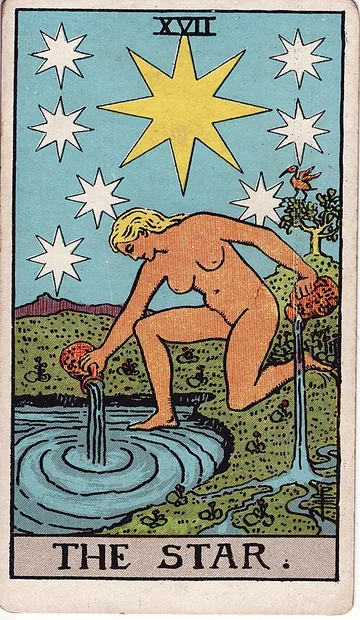
Choose a way to read
- 01
One card
A short daily practice: draw a card, notice the image, and follow one reflection question.
- 02
Past, present, future
Three positions help you compare what led here, what is active, and what may need attention.
- 03
Celtic Cross
Ten cards offer a wider map of the question, its setting, and possible next steps.
- 04
Relationship reading
Five cards prompt reflection on your perspective, shared patterns, and a conversation.
From the first card to the full spread
Our beginner guide explains how to frame a question, notice visual details, and read cards together. The spread guide shows what each position contributes before you draw.
Tarot card meanings
Browse the Major Arcana and four complete Minor Arcana suits.
Each card guide begins with the image, then offers upright and reversed context and questions for reflection.
Major Arcana
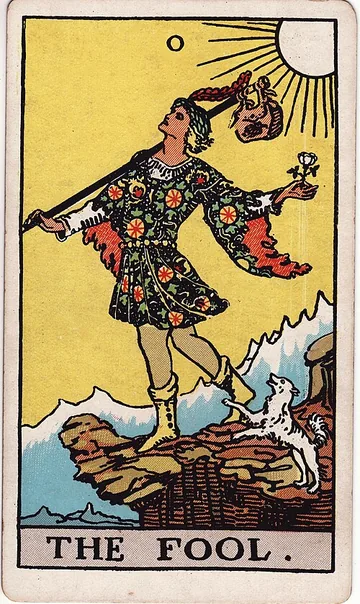
The Fool
The Fool can signal a new beginning, but it does not promise that every risk will pay off. Upright, this tarot card invites curiosity and a first step into unfamiliar territory. Reversed, it can ask…
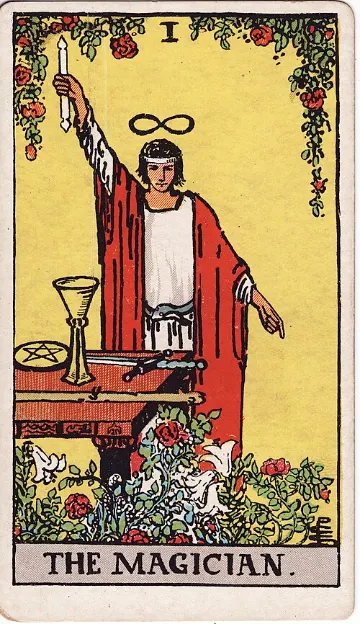
The Magician
The Magician tarot card points to the moment when an idea needs a method. Upright, it can favor initiative, skill, and using what is already within reach. Reversed, it can ask whether your attention is…
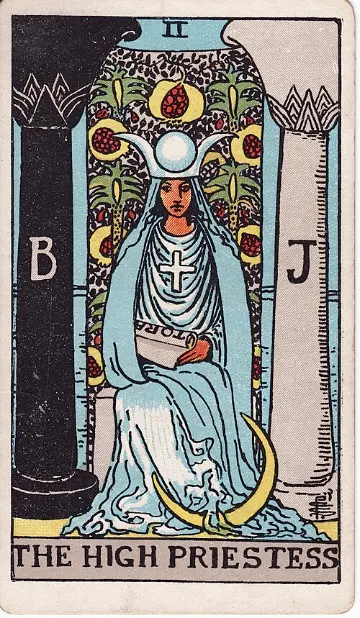
The High Priestess
The High Priestess tarot card can suggest a pause to listen, study, and notice what is still unclear. Upright, it often favors patient attention and a boundary around private thoughts. Reversed, it may…
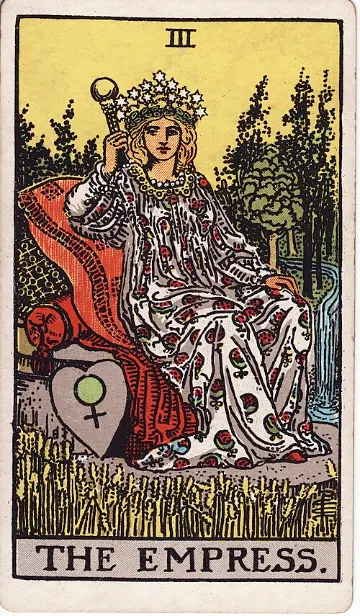
The Empress
The Empress tarot card is about growth that has something to live on. Upright, it can suggest creativity, pleasure, and the choice to give a relationship or project the time and resources it needs.…
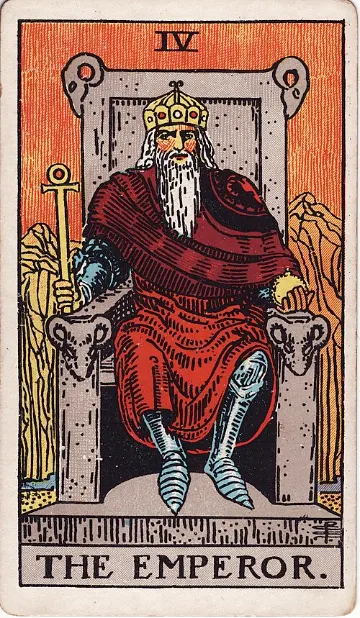
The Emperor
The Emperor tarot card asks what kind of authority a situation needs and who will answer for using it. Upright, it may favor dependable structure, clear decisions, and protection that has a practical…
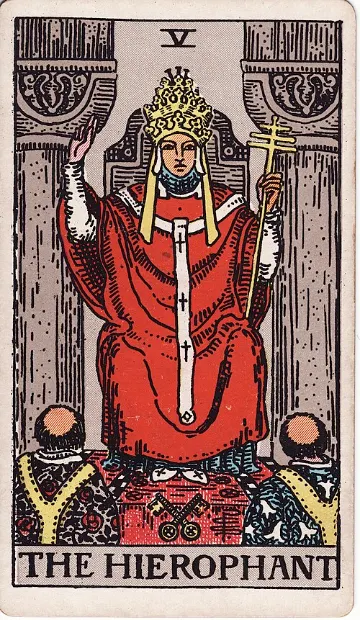
The Hierophant
The Hierophant tarot card can point to a teacher, a shared tradition, or the moment you decide whether to join a larger system. Upright, it may favor learning from an experienced community and…
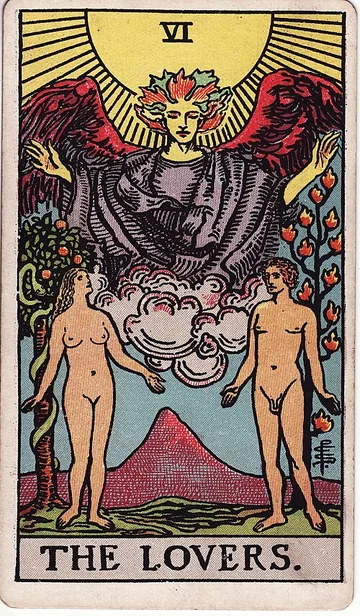
The Lovers
The Lovers is a card of attraction, relationship, and choices that reveal what matters to you. In the Rider–Waite–Smith image, two figures stand beneath an angel with different trees behind them. An…
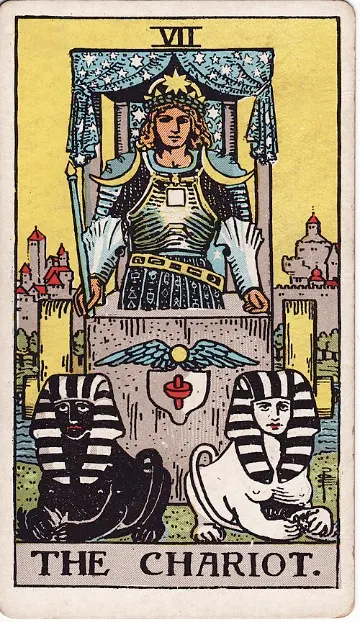
The Chariot
The Chariot tarot card can suggest a determined move toward a chosen goal, but its image is more thoughtful than a command to go faster. Upright, it may favor direction, coordination, and a pace you…
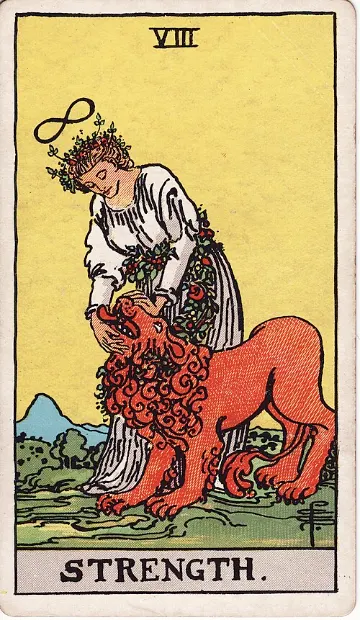
Strength
Strength tarot can describe courage expressed through patience, a firm boundary, or the choice not to escalate a difficult moment. Upright, it may favor steady action rather than a show of force.…
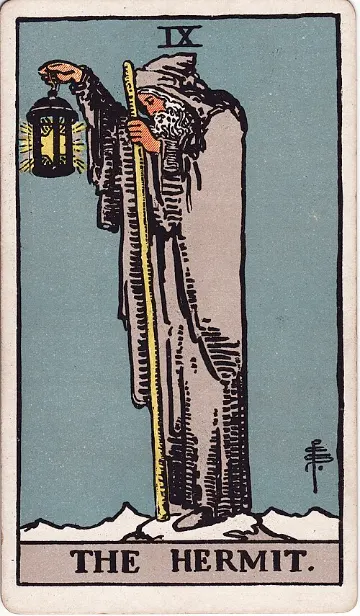
The Hermit
The Hermit tarot card can ask you to make room for careful thought, then put what you learn to use. Upright, a modern reading may favor a purposeful pause, research, or guidance from someone…
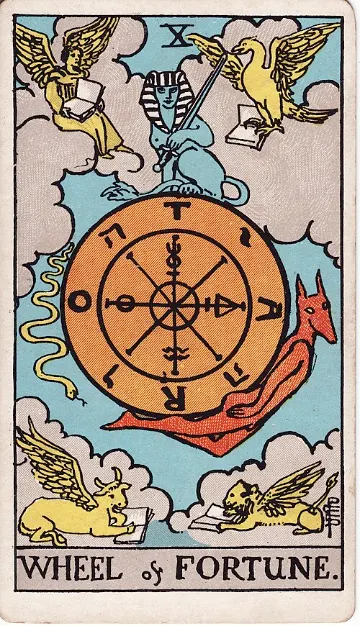
Wheel of Fortune
The Wheel of Fortune tarot card points to changing conditions: an opening, setback, or turning point that may alter what is possible. Upright, it can invite you to recognize an opportunity without…
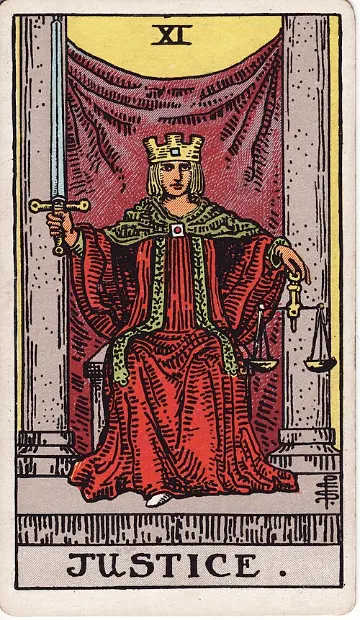
Justice
The Justice tarot card asks how a decision is made, whose account is heard, and who lives with the result. Upright, it can favor clear evidence, fair criteria, and responsibility for your part.…
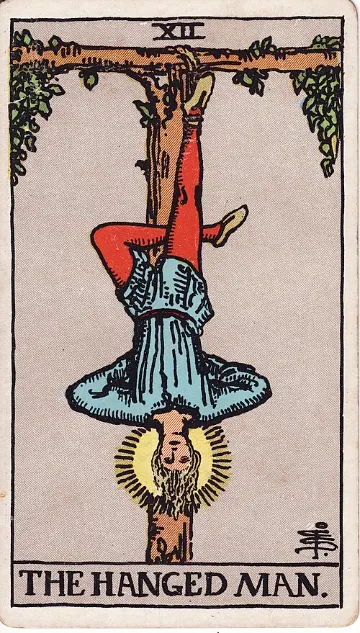
The Hanged Man
The Hanged Man tarot card can mark a pause that changes how you see a problem. Upright, it may favor waiting for a reason, releasing an unhelpful approach, or considering what the situation looks like…
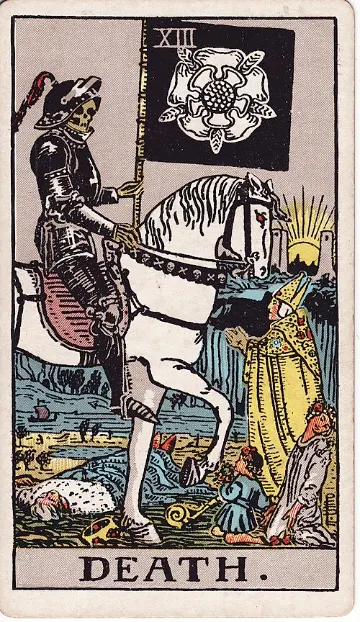
Death
Death (XIII) is a tarot card about endings, transition, and what survives a change. In the Rider–Waite–Smith image, an armored skeleton rides a white horse past a fallen king and kneeling figures while…
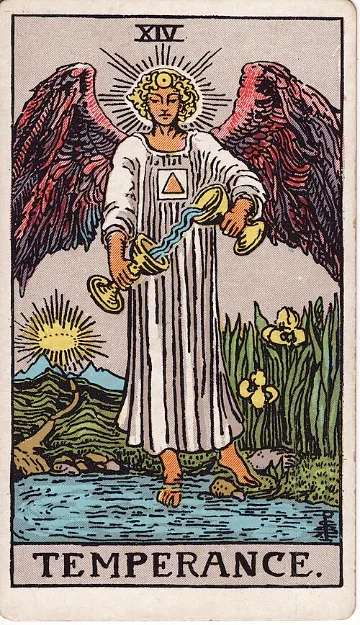
Temperance
Temperance asks what combination or pace will actually work. Upright, it may favor patient adjustment, cooperation, and enough restraint to notice the effect of each change. Reversed, it may bring…
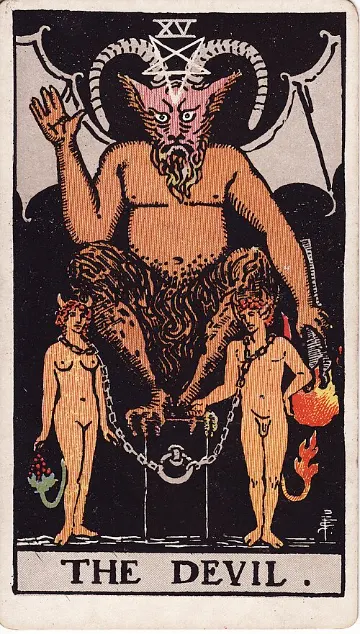
The Devil
The Devil tarot card can bring an appealing bargain and its hidden cost into focus. Upright, a modern reading may ask how desire, status, fear, or material pressure keeps a pattern going. Reversed, it…
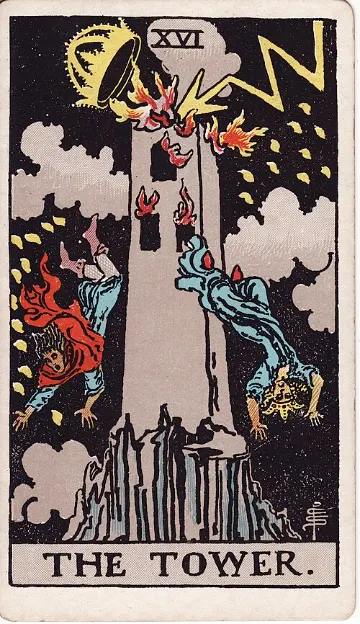
The Tower
The Tower tarot card points to sudden change, a disclosure, or an idea that no longer holds up to the facts. In the Rider–Waite–Smith image, lightning strikes a tower, its crown flies off, and two…
The Star
The Star tarot card can invite hope after a difficult turn, but it is a hope that needs water, time, and support. Upright, a modern reading may favor restoration and an honest next step. Reversed, it…
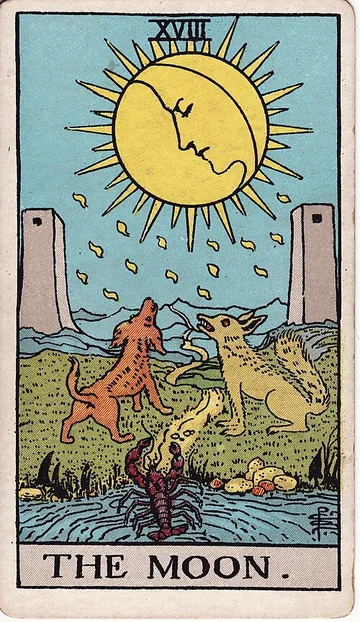
The Moon
The Moon tarot card points to a moment when feelings are strong but the whole picture is hard to see. In Pamela Colman Smith's image, a dog and wolf face a moonlit sky while a crayfish rises from water…
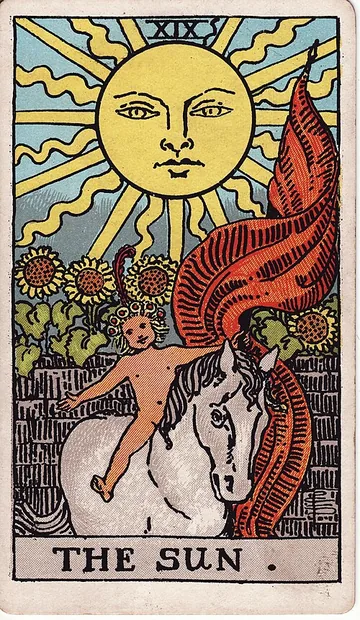
The Sun
The Sun tarot card can bring a real success, clearer understanding, or shared pleasure into view. Upright, it may favor celebrating what has worked and using the clarity to move forward. Reversed, a…
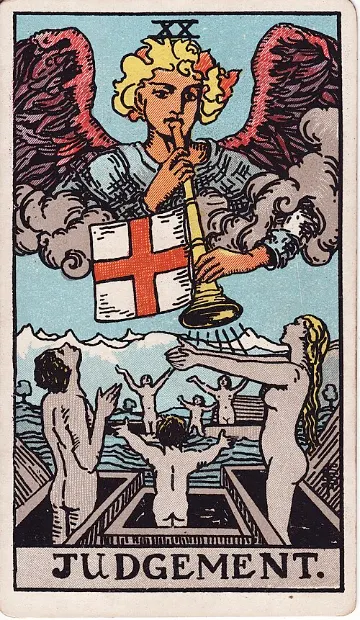
Judgement
The Judgement tarot card can mark a call to review what has happened and decide how to answer it. Upright, a modern reading may favor an honest reckoning followed by a visible change. Reversed, it may…
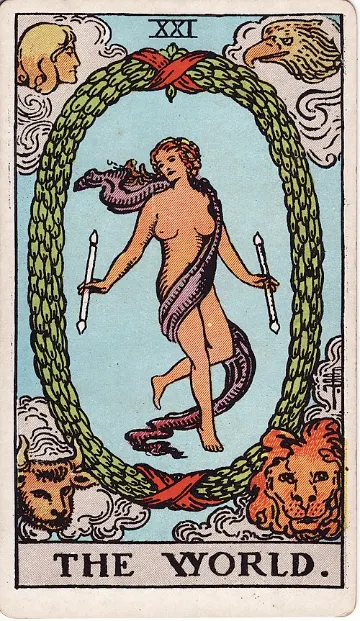
The World
The World tarot card can mark a cycle brought to a usable finish and a wider field opening beyond it. Upright, a modern reading may favor recognizing a completed effort, its contributors, and the next…
Wands
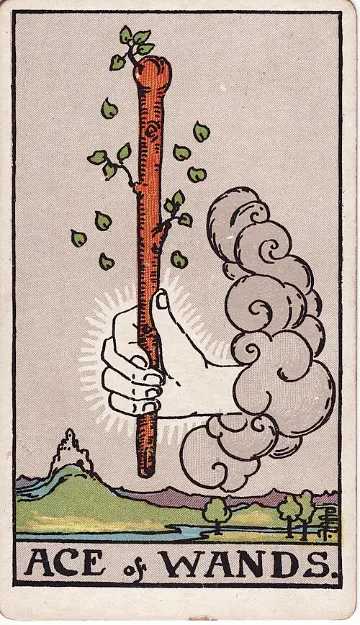
Ace of Wands
A hand from a cloud grips a living wand as leaves sprout and fall around it. A small castle stands on a distant hill. The Ace of Wands is a beginning with force behind it, before an idea has acquired a…
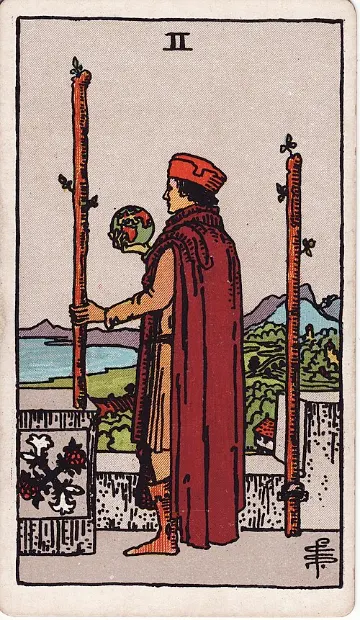
Two of Wands
A figure on a high terrace holds a small globe and looks over land and water, with one wand near the hand and another fixed to the wall. The Two of Wands sets a wide horizon against an established…
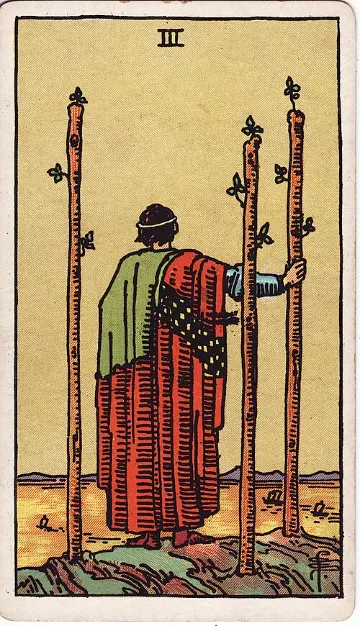
Three of Wands
A cloaked figure stands on a rocky rise with one hand on a wand, looking toward small ships on a pale sea. The Three of Wands gives a wider view after a plan has begun to meet the world. Waite's…
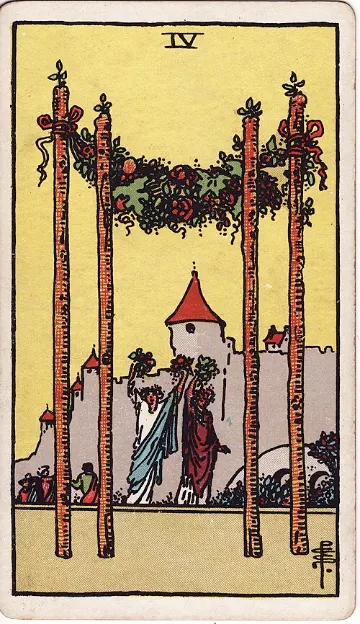
Four of Wands
Four flower-topped wands and a garland frame two people raising bouquets before buildings in the distance. The Four of Wands can mark a completed phase, a welcoming place, or a moment of rest shared…
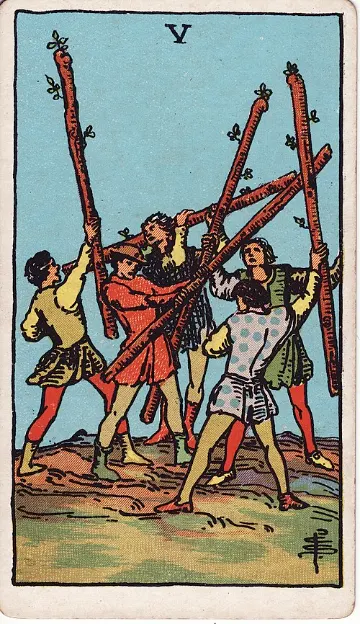
Five of Wands
Five differently dressed people raise sprouting staffs that cross above uneven ground. No one is visibly injured or declared the winner. Waite described the scene as sport or strife and linked the…
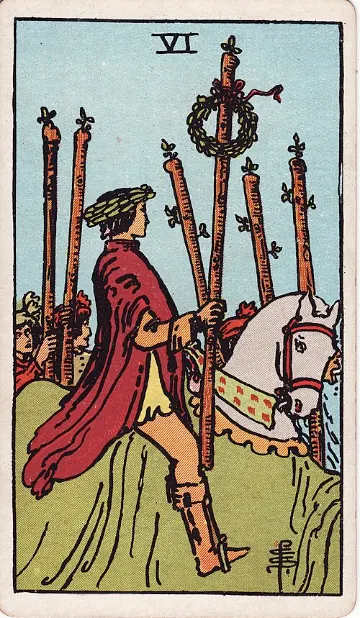
Six of Wands
A laurel-crowned rider moves on a white horse, carrying a wand topped with another wreath while people with staffs surround the procession. The Six of Wands can mark a public result, welcome news, or…
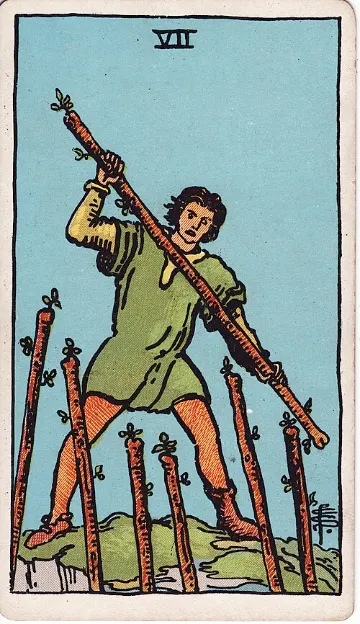
Seven of Wands
A figure on an uneven rise holds one staff diagonally against six staffs coming up from below. The mismatched shoes make the stance look hurried despite the advantage of higher ground. Waite linked the…
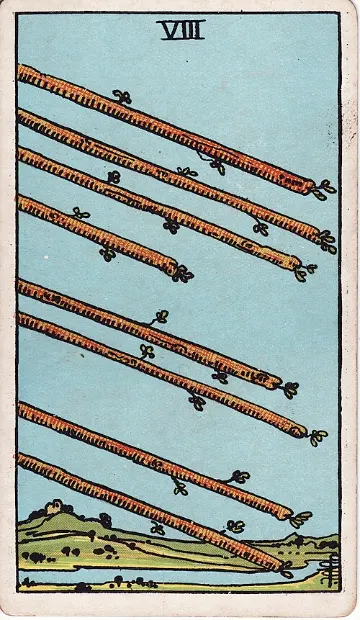
Eight of Wands
Eight leafy wands fly diagonally across an open sky above a river and low hills. No sender, recipient, or landing place appears. Waite describes the wands near the end of their course and links the…
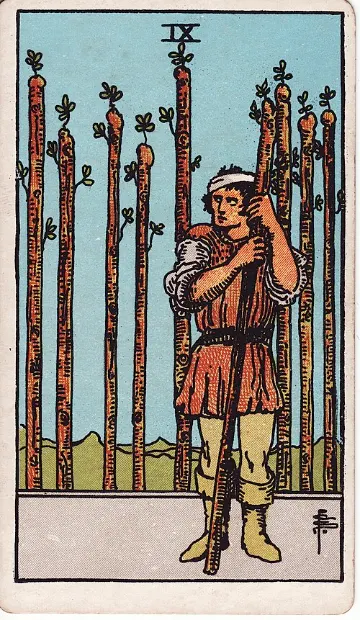
Nine of Wands
A bandaged figure holds one wand before a row of eight upright staffs and looks to the side. Waite read the Nine of Wands as strength in opposition, with delay or adjournment among its upright…
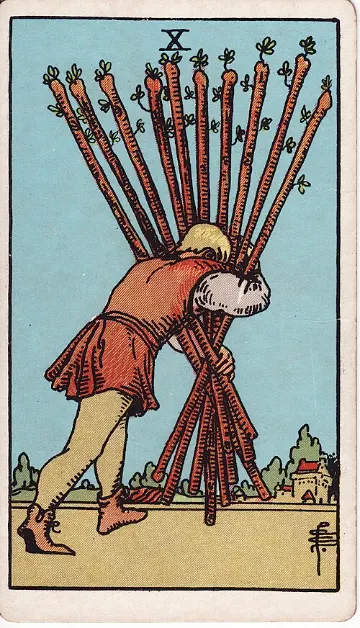
Ten of Wands
A stooped figure carries ten leafy staffs across open ground with buildings in the distance. The bundle fills the carrier's view. Waite gave the upright Ten a double edge: oppression, but also fortune…
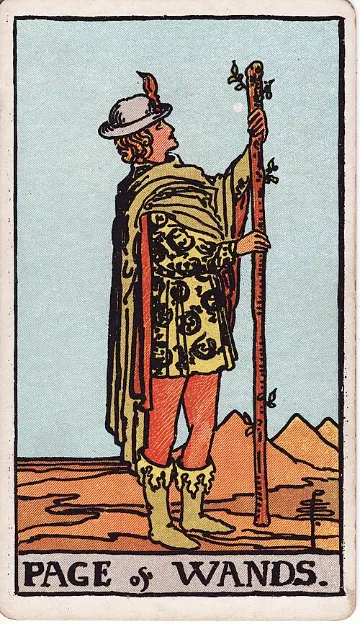
Page of Wands
The Page of Wands stands in a sandy landscape, studying a tall staff with small green shoots. Waite described the figure as making a proclamation and linked the upright card with an envoy, a lover, and…
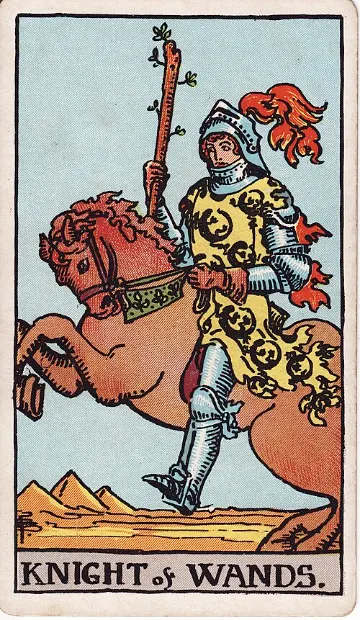
Knight of Wands
An armored rider raises a leafy staff while the horse lifts a foreleg above sparse ground. No opponent or destination appears. Waite gave the upright Knight meanings of departure, travel, and change of…
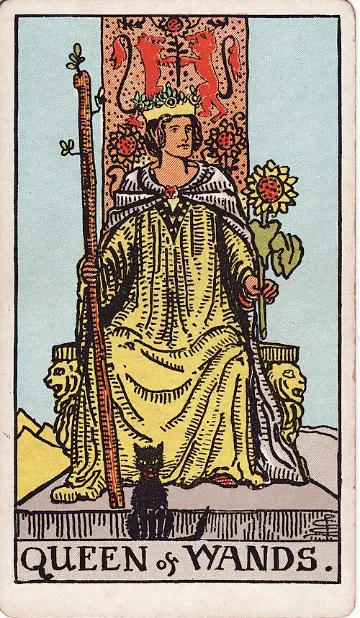
Queen of Wands
The Queen of Wands holds a leafy staff and a sunflower while a black cat sits below her lion-decorated throne. Waite described a friendly, loving, honorable figure and included business success among…
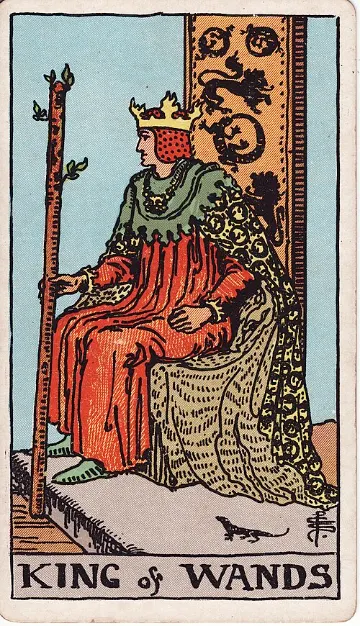
King of Wands
The King of Wands sits beside a leafy staff on a throne marked with lions and salamanders. Waite associated the upright card with a friendly, honest, conscientious figure; his reversed King can still…
Cups
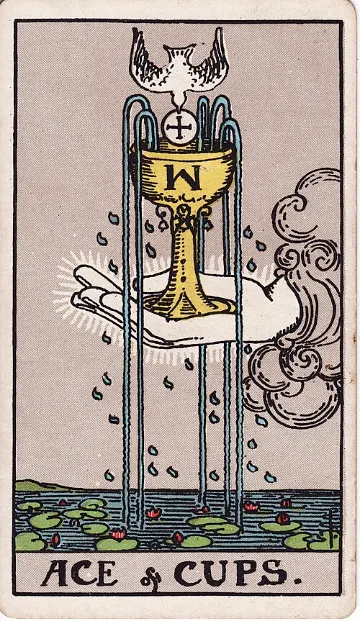
Ace of Cups
The Ace of Cups marks the beginning of a feeling, invitation, or creative impulse, not a finished relationship. Upright, it suggests openness; reversed, it asks whether emotion has somewhere safe to…
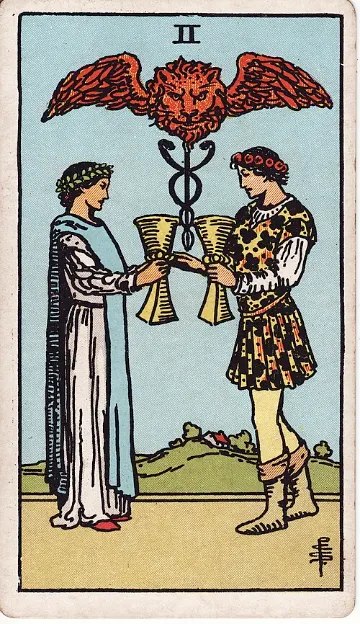
Two of Cups
Two people face one another with separate cups raised between them. The Two of Cups is about a meeting that can become friendship, romance, reconciliation, or a partnership when both sides take part.…
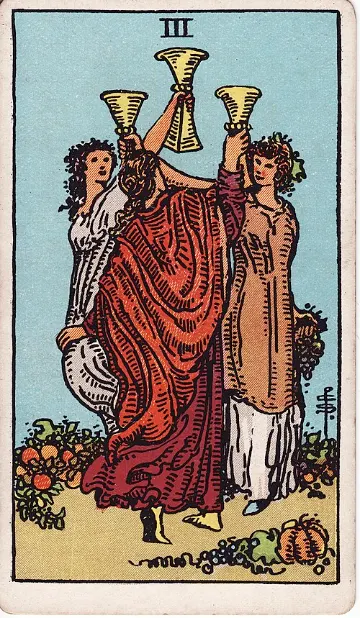
Three of Cups
Three figures raise separate cups above fruit and flowers. The Three of Cups pictures joy shared with other people: friends gathering, a team reaching a milestone, or support that makes a difficult…
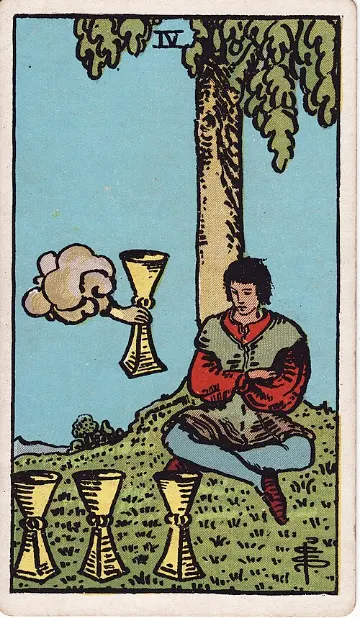
Four of Cups
A figure sits beneath a tree with arms folded, three cups on the ground, and a fourth offered by a hand from a cloud. The Four of Cups can meet a person at the point where an offer arrives but…
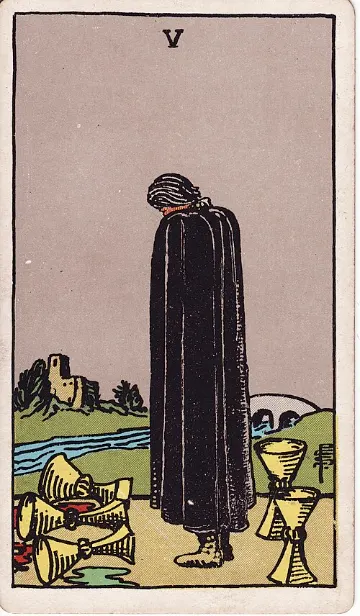
Five of Cups
A dark-cloaked figure faces three overturned cups. Two cups still stand nearby, and a bridge crosses the river toward a distant building. The Five of Cups gives loss its proper place in the scene…
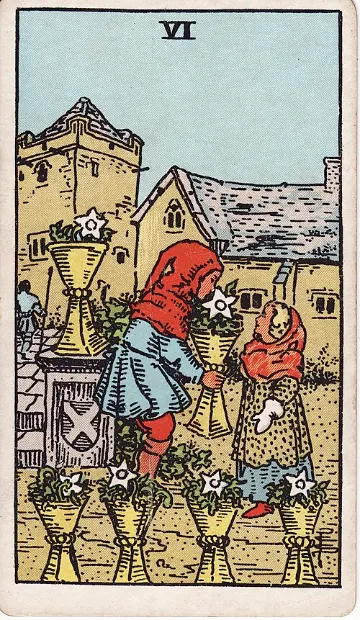
Six of Cups
In a walled garden, one child gives another a cup filled with flowers. Five more flower-filled cups stand around them, while a distant figure passes through the background. The Six of Cups can call up…
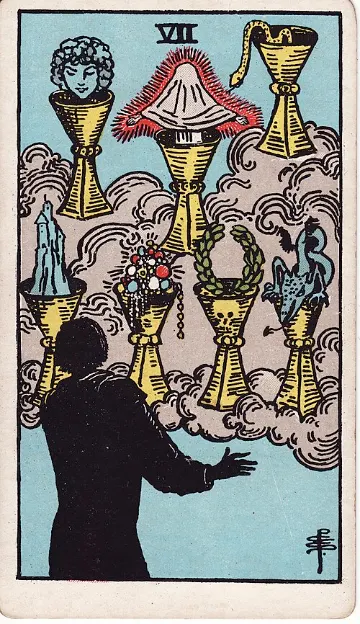
Seven of Cups
A dark figure reaches toward seven cups rising from clouds. They hold unlike visions: a head, a veiled figure, a serpent, a castle, jewels, a wreath, and a dragon. The Seven of Cups can appear when…
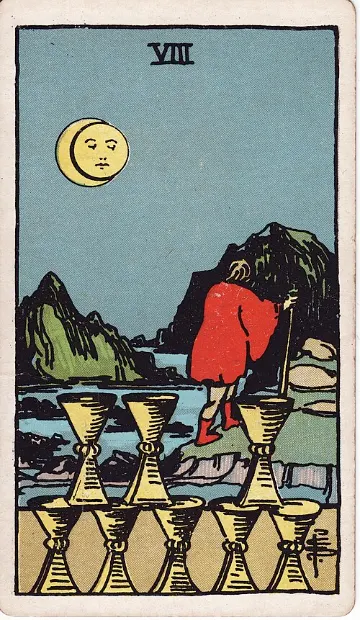
Eight of Cups
A cloaked traveler walks away from eight upright cups beside the water and heads toward rocky hills beneath the moon. Nothing in the arrangement has been smashed. The Eight of Cups often raises the…
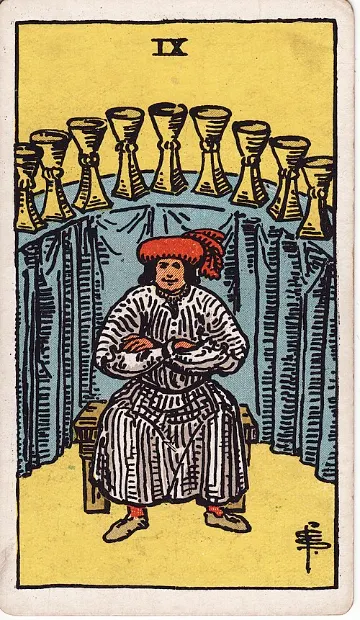
Nine of Cups
A seated figure faces us before nine cups displayed in a wide arc above a blue-draped counter. The Nine of Cups is often called the wish card, but its strongest use is to notice a result that has…
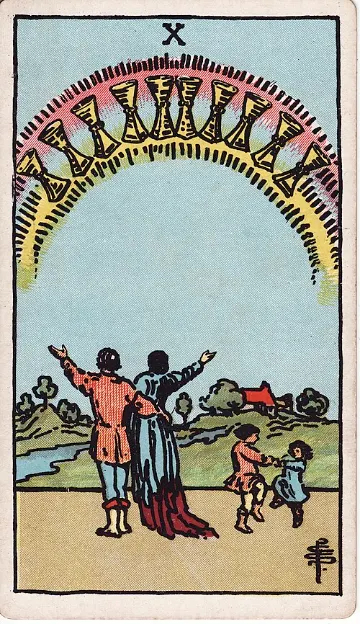
Ten of Cups
Ten cups arc across a rainbow above two adults who gesture upward and two children who dance together. Water, trees, and a distant home complete Smith's scene. The Ten of Cups can speak to happiness…
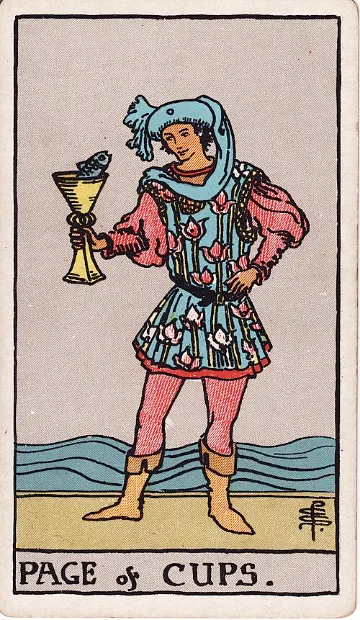
Page of Cups
A richly dressed Page lifts a cup, and a fish rises from it to meet their gaze. The Page of Cups can describe a surprising message, a new feeling, or an image that has only just begun to take form.…
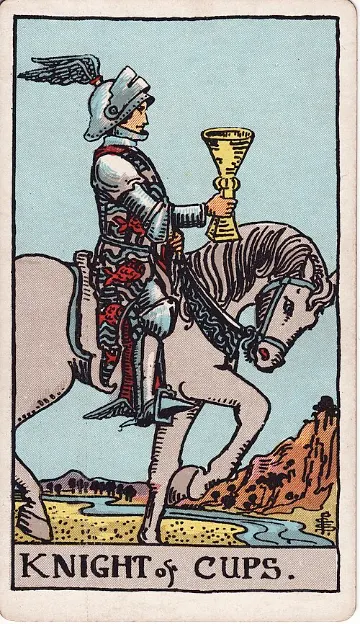
Knight of Cups
An armored rider carries a cup forward on a pale horse moving at a measured pace beside a stream. The Knight of Cups often appears when someone is approaching with an invitation, romantic gesture, or…
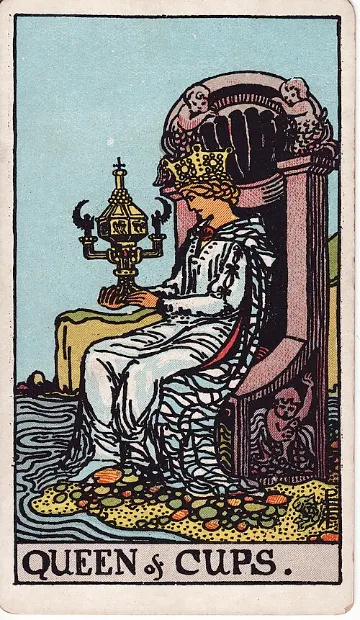
Queen of Cups
The Queen of Cups sits beside the sea and studies a covered, richly ornamented cup. She is often read as compassionate and perceptive, yet the image also asks what a thoughtful response looks like when…
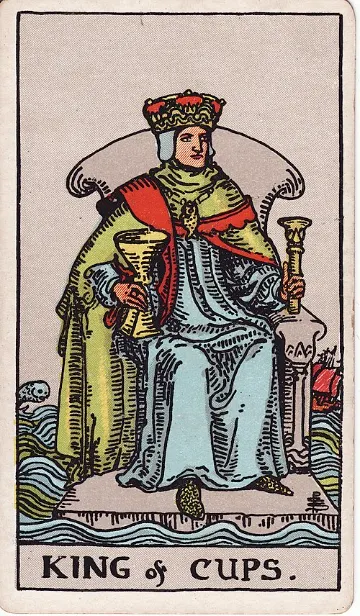
King of Cups
A crowned figure sits on a stone throne amid waves, with a cup in one hand and a short sceptre in the other. A ship and a leaping dolphin animate the water beyond. The King of Cups can bring feeling…
Swords
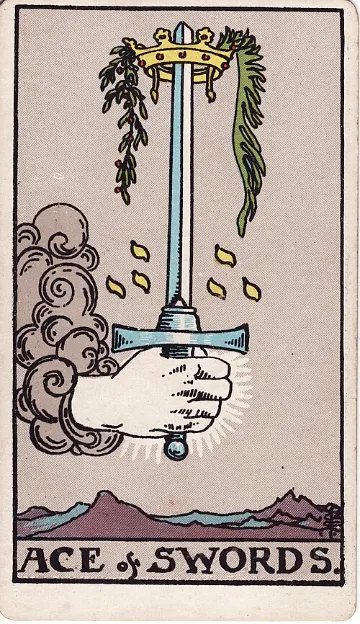
Ace of Swords
A hand emerges from a cloud and raises a sword through a crown. Greenery hangs from the crown, and a bare mountain range lies far below. The Ace of Swords can describe a striking idea, decisive words,…
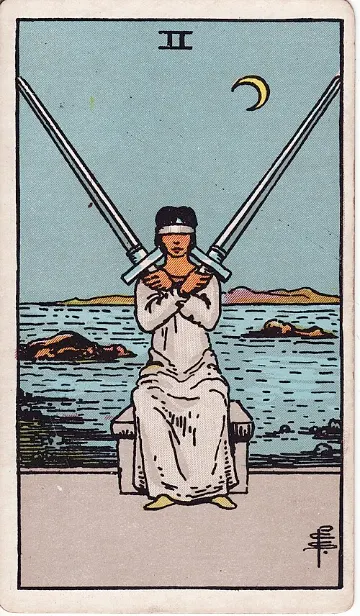
Two of Swords
A blindfolded figure sits by the sea, holding two swords crossed before the chest. A crescent moon hangs above rocky water. The Two of Swords can show a choice held still: the pause may protect a…
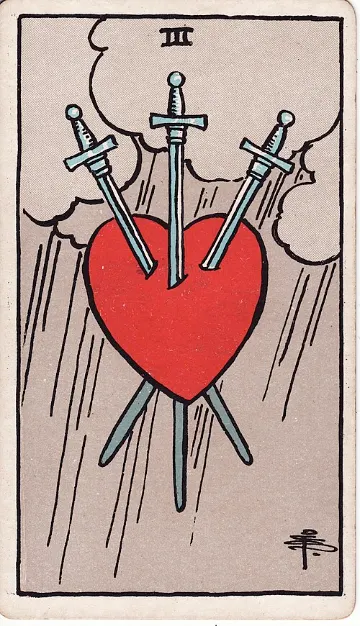
Three of Swords
Three swords pierce a bright red heart against gray cloud and rain. With no person or landscape in the frame, the Three of Swords gives hurt a stark shape without assigning a culprit or a timetable.…
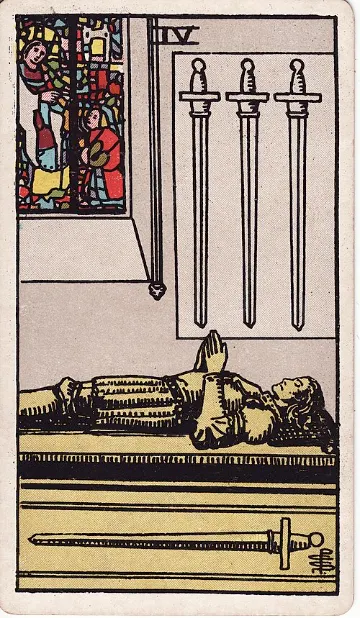
Four of Swords
A knight's tomb effigy lies with hands joined beneath a stained-glass window. Three swords hang on the wall; a fourth runs along the tomb. The Four of Swords sets the suit's conflict against a still,…
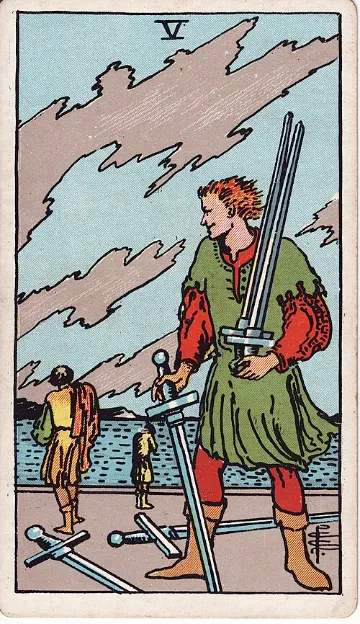
Five of Swords
A foreground figure holds three swords while two others walk away; two blades lie on the ground beneath a broken sky. The Five of Swords presents the aftermath of a conflict, with possession of the…
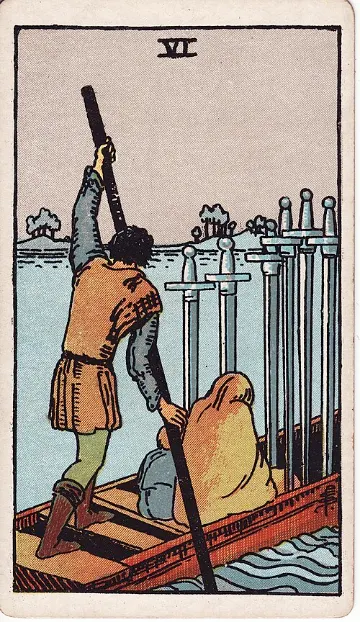
Six of Swords
A ferryman poles a small boat across the water with a cloaked adult, a child, and six swords. The Six of Swords depicts movement that includes passengers and what they carry. Waite's upright meaning is…
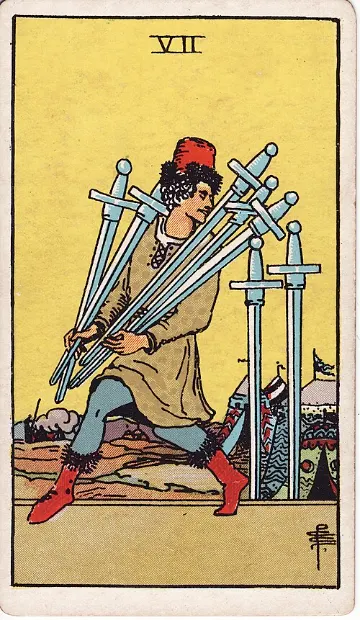
Seven of Swords
A figure carries five swords away from a camp while two remain planted in the ground. The Seven of Swords invites a question about strategy, secrecy, and what a plan leaves behind. Waite's upright…
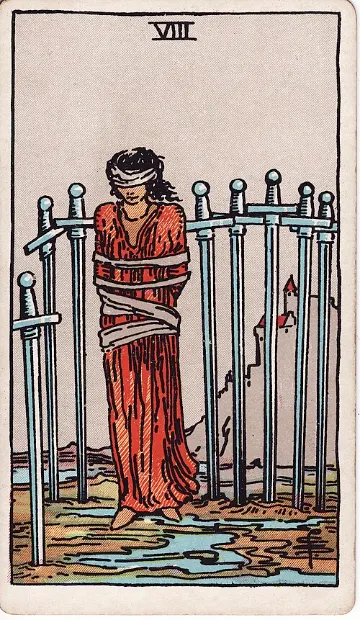
Eight of Swords
A bound, blindfolded figure stands on wet ground among eight upright swords. The blades leave visible gaps, but the figure cannot see them and remains tied. Waite calls the predicament temporary, while…
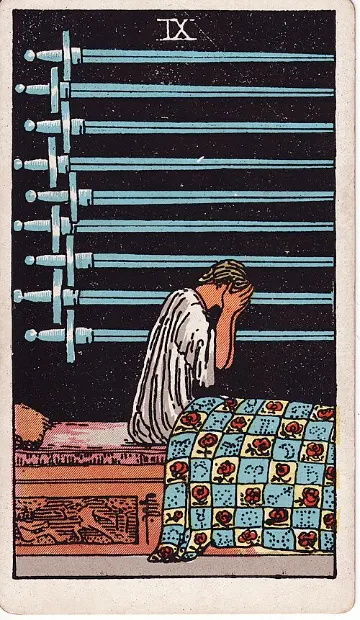
Nine of Swords
A figure sits upright in bed with their face in their hands. Nine swords cross the black background, while a patterned quilt covers the lower half of the scene. The Nine of Swords shows private…
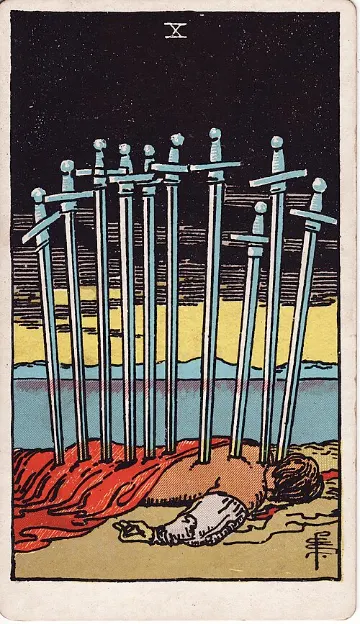
Ten of Swords
A figure lies face down beneath ten swords, red drapery over the lower body. The sky is almost black above a narrow yellow horizon and distant water. The Ten of Swords uses an extreme image for pain or…
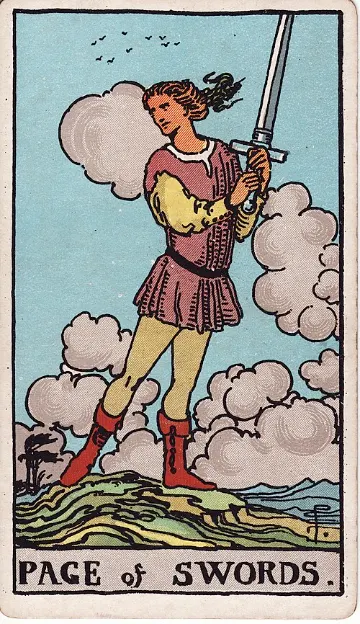
Page of Swords
A young figure strides across a windy ridge with a sword held in both hands, looking back while birds and clouds move overhead. The Page of Swords is watchful, curious, and ready to question what…
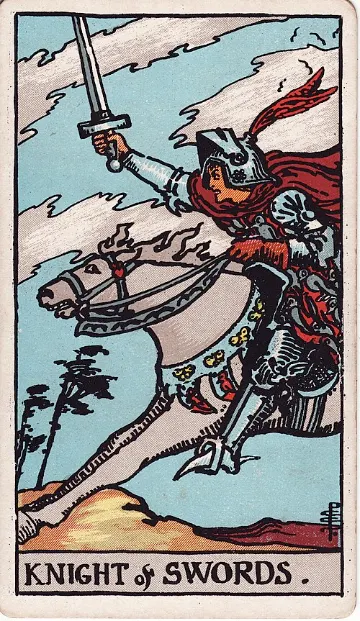
Knight of Swords
An armored rider charges on a white horse with a sword raised against wind-torn clouds. The Knight of Swords can bring skill and courage to an urgent task, or carry conflict farther than intended.…
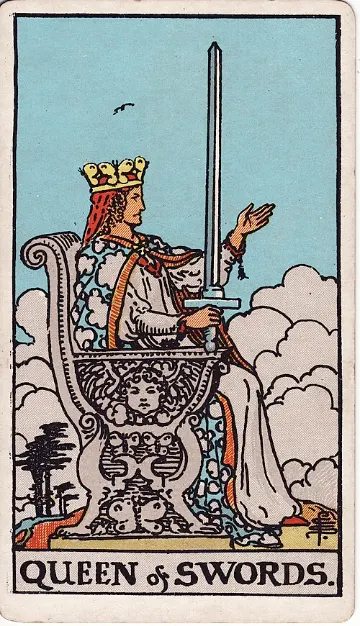
Queen of Swords
A crowned figure sits with a sword raised in her right hand and her left hand extended. Clouds frame the throne, and a winged child's face appears in its carving. The Queen of Swords can pair an…
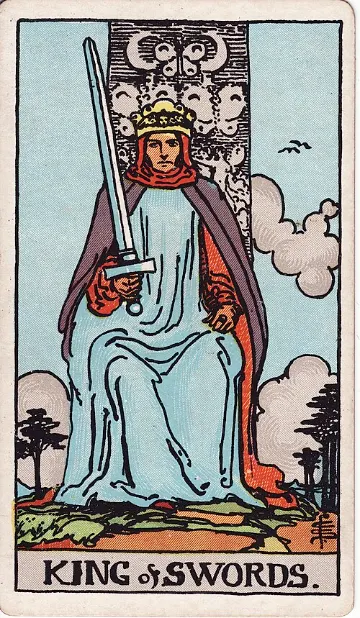
King of Swords
A crowned figure sits facing forward with an unsheathed sword held upright at a slight angle. Clouds, trees, birds, and carved motifs surround the throne. The King of Swords places judgment in an…
Pentacles
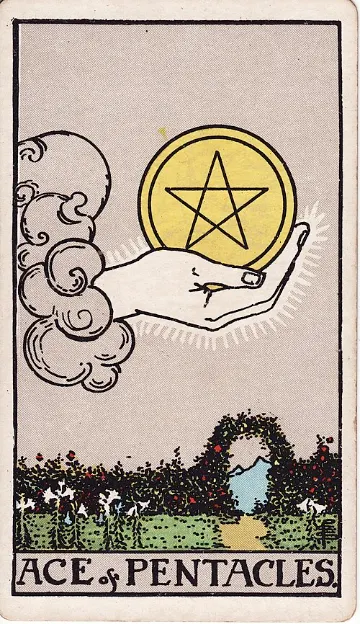
Ace of Pentacles
A hand from a cloud presents one large pentacle above a cultivated garden. A path runs through a hedge arch toward pale hills, but the card does not show anyone taking it. The Ace of Pentacles can mark…
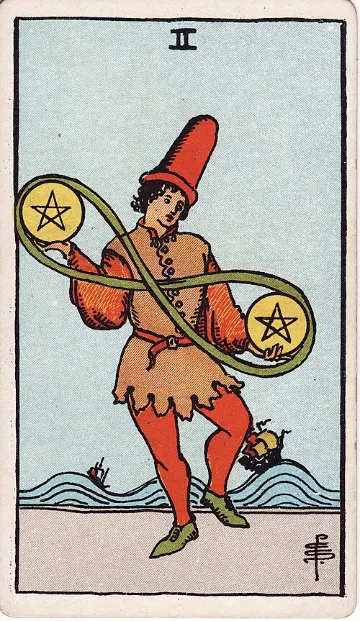
Two of Pentacles
A dancer holds a pentacle in each hand while a green, looping cord joins both in a figure eight. Two ships move through waves behind the figure. The Two of Pentacles is about keeping things in motion…
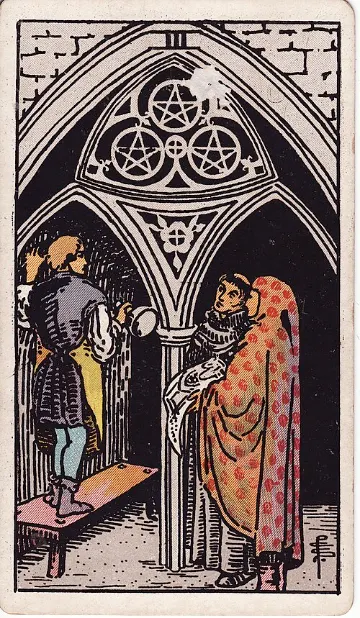
Three of Pentacles
A craftsperson stands on a bench beneath three pentacles carved into an arch, while two visitors stand nearby with a plan. The Three of Pentacles gives skilled work an audience and a setting: the…
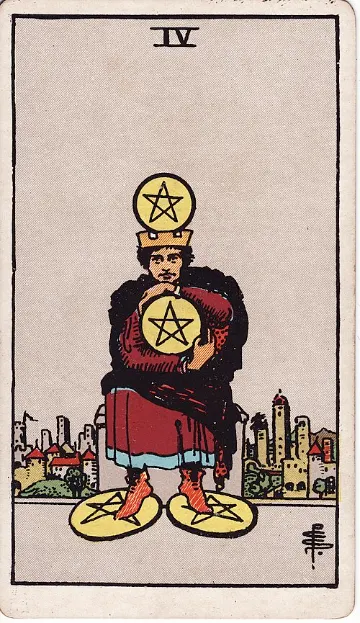
Four of Pentacles
A crowned figure sits before a city with one pentacle held to the chest, one above the head, and two beneath the feet. The Four of Pentacles asks what it takes to keep a resource secure and what…
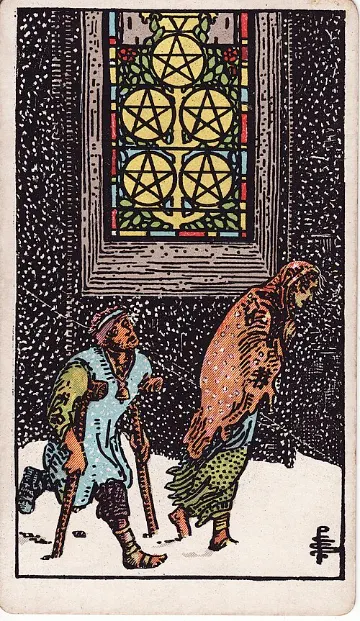
Five of Pentacles
Two people cross snow outside a lit stained-glass window set with five pentacles. One uses crutches; neither holds a coin. The Five of Pentacles can describe material pressure and the loneliness that…
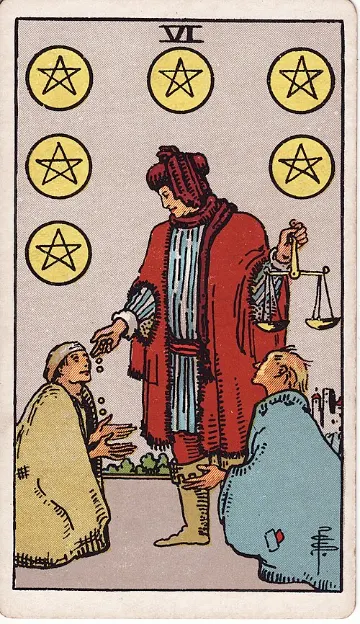
Six of Pentacles
A standing figure holds scales while giving coins to one of two kneeling people. The Six of Pentacles pictures help in motion, with the giver deciding how much and to whom. Waite associated it with…
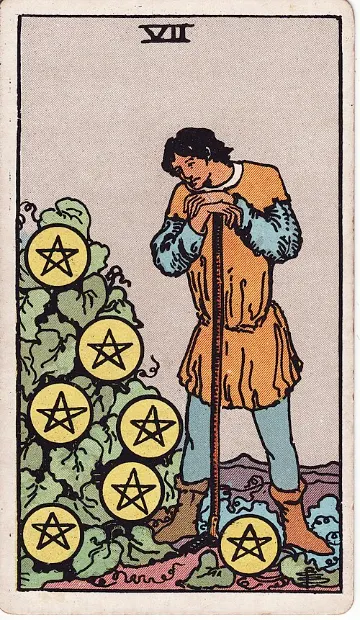
Seven of Pentacles
A worker leans on a staff and looks at six pentacles among the leaves, with a seventh low near the feet. The Seven of Pentacles can mark a pause to judge what sustained effort has produced. That…
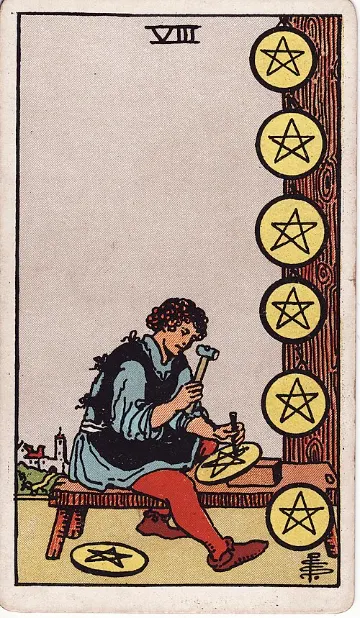
Eight of Pentacles
A seated craftsperson works on one pentacle while six hang in a column and another lies near the ground. The Eight of Pentacles draws attention to skill made through repeated work, whether in study,…
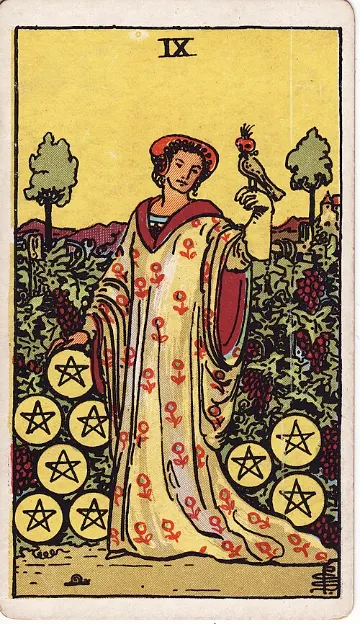
Nine of Pentacles
A richly dressed figure stands among grapevines and nine pentacles, holding a bird on a gloved wrist. A manorial building sits beyond the garden. The Nine of Pentacles can mark comfort shaped by…
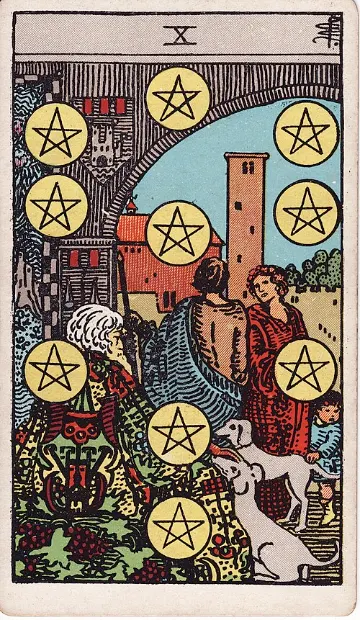
Ten of Pentacles
An elder sits with two dogs near an arch while a couple and child occupy the space beyond; ten pentacles overlay the scene. The Ten of Pentacles broadens the suit from one person's comfort to the…
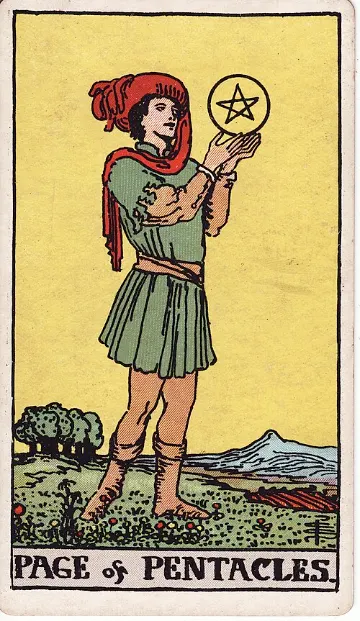
Page of Pentacles
A young figure stands among flowers, absorbed in a pentacle that seems to hover above raised hands. The Page of Pentacles turns material life into something to study before trying to possess or use it.…
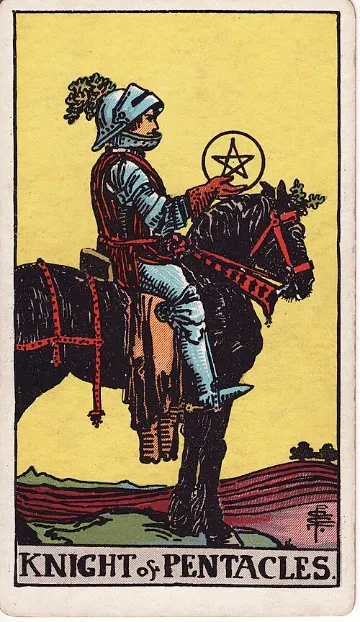
Knight of Pentacles
An armored rider presents a pentacle from a still dark horse above worked fields. The Knight of Pentacles carries a resource with patience and responsibility rather than speed. Waite's upright meanings…
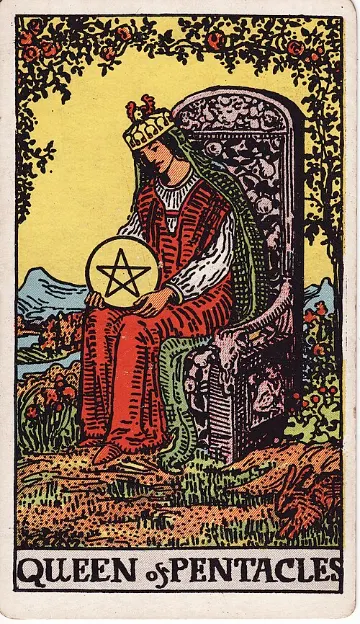
Queen of Pentacles
The Queen of Pentacles sits on a carved throne amid flowers, looking down at a pentacle held in both hands. A rabbit appears near the lower edge of the garden. The card links material comfort with…
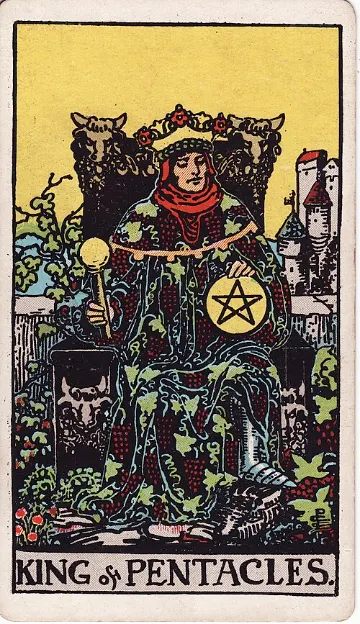
King of Pentacles
A crowned ruler sits on a throne carved with bull heads, wearing a vine-patterned robe. A scepter is held upright while a pentacle rests against the lap; buildings rise nearby. The King of Pentacles…
How to read
Major and Minor Arcana
The Major Arcana is a sequence of twenty-two named cards, numbered from The Fool at zero through The World at twenty-one. Readers often use them for broad themes or turning points. The Minor Arcana contains four fourteen-card suits: Wands, Cups, Swords, and Pentacles. Their images can bring everyday actions, feelings, decisions, and resources into a reading.
How to use these meanings
Describe the figures and setting you can actually see before deciding what the card means for your question. Compare that observation with the traditional themes and with neighboring cards. Upright and reversed positions can suggest different emphases; neither fixes an outcome.