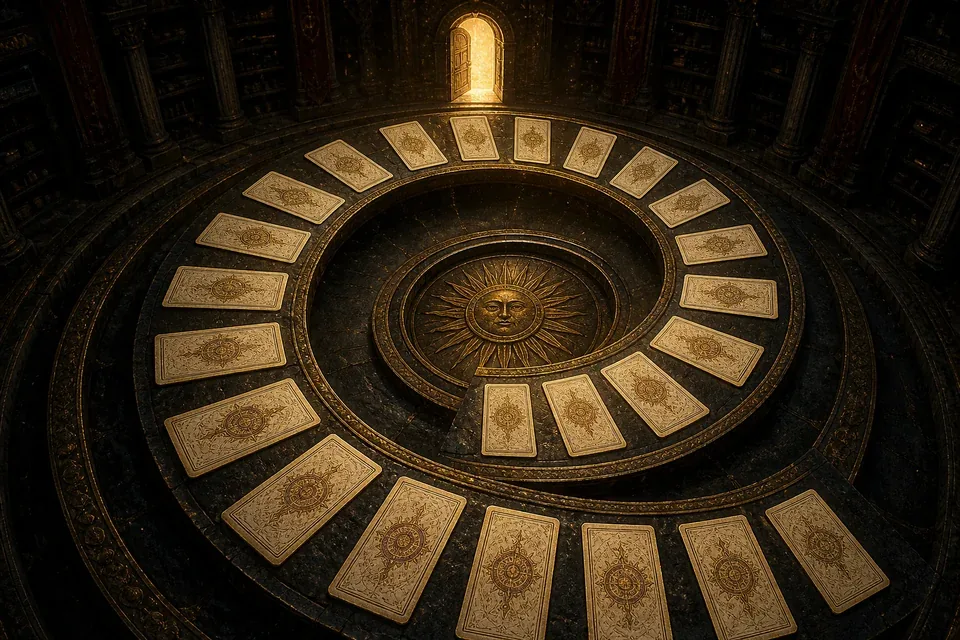
A spread is simply a layout with a question for each position. It helps prevent a reader from treating every card as a vague answer to everything. Begin with a small format, explain the positions before drawing, and check every interpretation against the actual situation.
One card: a focused prompt
A single card has no neighboring positions to qualify it, so keep the question narrow and open. “What should I examine before this meeting?” invites observation and preparation. “Will everything turn out perfectly?” asks the card to guarantee an outcome it cannot establish. After the draw, describe a feature of the image before consulting a meaning. Write one interpretation that fits the question and one that might fit less well. The contrast helps you avoid forcing an answer.
Use the free one-card reading when you want a brief exercise. The result links to a full card article, including questions that can help translate a broad theme into something concrete.
Three cards: past, present, future
This familiar layout makes a small story. The past position can name a remembered pattern or an earlier influence. The present position asks what is observable now. The future position asks what might follow if present conditions continue, or which alternative you might explore. It should never be read as proof that a particular event must happen. The three cards may also disagree; that tension can be more useful than a tidy narrative.
Choose a question that you can revisit after the draw. If you are considering a new project, for example, the past card might raise a lesson from an earlier attempt, the present card might point to a current resource, and the future card might invite one trial step. These positions do not replace ordinary research, direct conversation, or professional advice when the stakes are high. Try the free past-present-future reading and record the images that made you think, not just the card names.
Other three-card layouts
You can assign the same three-card format different roles before shuffling: “situation, action, support” or “known, uncertain, next question.” Do not change the role after a card appears just to make it fit. For a choice between two options, ask what information is missing rather than demanding a verdict. The spread is most useful when its positions make your thinking clearer.
Upright and reversed meanings are traditions of emphasis, not separate facts about the world. The free readings on this site display cards upright and leave reversed-context discussion in the individual guides. That keeps the method visible. The 78-card library includes every Major and Minor Arcana card, while the beginner guide walks through images, suits, and neighboring cards.
When a larger spread helps
The ten-card Celtic Cross reading can hold a more layered question. Six positions form a cross around the present matter; four form a staff for personal stance, surroundings, hopes and concerns, and a working synthesis. It offers more places for comparison but also more chances to force a story, so begin with one clear question and keep notes on what each image actually shows.
The Celtic Cross position guide traces the printed layout in A. E. Waite’s Pictorial Key, explains this site’s adaptation, and gives a practical prompt for each position. You can use the guide even without drawing online.
Keep a simple reading record
Write the date, your exact question, the positions, the cards, and the image details you noticed. Later, record what happened and what you learned. This can reveal whether a symbol helped you ask a better question or whether you imposed a meaning that did not fit. The reading itself is a reflective practice; it is not evidence that the cards caused, knew, or guaranteed an event.