
Crowley’s ritual texts did not arrive as one fixed handbook. They appeared in a Victorian papyrus translation, a 1904 Goetia edition, successive numbers of The Equinox, and the deliberately strange chapters of The Book of Lies. Later collections moved them again. These guides follow each document through those changes while keeping historical description separate from performance.
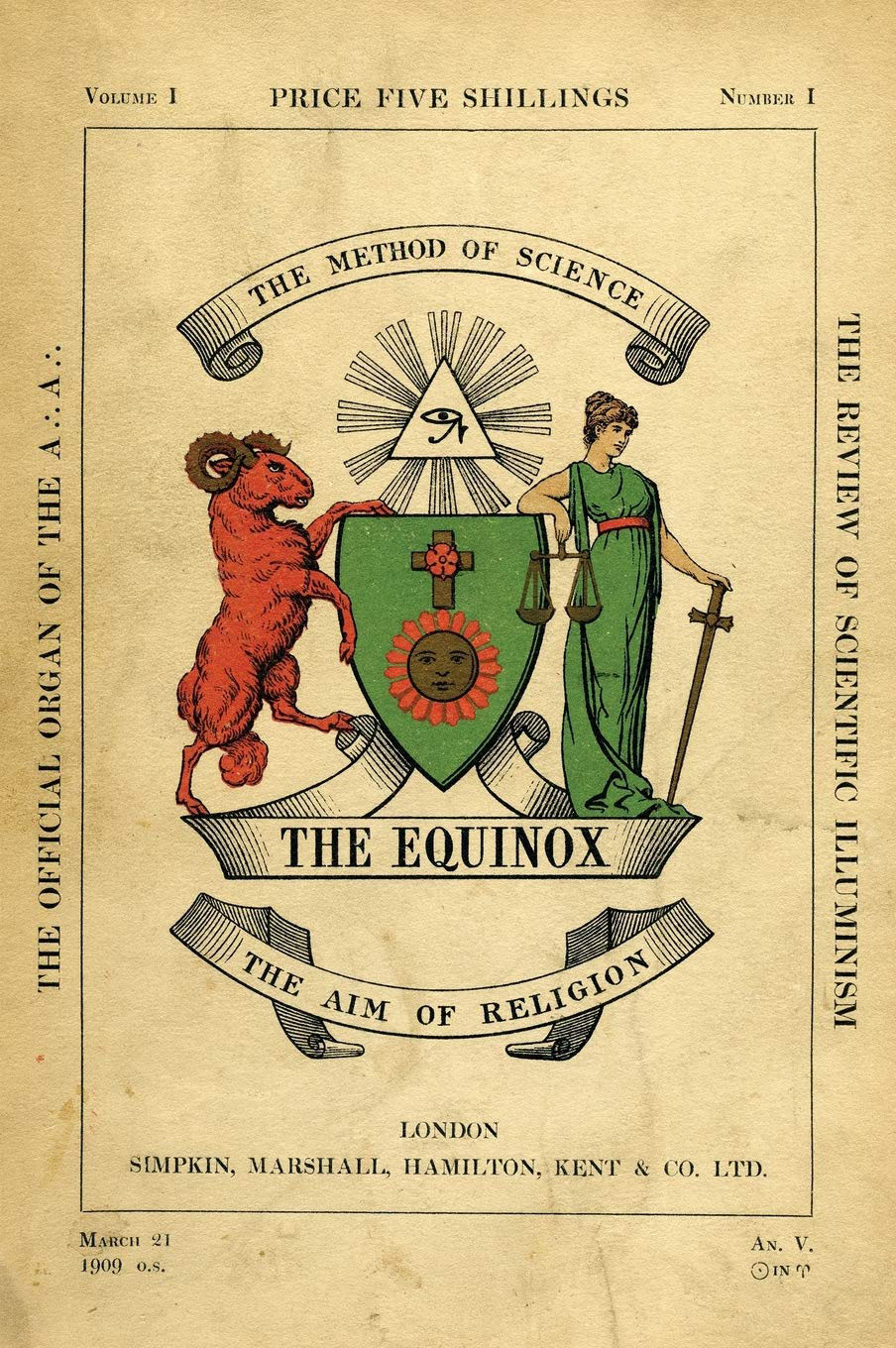
Browse the ritual histories
- Liber O and the pentagram ritualThe Equinox I, no. 2 (1909), pp. 11–30Where the familiar lesser pentagram ritual appears in Crowley’s 1909 Liber O, and how the printed lesson fits its wider training program.
- Bornless / Preliminary InvocationGoodwin translation (1852); Preliminary Invocation (1904)How a Graeco-Egyptian papyrus passage entered the 1904 Goetia as a Preliminary Invocation and later acquired a separate occult afterlife.
- The Star RubyThe Book of Lies (1913), chapter 25; later in MagickThe Star Ruby’s first appearance as chapter 25 of The Book of Lies, its pentagram ancestry, and its later revised form.
- The Mass of the PhoenixThe Book of Lies (1913), chapter 44; later in MagickA source-led history of chapter 44 of The Book of Lies, its solar Eucharistic symbolism, later republication, and hazardous element.
- Liber ReshThe Equinox I, no. 6 (1911), pp. 29–32How Liber Resh organizes dawn, noon, sunset, and midnight in a 1911 Equinox instruction, and how later curricula described its purpose.
A publication timeline
- 1852: Goodwin publishes a Graeco-Egyptian papyrus translation that later feeds the Bornless tradition.
- 1904: the Preliminary Invocation appears in the front matter of the Mathers–Crowley Goetia.
- 1909: The Equinox I, no. 2 prints Liber O with its pentagram material.
- 1911: The Equinox I, no. 6 prints Liber Resh as a four-part solar observance.
- 1913: The Book of Lies prints the Star Ruby at chapter 25 and Mass of the Phoenix at chapter 44.
- 1929: Magick in Theory and Practice gathers revised or recontextualized ritual texts into a larger manual.
Why editions change the meaning
A text embedded in a periodical lesson does different work from the same text extracted into an appendix. Titles and numbers can also conceal change: Liber XXV points back to chapter 25, but the later Star Ruby does not reproduce every 1913 detail. The Bornless material changes even more dramatically as a papyrus passage becomes Goetia front matter and then Liber Samekh.
For the wider bibliography, visit Crowley’s works and editions. The 1904 Goetia guide separates editorial additions from the older grimoire tradition, while the Greek Magical Papyri reading room restores the ancient setting behind the later Bornless name.