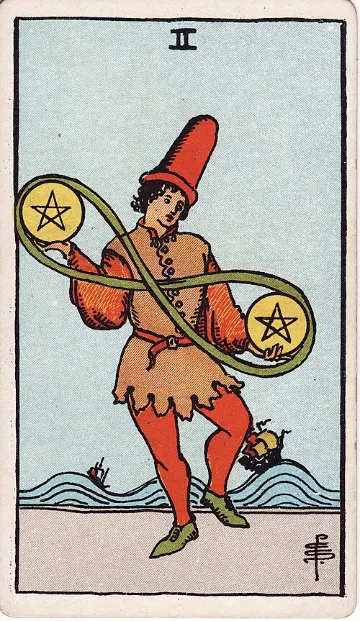
A dancer holds a pentacle in each hand while a green, looping cord joins both in a figure eight. Two ships move through waves behind the figure. The Two of Pentacles is about keeping things in motion when time, money, or attention must serve competing demands. It can show real skill without proving the load is sustainable. Waite's older meanings mix recreation with obstacles and written news; modern readings often emphasize practical balance. Upright or reversed, the card asks what can be adjusted, what cannot, and whether a cheerful performance is hiding strain.
Look at the image
Pamela Colman Smith puts a pentacle in each of the dancer's hands. A green cord surrounds them in a sideways eight, so the two objects remain linked even as the hands move apart. Two ships ride the waves in the distance. The figure's pointed hat and lifted foot make the action look playful, but the picture captures a moment of movement, not a settled arrangement. The ships have their own conditions to navigate; nothing in the scene promises calm water. Ask what connects the two demands in your question. Money, time, and attention can pass between them, but a loop does not create an endless supply of any of these.
Upright: keep the rhythm workable
A contemporary upright reading often concerns balancing bills, schedules, care, or overlapping projects. Skill lies in changing the order or pace without losing sight of what matters. Waite's account is less tidy: alongside gaiety and recreation, he lists written news, obstacles, agitation, and trouble. The card can therefore describe a lively situation with inconvenient information arriving in the middle of it. Identify the fixed commitment first, then decide what can move. If an expense is due on Friday and a project can wait until Monday, a clear plan beats pretending both require the same urgency. The dancer looks nimble, but the card never tells us how long this pace can continue.
Reversed: when the smile is work
Waite's reversed meanings include forced gaiety and simulated enjoyment, along with writing and letters of exchange. That is more specific than the modern shorthand of simply “dropping the balls.” A reversed card may fit a person who keeps an upbeat face while a changing workload or payment schedule becomes difficult to manage. It may also mark the choice to stop performing ease and renegotiate a demand. Check the facts before calling anyone careless: a delayed invoice, extra care duty, or moving deadline could have changed the whole balance. The useful question is which commitment needs a new term, not whether the dancer has failed a test of cheerfulness.
Two of Pentacles in love and relationships
In a relationship reading, the two pentacles need not represent two romantic partners. They may be work and intimacy, two households, or the shared tasks that keep a home running. If time together keeps moving to the end of the week, look at the calendar and ask whose commitments can shift. An upright card can suggest a flexible arrangement that both people understand. Reversed, one person may be saying everything is fine while carrying too much of the practical work. Name the recurring task, its frequency, and who will handle it. A fairer rhythm comes from an explicit agreement, not from expecting one person to juggle more gracefully.
Two of Pentacles as feelings
When the question is about your feelings, this card may reflect interest mixed with limited attention: you want to stay connected while other demands claim the same hours. That is a different problem from a lack of affection. If you ask what another person feels, the dancer cannot reveal a private answer. Look at whether they make time, communicate changes, and follow through on plans. Reversed, a cheerful message may coexist with strain, but it is not proof of hidden feelings or dishonesty. A direct question about availability tells you more than trying to decide from a card whether someone can sustain the connection.
Two of Pentacles in career and money
At work, the card can describe two deadlines, variable shifts, or the transition between a paid role and a new venture. List the hours each obligation actually needs, including travel, preparation, and recovery. If the total will not fit, renegotiate scope before accepting another task. With money, compare payment dates and essential costs rather than treating every expense as equally flexible. Waite's references to written news and letters of exchange make it especially apt to check the message, invoice, or agreement that changes the plan. Reversed may signal cash-flow strain or a schedule that only works on paper. A budget and a conversation can reveal which adjustment is possible.
Two of Pentacles versus Four of Pentacles
Both cards can appear when money or capacity feels tight, but their pictures pose different questions. In the Two, a dancer moves two linked pentacles through an ongoing routine; the issue is how to handle changing demands. In the Four, a seated figure holds coins against the body and under the feet; the issue is how firmly to keep a resource. If both appear, you may need a protected reserve and a flexible schedule at once. Decide what cannot be spent, then see which remaining commitment can shift. The Two's motion is not automatically better than the Four's stillness. The right choice depends on what the resource is for.
Is the Two of Pentacles a yes or no card?
The Two rarely gives a useful answer to a question as broad as “Can I do it all?” For a defined extra commitment, upright can lean yes if the time and money fit after existing obligations are counted. It may lean no when the plan depends on every week going perfectly. Reversed asks for a change in terms before agreement: fewer hours, a later deadline, a smaller expense, or help from someone who has agreed to provide it. Ask “Can I take this second client for six weeks at the proposed hours?” and check the calendar. The card favors a workable arrangement over a confident performance of capacity.
A reading example: two deadlines in one week
Imagine a designer has promised a client a draft on Thursday, then a manager asks for a new presentation on the same day. The Two of Pentacles appears. The designer estimates each task honestly, discovers that both require a full day of focused work, and checks which deadline has an external dependency. The client needs the draft before a Friday meeting; the internal presentation can move to Monday. The designer tells the manager promptly, agrees on the later date, and reserves Thursday for the draft. If neither deadline could move, the next step would be to ask for support or reduce scope. The card's loop becomes a visible schedule rather than a claim that two full days fit inside one.
Questions to ask
- Which two demands draw on the same time or money?
- What can move, and who needs to know?
- Does this arrangement work beyond the next few days?