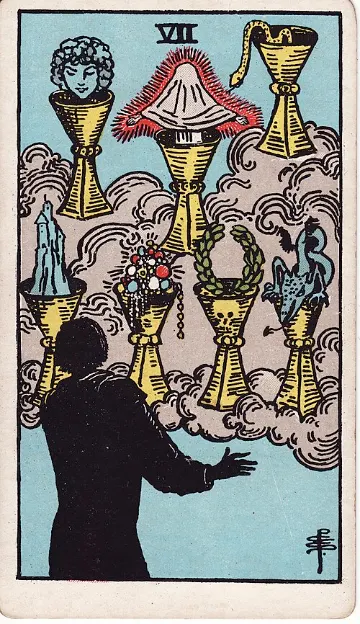
A dark figure reaches toward seven cups rising from clouds. They hold unlike visions: a head, a veiled figure, a serpent, a castle, jewels, a wreath, and a dragon. The Seven of Cups can appear when imagination offers more paths than a person can act on at once. Upright, it asks which image answers a real desire and which is still only a picture. Reversed, desire may take the shape of a specific project, though focus alone does not make the plan sound. In love or work, the card does not say that all options are false. It asks what can be learned about the one you most want to choose.
Look at the image
Pamela Colman Smith places a dark figure before seven cups suspended in clouds. Their contents resist a single explanation: a head, a veiled form, a serpent, a castle, jewels, a wreath, and a dragon. The figure reaches toward the display but has not taken a cup. A. E. Waite called them strange chalices of vision and associated the card with reflection and imagination, without suggesting that the pictured attainments would last. The clouds remove ordinary details such as cost, time, and responsibility. That absence matters more than assigning each vessel a fixed reward or threat. We can see what draws attention; we cannot yet see what exists beyond the image.
Upright: possibility needs a test
Upright, the Seven of Cups can mark a productive time to imagine more than one future. Creative work often begins with this kind of abundance. The problem starts when a vivid picture is treated as a finished plan or when every possible choice demands an answer today. Name what attracts you to each cup: security, recognition, freedom, relief, or curiosity. Then identify one fact that would make the preferred path real. Is the opportunity available, and what would it require? Some visions will survive that check and deserve effort. Others may remain useful as art, aspiration, or warning without becoming an immediate commitment.
Reversed: resolve without rushing
Waite's older reversed list turns from images toward desire, will, determination, and a project. That can fit the moment a person chooses one idea and begins to work on it. It can also fit determination aimed at an option that has not been tested. Reversed does not guarantee that the fog has cleared. Ask whether the choice came from evidence, a deadline, or exhaustion with comparing possibilities. A small first step can reveal more than another week of imagining, but a large commitment deserves written terms. The card's useful shift is from admiring a cup to discovering what choosing it would actually involve.
Seven of Cups in love and relationships
In love, the seven visions can resemble imagined futures with someone: a romance, a shared home, an apology, or a complete transformation of the relationship. A promising date may deserve interest without having to carry all of those stories at once. For partners, the card can expose expectations that have never been spoken aloud. Ask what each person wants now, not what the other person is supposed to become. Reversed, one conversation may narrow the gap between hope and reality, or reveal that the desired version of the bond is not available. The image does not prove that anyone is dating multiple people or hiding a choice.
Seven of Cups as feelings
If you are asking about your own feelings, the card may name attraction mixed with curiosity, fear, or the pleasure of possibility itself. Which cup represents the person in front of you, and which represents a future you have built around them? That distinction can keep a new connection from bearing promises it has not made. If you ask how someone else feels, the Seven cannot reveal their private thoughts. Their actions and words matter more than the number of cups in the cloud. Reversed might show a wish becoming a decision, but it can also show someone choosing a different direction. Let a direct answer replace speculation where possible.
Seven of Cups in career and money
A career choice may offer several attractive versions of success: a high salary, independence, a respected title, creative work, or a calmer schedule. The Seven asks which of those you can actually obtain in the opportunities before you. Compare written pay, time, support, and responsibilities rather than the atmosphere of a pitch. For a business idea, try a small paid project before treating the imagined audience as a market. Reversed, a chosen direction can free energy, but do not confuse a decisive mood with a workable budget. One cup can be worth pursuing even if the other six were only sketches.
Seven of Cups versus Four of Cups
Both cards can interrupt a quick yes, but their scenes are different. In the Four of Cups, three vessels stand on the ground while a fourth is offered to a seated person who appears weary or absorbed. The question concerns attention to one offer. In the Seven, all the cups hover in clouds before a reaching figure; the question concerns desire among many visions and how to test them. If both appear together, a person may be tired of current choices and tempted by every alternative at once. First name what is unsatisfying, then examine the most promising option on its own terms.
Is the Seven of Cups a yes or no card?
The Seven is a poor basis for an unconditional yes or no when the option has not been defined. If the question is whether to explore a low-cost idea, the answer may lean yes: arrange a conversation, request details, or try a small version. If it is whether to sign a contract on the strength of a compelling pitch, wait for the terms. Reversed may favor a decision after the needed facts arrive, but determination does not turn a weak offer into a good one. Ask which cup you mean, what it costs, and what evidence would change your mind. A precise question can turn “maybe” into an action.
A reading example: two career paths
Imagine a designer considering a salaried studio role and a freelance business. The studio offers steady pay but less control over projects. Freelance work promises independence, yet the imagined client list is still mostly names in a notebook. You draw the Seven of Cups upright. Instead of deciding from the most exciting picture, you request the studio's written terms and take one paid freelance commission. The trial reveals how much time marketing and invoicing require, while the offer clarifies the actual schedule. A reversed Seven a month later might fit a deliberate choice because the options now have tested costs. The first card made room to dream; the second asks what you learned.
Questions to ask
- Which vision answers a real need, and which belongs to a story I have imagined?
- What would I need to learn before choosing this option?
- What small test could turn the most promising cup into an actual decision?