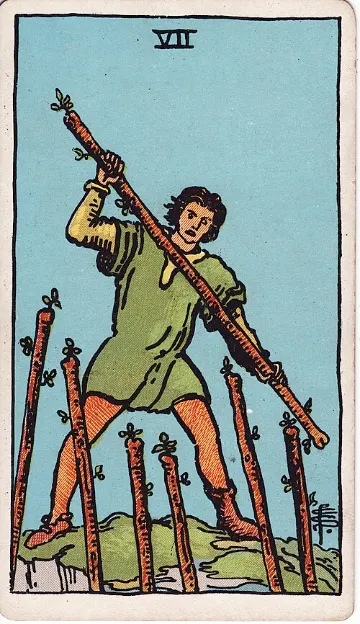
A figure on an uneven rise holds one staff diagonally against six staffs coming up from below. The mismatched shoes make the stance look hurried despite the advantage of higher ground. Waite linked the upright Seven of Wands with courage, argument, negotiation, and a possible victory; his reversal emphasizes anxiety, embarrassment, and indecision. The card can describe defending a boundary or a proposal, but the picture does not reveal who holds the other staffs or why. In love or work, the useful question is which part of the position has evidence and support, and which challenge deserves a real answer.
Look at the image
Pamela Colman Smith places one figure on an uneven mound, bracing a staff diagonally across six that rise from below. The person wears visibly different shoes, as though the confrontation arrived before there was time to prepare a matching pair. The higher ground provides an advantage but not a comfortable stance. We cannot see who holds the lower staffs or whether their questions are coordinated. The image therefore centers the work of holding a position, not a settled verdict about enemies. Look at the space the figure can defend from here and at the footing required to keep doing it.
Upright: defend the part that matters
Waite gives the upright Seven valor and an advantage of position, with possible success because the opponents may be unable to reach the figure. He also connects it to intellectual debate, wordy strife, trade, and business negotiation. An upright reading can fit defending a considered plan, answering criticism, or holding a boundary when several demands arrive at once. State the point you are protecting and the evidence for it. Some objections may reveal a real flaw; others may simply ask you to repeat a decision already made. The figure's high ground is useful when it supports a clear case, not when it becomes a reason to reject every question.
Reversed: anxiety before the answer
Waite's reversed meanings include perplexity, embarrassment, and anxiety, with a warning against indecision. They do not simply show surrender. Modern readers may also see exhaustion from defending too much alone or a boundary that has hardened beyond its purpose. Identify the immediate source of pressure. Are you unsure which objection matters, lacking authority to decide, or carrying a position without support? A short pause to sort the questions can be more decisive than answering all six at once. Reversed, the next step may be to seek a colleague, revise one weak part, or set a time to decide rather than keep fighting from uncertain footing.
Seven of Wands in love and relationships
In love, the Seven can fit a boundary about time, privacy, family involvement, or how a shared decision gets made. Upright, a person can hold a real need while still hearing the other person's concern. Reversed, repeated defense may leave little room for closeness, or anxiety may make a reasonable question sound like an attack. The six unseen staffs are not evidence of outside rivals. Name the specific issue and what each person is asking for. If a boundary affects both people, explain its purpose and when it could be reviewed. A relationship becomes safer when firmness and fair listening can exist in the same conversation.
Seven of Wands as feelings
When asking about your own feelings, the Seven may describe being protective, challenged, or tired of explaining an important choice. Those feelings can coexist with care for the people asking questions. If you ask what another person feels, the figure's raised wand cannot reveal their private attitude toward you. Notice whether they state a concern clearly, listen to an answer, and respect a limit once it is agreed. Reversed, a guarded reply could come from anxiety or from a disagreement still unresolved; a direct conversation is needed to tell. Ask what each person needs to feel heard before deciding the encounter must be a fight.
Seven of Wands in career and money
At work, the Seven may appear when a proposal meets several objections, a role must be defended, or a vendor negotiates terms from a position they have earned. Waite's business emphasis makes the details matter: record the price, scope, deadline, and person with authority to approve a change. A strong argument is easier to hold when it points to results and a clear requirement. If several stakeholders object, group their concerns rather than answering each separately. Reversed, anxiety or uncertain authority can prolong a decision and raise costs. Get support for the part of the position that is essential, and revise the part the evidence does not sustain.
Six versus Seven of Wands
The Six of Wands shows a laurel-crowned rider moving through public recognition. The Seven places one figure above six rising staffs, defending a position after attention has reached them. Praise can open an opportunity, and that opportunity may bring scrutiny. If both cards appear, distinguish the confirmed achievement from the claims that still need defense. A team that wins an award, for example, may be asked to explain its method before receiving a larger contract. The wreath cannot answer those questions by itself. Keep the result visible, then prepare the evidence and support that allow the position to hold.
Is the Seven of Wands a yes or no card?
For a position with a clear purpose, sound evidence, and enough support to hold it, the upright Seven can lean yes: speak up, submit the response, or keep the boundary. It is not a promise that every objection will disappear. Reversed suggests pausing if anxiety is making the decision for you or if the cost of defending the position has overtaken its value. Ask “Should I keep this requirement in the proposal despite the stated objections?” and review the evidence and decision rights. “Will everyone stop challenging me?” asks for control over people the picture does not even show.
A reading example: defending accessibility
A team lead proposes an accessible entrance for a renovated community room and draws the Seven of Wands after several stakeholders object. One worries about cost, another about appearance, and others repeat a general preference for the old layout. The lead separates the questions: the access requirement is grounded in the project's agreed brief, while the finish material and planting around the entrance can change. They obtain an updated cost estimate, invite an accessibility reviewer to the meeting, and revise the visual details without removing the entrance. The position holds because its essential purpose is clear and supported, not because the lead answers every raised staff alone.
Questions to ask
- Which part of this position must hold?
- Which objection points to a real change worth making?
- What support would make the defense sustainable?