The Dictionnaire Infernal is Jacques-Albin-Simon Collin de Plancy’s alphabetically arranged encyclopedia of demons, magic, divination, apparitions, folklore, trials, and occult books. First issued in Paris in 1818, it grew through several revisions. The famous illustrated sixth edition appeared in 1863 with a greatly expanded text and hundreds of engravings.
1818First Paris edition
1844Expanded 582-page edition
1863Sixth edition with 550 engravings
Explore the collection
Illustrated demon profiles
These twenty-four profiles read the 1863 French entries and Louis Le Breton portraits beside the corresponding Ars Goetia descriptions and seals. Each page keeps spelling, rank, legion totals, and visual form tied to its own book, then works through one difference in detail.
A changing nineteenth-century reference book
The title is often encountered online as a gallery of demon portraits, but the book is much larger than that gallery. Its entries move among learned demonology, popular stories, accounts of marvels, biographies, religious judgment, and descriptions of divinatory practices. Alphabetical order places different source traditions beside one another without turning them into a single system.
Edition matters because the project changed over forty-five years. The 1818 first edition established the dictionary format. The Library of Congress records an 1844 edition of 582 pages. The Bibliothèque nationale de France describes the 1863 sixth edition as VIII plus 723 pages, while its title advertises 800 new articles and 550 engravings. That late visual program is the source of the portraits reproduced in this reading room.
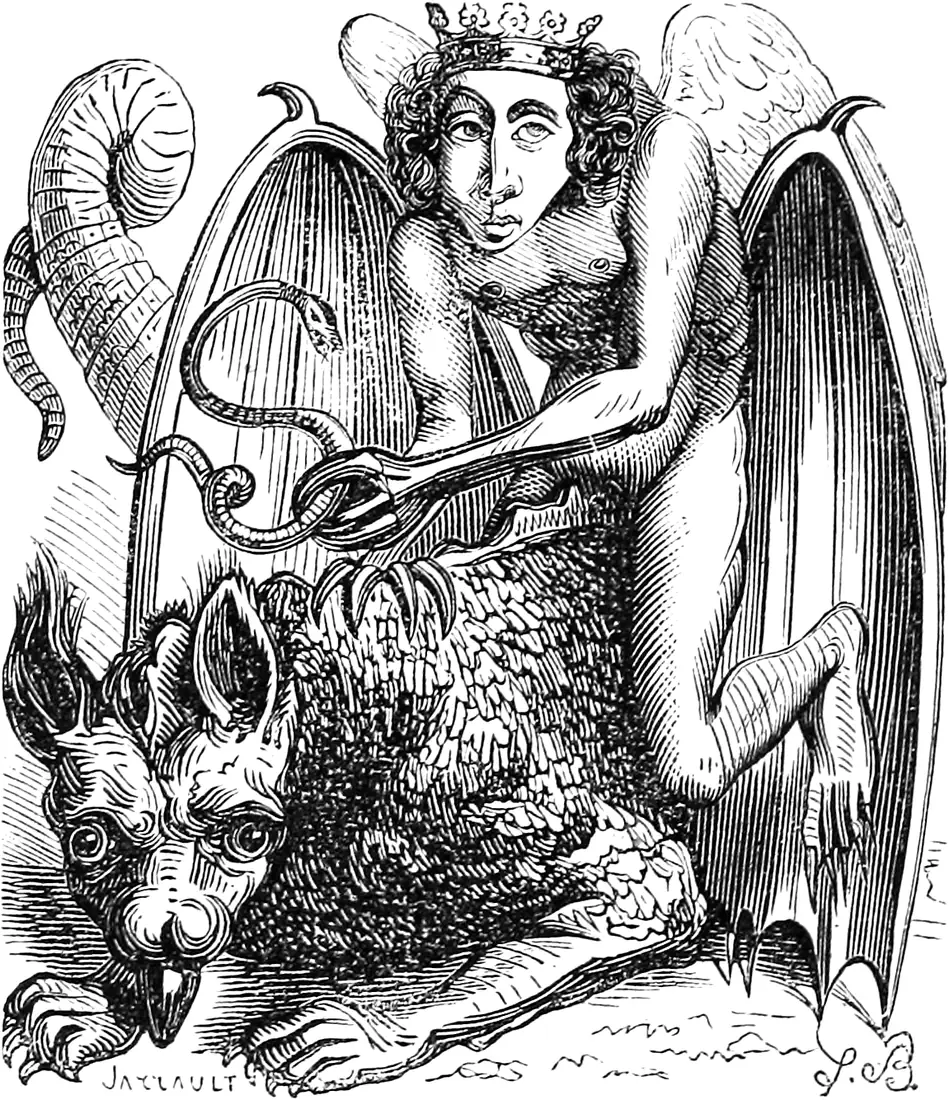
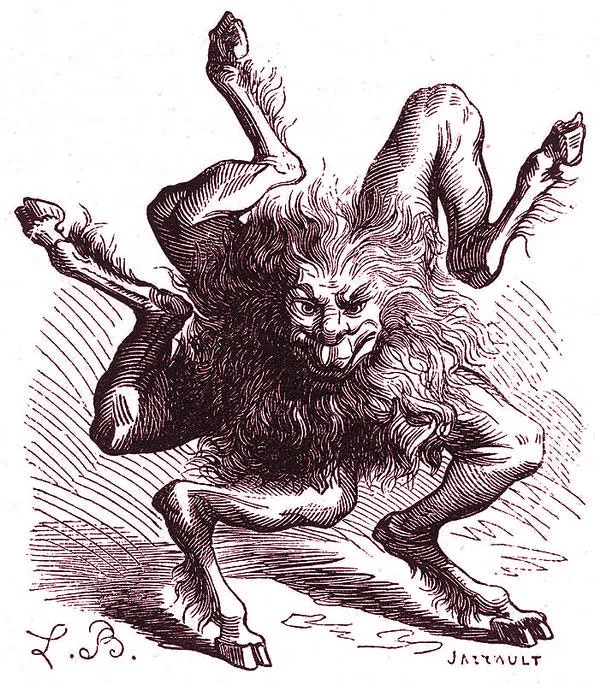
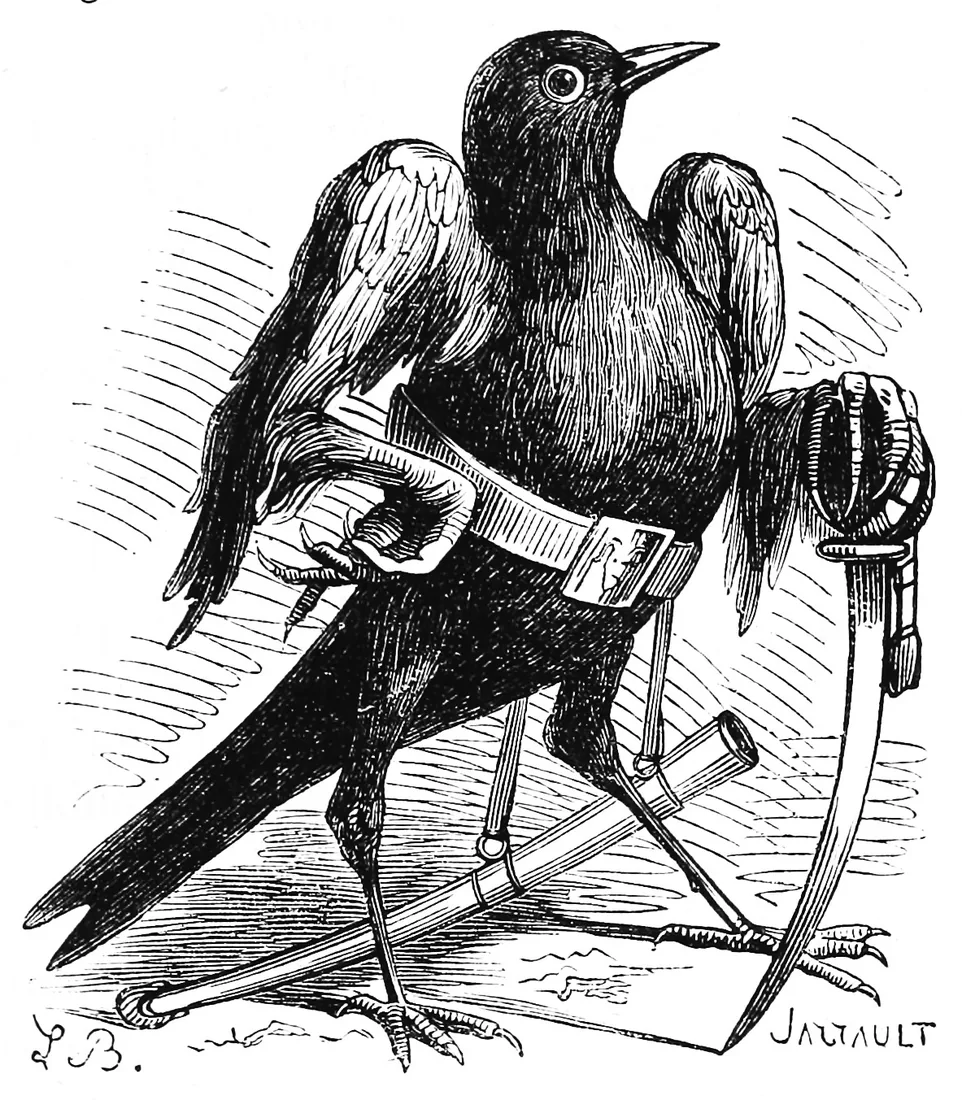
Astaroth, 1863. Illustration by Louis Le Breton from the sixth edition; public domain. View the image record ↗Buer, 1863. Illustration by Louis Le Breton from the sixth edition; public domain. View the image record ↗Caym, 1863. Illustration by Louis Le Breton from the sixth edition; public domain. View the image record ↗
Portraits, names, and seals
Louis Le Breton’s figures are book illustrations. They give spirits bodies, poses, and recognizable attributes for a nineteenth-century audience. They are different from the linear seals found in Ars Goetia manuscript and print traditions. Modern reference pages frequently show both, but the two image types answer different historical questions.
Astaroth, Buer, and Caim show three possible relationships between word and image. Astaroth turns a detailed rider description into a heraldic scene, Buer makes a wheel-shaped body look diagrammatic without becoming a seal, and Caim combines a bird stage with a sword assigned to a human stage. The individual profiles extend that method across the full set.