
With sword raised, Le Breton’s 1863 Andras rides a black wolf beneath a horned owl head; Ars Goetia 63 retains the same lethal mounted form.
- 1863 headword
- Andras
- Ars Goetia
- No. 63 · Marquis
- Legions
- Dictionnaire 30 · Goetia 30
What Collin de Plancy’s Andras entry says
Andras is a great marquis with an angel’s body and the head of a horned owl, riding a black wolf and carrying a pointed sword. Collin de Plancy assigns him the raising of discord and quarrels and says he teaches favored people to kill enemies, masters, and servants. Thirty legions follow him. Unlike entries that pair conflict with reconciliation or instruction, this notice is dominated by violence.
The list of possible victims crosses social levels, making the threat domestic and political rather than confined to battle. Angelic body, nocturnal bird head, wolf mount, and weapon turn the fallen-spirit theme into a martial hybrid. A historical account should name that violence clearly without converting it into advice.
Reading Louis Le Breton’s 1863 portrait
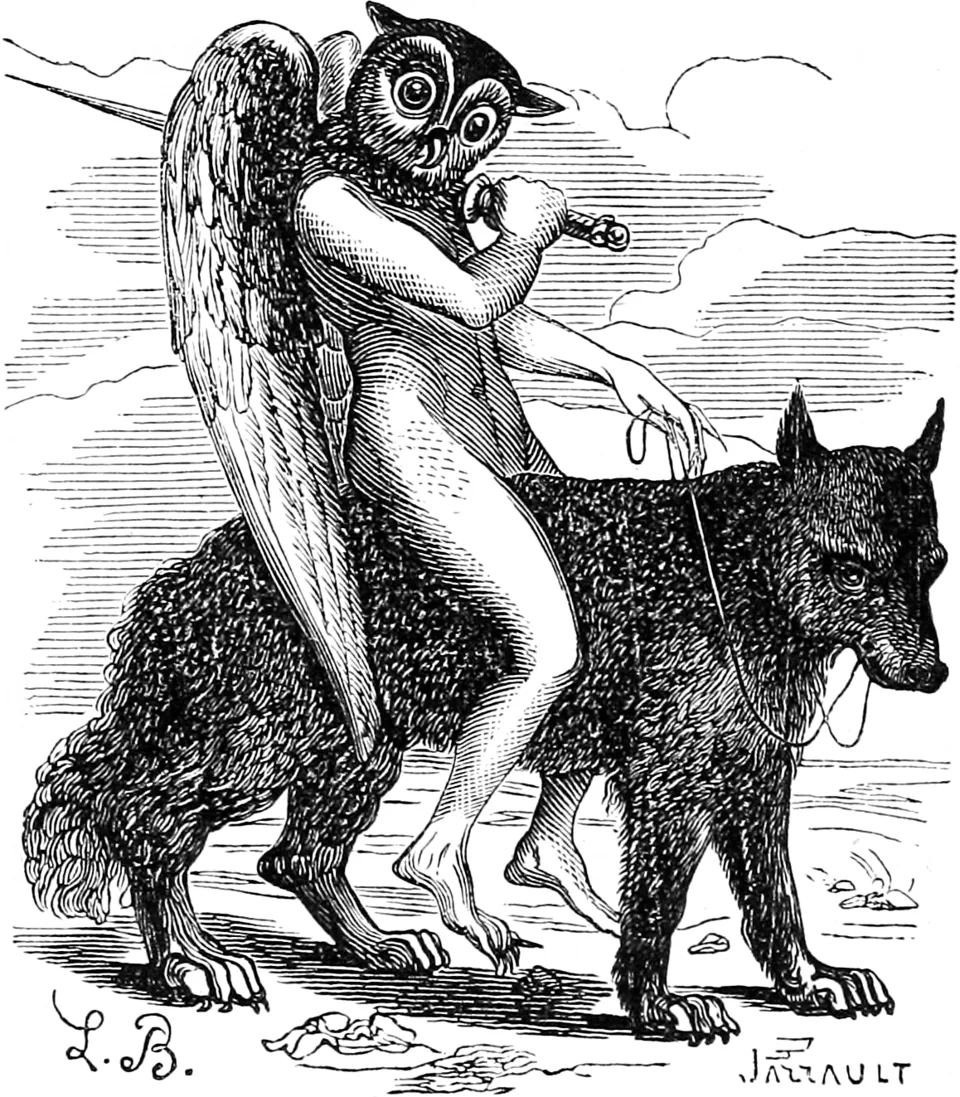
Le Breton shows a winged humanoid seated on a dark wolf, owl head in profile and long sword raised overhead. The mount moves forward while the rider twists back, creating tension between direction and attack. Dark wings and wolf frame the pale blade, which becomes the visual center of the engraving.
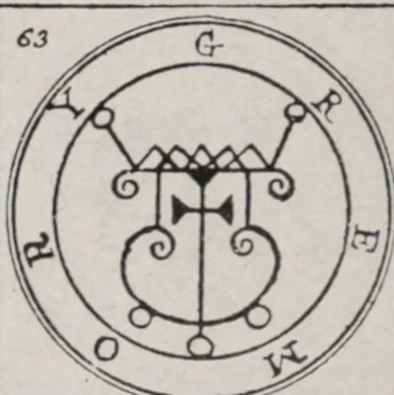
The portrait closely follows the French description but cannot show quarrels unfolding. Andras’s Goetia seal is a separate sign on the fifth frontispiece. Its abstract lines neither depict the sword nor soften the entry’s warning; the prose remains necessary to understand the hostile office.
Andras and Ars Goetia spirit 63
Both sources retain a bird-headed angelic rider on a black wolf, a bright or pointed sword, discord, thirty legions, and the rank of marquis. The correspondence between description and engraving is direct.
The Dictionnaire specifies a horned owl and expands the victims of taught killing. The Goetia calls the head a night raven and warns that an incautious summoner and companions may be killed. Both are violent, but their warnings point in different directions: outward targets in the French account and danger to the operator in the English one.
Worked comparison: two different directions of danger
Write the subject and object of each violent clause. In the Dictionnaire, Andras teaches a favored person to kill named social relations. In the Goetia, the spirit may kill an incautious summoner and companions. The shared sword portrait fits both atmospheres but does not distinguish who threatens whom. Only the prose reveals that shift.
The exercise prevents a broad “warfare” tag from flattening the material. One text foregrounds instigated violence; the other foregrounds ritual peril. The seal identifies spirit 63, while the engraving supplies a martial body common enough to serve both readings. The owl-versus-night-raven variation then affects the head without changing the wolf, sword, rank, or thirty-legion following.