
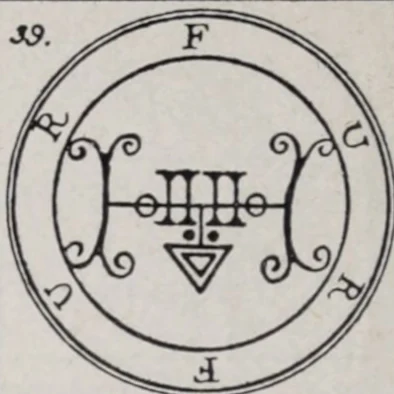
One mason’s trowel identifies the winged crow-human Malphas in Le Breton’s 1863 engraving; Ars Goetia 39 leaves the fortress office in prose beside an abstract seal.
- 1863 headword
- Malphas
- Ars Goetia
- No. 39 · President
- Legions
- Dictionnaire 40 · Goetia 40
What Collin de Plancy’s Malphas entry says
Malphas is a great infernal president who appears as a crow and can take human shape with a rough voice. He builds impregnable citadels and towers, destroys enemy ramparts, finds skilled workers, and supplies familiar spirits. The dictionary warns that he accepts sacrifices and deceives those who make them. Forty legions obey him. Construction, counter-construction, recruitment, and deception form the entry’s compact internal sequence.
The architectural offices are deliberately double-edged: Malphas can build defenses and undo defenses. Good workers and familiars extend that control through delegated labor, while the final warning makes exchange itself unreliable. The entry does not offer a neutral “building demon”; it describes a figure organized around strategy and betrayed trust.
Reading Louis Le Breton’s 1863 portrait
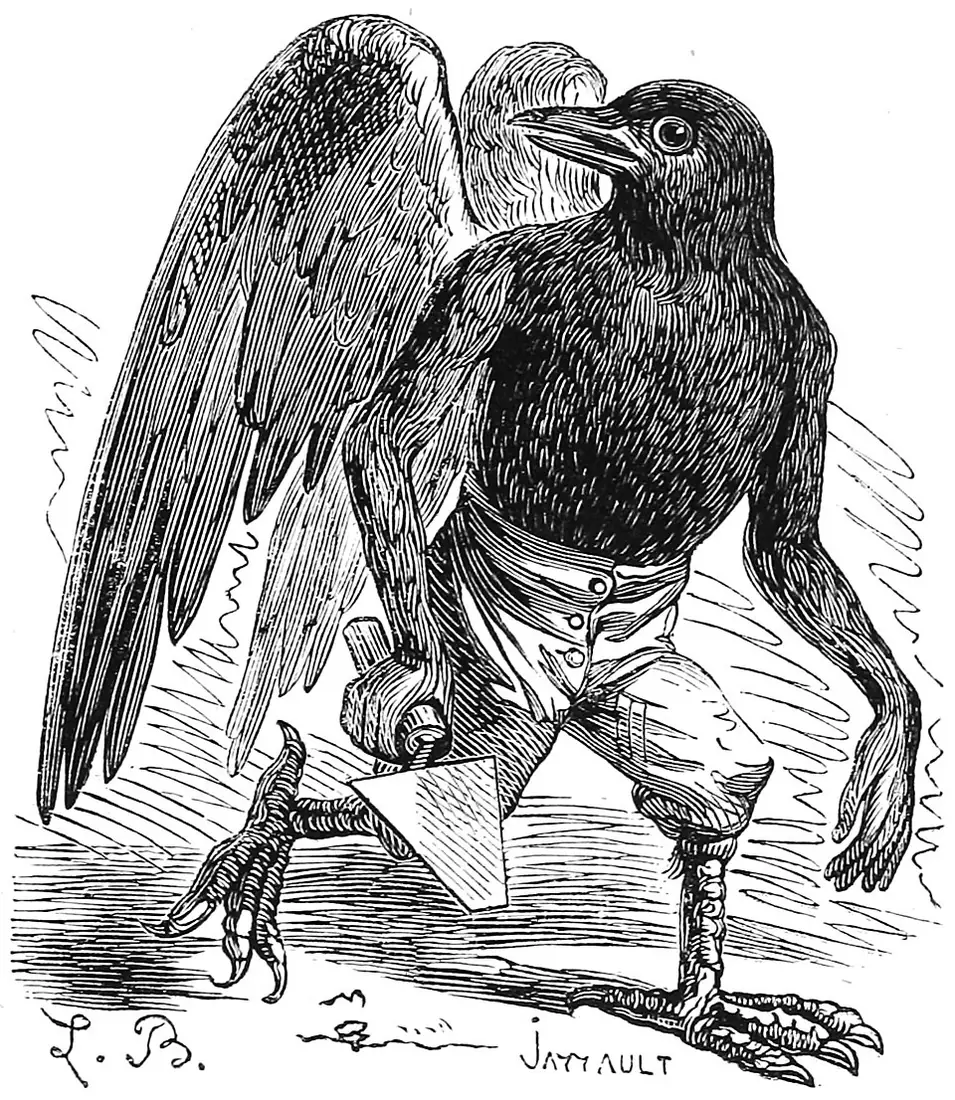
Le Breton turns Malphas into an upright crow-human hybrid with a black corvid head and torso, a huge feathered wing, humanlike arms, buttoned clothing, and clawed feet. One hand grips a triangular mason’s trowel. The tool supplies a compact sign of construction even though no tower, wall, worker, or offering appears in the blank setting.
The engraving combines the crow and human phases instead of leaving the transformation unshown. Its masonry trowel also converts the office of building houses and towers into a visible prop, while demolition, enemy intelligence, familiars, sacrifice, and deception remain outside the frame. Malphas’s Goetia seal omits both body and tool because it serves as an assigned line sign rather than a narrative portrait.
Malphas and Ars Goetia spirit 39
Ars Goetia 39 also begins with a crow, allows human form and a hoarse voice, concerns houses or towers, reveals enemy intentions, provides familiars, warns of deception around sacrifice, and retains forty legions.
The Dictionnaire sharpens the military architecture into impregnable citadels and enemy ramparts and adds the finding of good workers. The Goetia emphasizes knowledge of what enemies have done or intend and speaks of building high houses and towers. Each version balances construction with intelligence or demolition in a different way.
Worked comparison: building, revealing, and destroying
Place the verbs in order. The French entry says build, overturn, find, give, receive, and deceive. The Goetia says build, make known, give, receive, and deceive. The common frame is strategic service followed by unreliable exchange; the French witness adds explicit demolition, while the English one adds intelligence about enemies.
The mason’s trowel communicates the first verb, building, but not the full sequence. It cannot show enemy walls overturned, intentions revealed, workers or familiars supplied, or an accepted sacrifice ending in deception. The worked comparison restores that strategic logic around one sharply chosen prop. It also shows that the warning about exchange is shared even though the French and English accounts distribute construction, demolition, and intelligence differently.