
Le Breton’s 1863 engraving turns the single word “monster” into a crouching composite Ronwe; Ars Goetia 27 spells Ronove and assigns rhetoric, languages, servants, and favor.
- 1863 headword
- Ronwe
- Ars Goetia
- No. 27 · Marquis and Earl
- Legions
- Dictionnaire 19 · Goetia 19
What Collin de Plancy’s Ronwe entry says
Ronwe is a marquis and count who appears simply as a monster. He grants knowledge of languages and the goodwill of everyone, and nineteen infernal cohorts are under his orders. The article is so brief that its omissions become meaningful: no animal species, costume, transformation, direction, or anecdote explains the body. The illustrator therefore had unusually wide latitude within the single word “monster.”
Two social abilities sit behind the grotesque exterior. Languages make communication possible, while general benevolence changes reception by other people. Collin de Plancy gives no account of how those offices relate to the body, leaving a deliberate gap between appearance and function.
Reading Louis Le Breton’s 1863 portrait
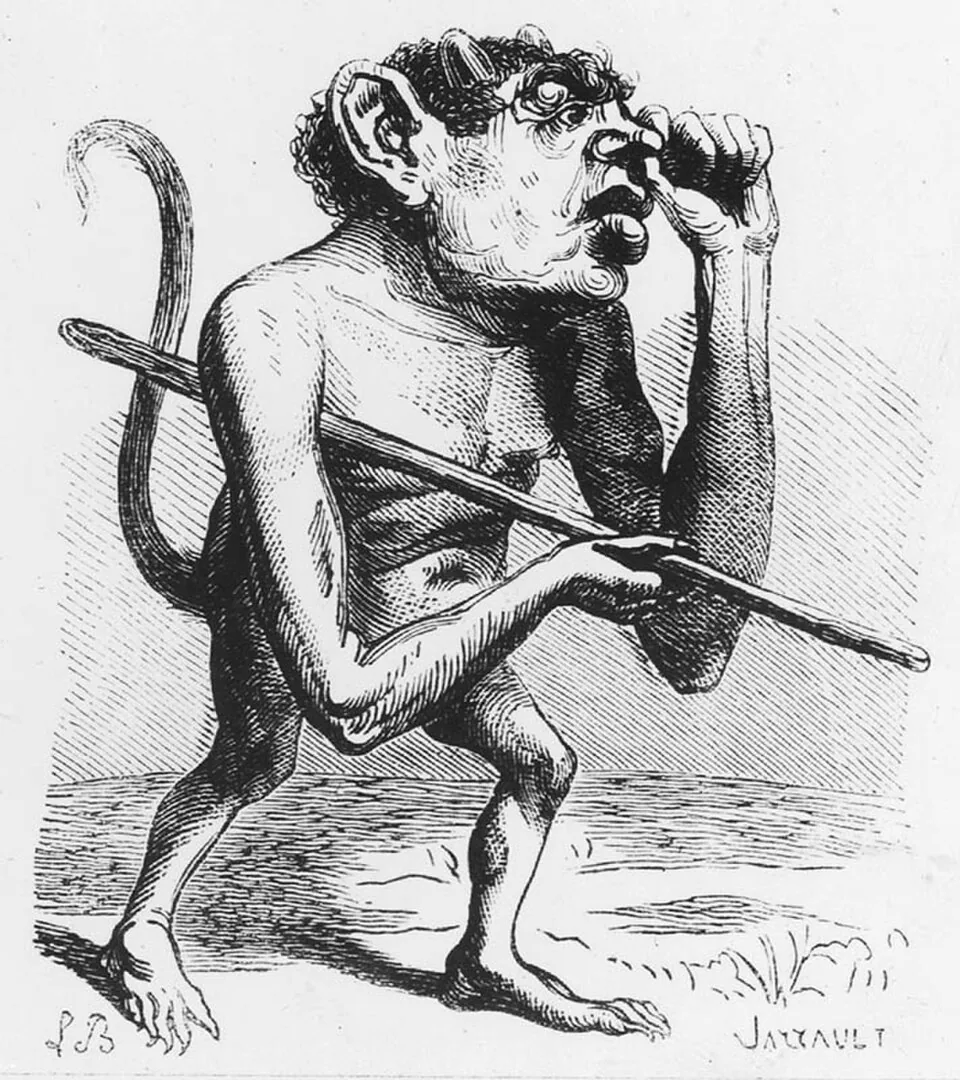
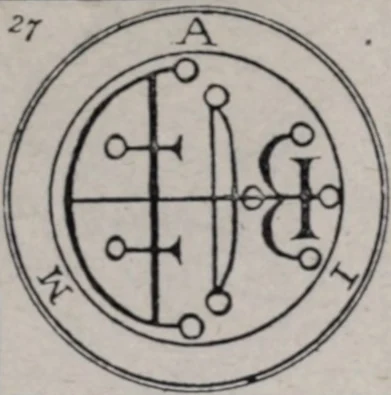
Le Breton fills that gap with a low, long-limbed creature whose body mixes mammalian bulk, clawed limbs, a jutting face, and ornamental curves. The figure crouches rather than stands, creating a compact shape that can fit beneath the headword. Because the prose names no components, almost every anatomical decision belongs to the visual interpretation.
This makes Ronwe a useful control case for the series. Other engravings can be checked feature by feature against detailed descriptions; here the source authorizes only monstrosity. Ronove’s Goetia seal is abstract as usual, but the portrait is also unusually free from verbal constraints.
Ronwe and Ars Goetia spirit 27
Ars Goetia 27 likewise calls the appearance a monster, combines marquis and earl, teaches rhetoric and languages, grants favor from friends or enemies, provides good servants, and commands nineteen legions. The French summary condenses those social and educational offices.
The Dictionnaire omits rhetoric, servants, and the distinction between friends and enemies, broadening favor into goodwill from everyone. It uses Ronwe and counts cohorts rather than legions. The Goetia spelling Ronové or Ronove and fuller office allow a more specific textual profile even though the body stays undescribed.
Worked comparison: measuring an illustrator’s freedom
Try to label each visible feature from the French sentence. “Monster” supports the overall category, but it does not specify the muzzle, ears, paws, posture, or tail. Repeat the exercise with Buer or Stolas and far more details can be matched. The difference measures how much Le Breton had to invent for Ronwe.
The portrait is historically important precisely because it is not a transparent transcription. It records one 1863 visual solution to an underspecified entry. The Goetia seal and expanded office help identify the corresponding catalogue spirit but do not validate the invented anatomy. Language teaching and social favor also provide no obvious attributes for an illustrator, which helps explain why the body rather than the office carries the image’s entire identifying burden.