
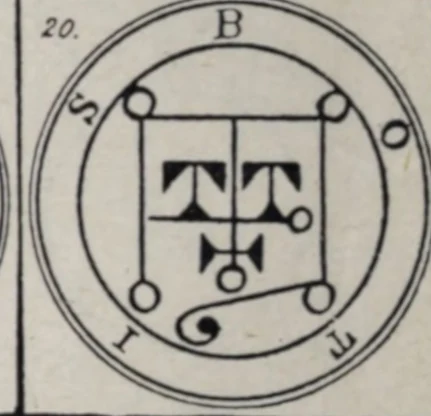
The 1863 Pursan text permits a bear mount, yet Le Breton engraves only a long-haired, bearded bust with mane-like profile; Ars Goetia 20 spells Purson.
- 1863 headword
- Pursan
- Ars Goetia
- No. 20 · King
- Legions
- Dictionnaire 22 · Goetia 22
What Collin de Plancy’s Pursan entry says
Pursan or Curson is a great infernal king with a human body and lionlike head. He carries a snake, sometimes rides a bear, and is continuously preceded by a trumpet. The dictionary credits him with complete knowledge of present, past, and future, discovery of buried things and treasure, an airy human form, and parentage of good familiar spirits. Twenty-two legions receive his orders.
The entry combines royal procession with discovery. Trumpet, bear, lion face, and snake make the entrance audible and visible; time knowledge and buried treasure shift attention toward what is hidden. Calling him father of good familiars then turns retinue into genealogy rather than a mere legion count.
Reading Louis Le Breton’s 1863 portrait
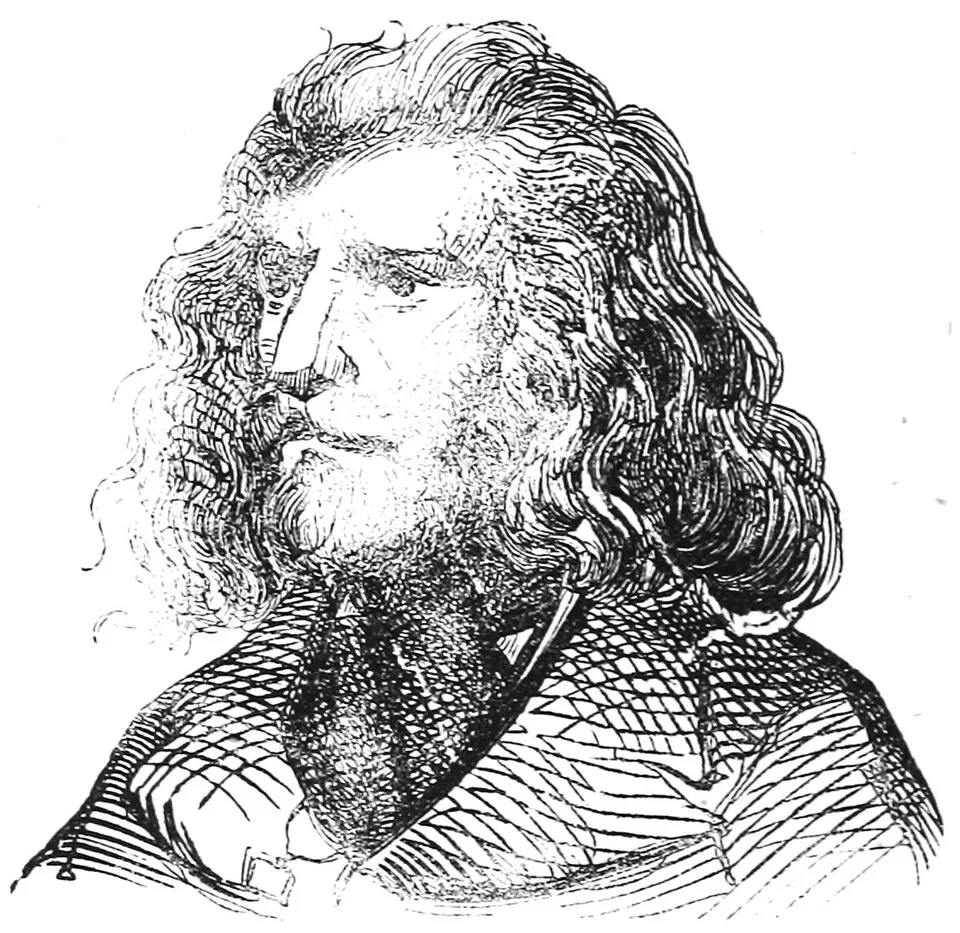
Le Breton reduces Pursan to a close bust with a broad face, heavy brows, long mane-like hair, and a full beard above a patterned collar. The result looks more like a formal portrait than a procession. No bear, serpent, trumpet, crown, or full human body appears, so the image isolates the leonine or human head from the many attributes supplied by the entry.
The tight crop makes the boundary between “human body with a lionlike head” and an imposing bearded human face deliberately unstable. Hair and beard can suggest a mane without becoming a literal lion portrait. Purson’s Goetia seal offers a separate line figure beside entry 20, while the prose is required to restore the omitted mount, snake, music, temporal knowledge, treasure, and familiars.
Pursan and Ars Goetia spirit 20
The Goetia shares the kingly rank, lion-faced human, bear, viper, trumpets, knowledge across time, hidden treasure, answers about earthly and divine secrets, familiars, and twenty-two legions. The catalogue cores are closely aligned.
The Dictionnaire uses Pursan and Curson, describing the bear mount as occasional and the transformed human as aerial. The Goetia standardizes Purson in the local index and broadens the category of secret things. Le Breton’s bearded bust omits the optional bear, serpent, trumpet, crown, and full body.
Worked comparison: how a procession becomes a bust
Divide the French description into head and procession. The human body and lionlike head support the mane-like face in the engraving; the occasional bear, carried snake, continuous trumpet, treasure, and retinue require a wider narrative scene. Le Breton chooses only the head. The familiar bear rider belongs to the prose comparison here, not to the selected 1863 image.
The bust demonstrates selection by omission. It preserves enough of the lion-faced human to identify Pursan while discarding the optional mount and every processional prop. The Goetia seal contributes stable numbering but no answer about the missing bear’s frequency. Reading image and entries together therefore expands a deliberately narrow portrait instead of claiming that the engraving depicts attributes it leaves outside the frame.