People
Crowley’s ceremonial experiments and Thelema reshaped modern Western esotericism through writings that demand separation by genre and date.

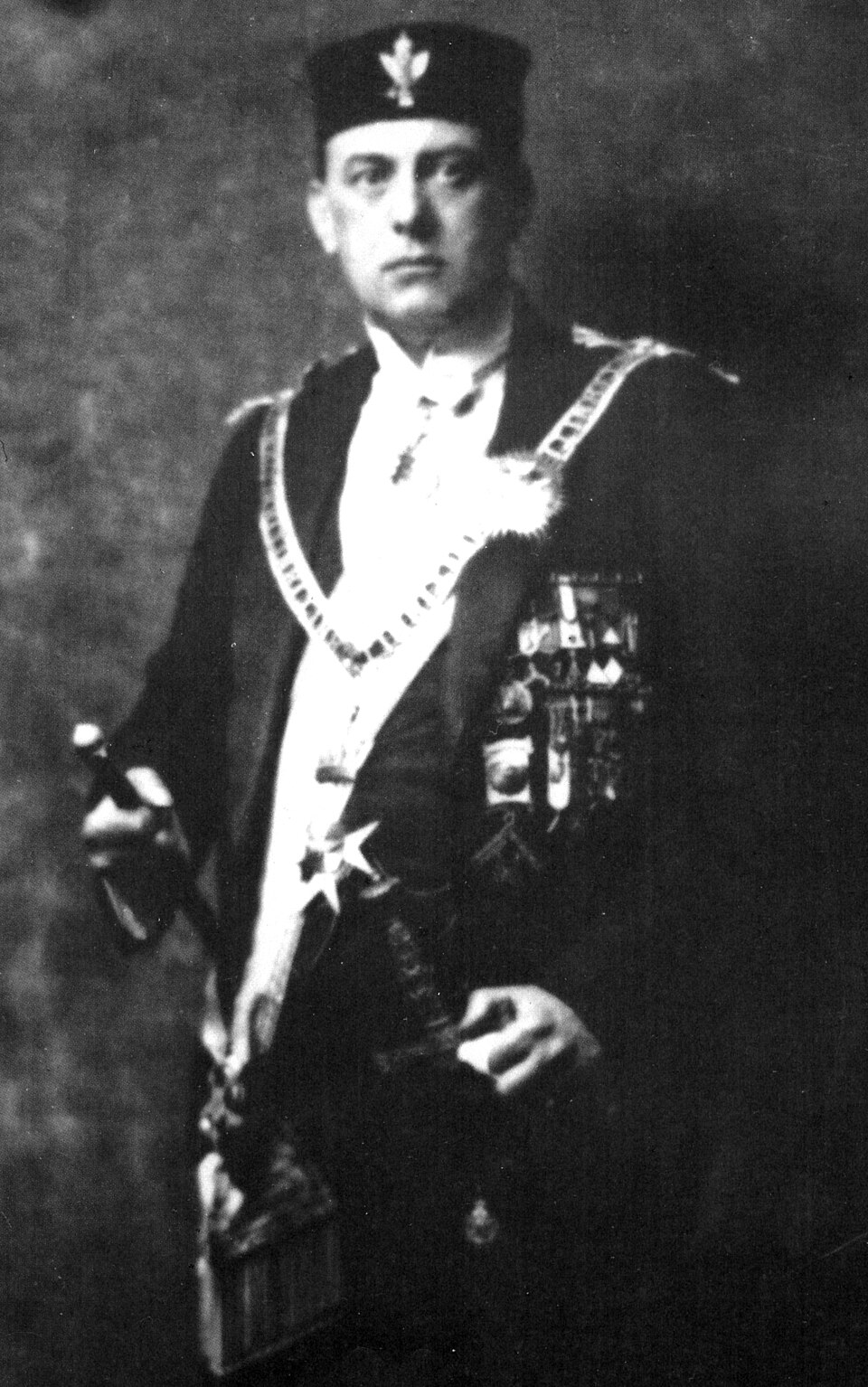
A writer formed by several traditions
Aleister Crowley (1875–1947) was an English writer, mountaineer, and ceremonial magician. He entered the Hermetic Order of the Golden Dawn near the end of the nineteenth century and later developed a distinctive body of writing that drew on ceremonial magic, yoga, poetry, and religious experimentation. Calling him simply a “demonologist” misses that larger intellectual range. Practical manuals, visionary texts, autobiography, and polemic all appear among his books; they do not share a single voice. He adopted the spelling “magick” to distinguish his conception of intentional practice from stage illusion. Crowley also cultivated a provocative public persona. Newspaper anecdotes, assertions in his memoir, and dated manuscripts preserve different versions of his life, while successive editors shaped the texts now circulating.
A work-by-work map of Crowley’s different voices
Crowley’s titles belong to different genres. The Book of the Law is three-voiced scripture; Liber E and Liber O teach exercises; Book 4 mixes mysticism, theory, and equipment; The Equinox is an edited periodical; Confessions is retrospective self-fashioning; the 1904 Goetia reworks an older catalogue; The Vision and the Voice presents visionary records. Each genre creates a different kind of claim.
Thelema and the Cairo account
Crowley identified the 1904 Book of the Law as the foundation of Thelema. In his account, the text was received in Cairo through a communication associated with a being named Aiwass. That is a claim within Crowley’s religious history, not a fact a historian can independently establish. Thelema’s language of will, freedom, and a new aeon has been interpreted differently by later adherents. Crowley’s subsequent organization and publication work helped turn a personal revelation into a movement with initiatory bodies, commentaries, and competing readings. The famous formula “Do what thou wilt” is especially easy to flatten into permission for any passing desire. Thelemic writing places it within a more involved discussion of a person’s “True Will.” Readers can recognize the phrase’s influence without accepting Crowley’s metaphysical claims or treating one slogan as the whole of his system.
A divided and far-reaching legacy
Crowley’s influence extends into modern occult orders, contemporary witchcraft, popular music, art, and alternative spirituality. His 1904 Goetia edition belongs to the modern publication history of an older manuscript tradition; it did not create the seventy-two-spirit catalogue. His ethical record, treatment of other people, and statements about race, gender, and power remain part of that history. Dated primary texts and scholarship on their reception distinguish practices Crowley inherited, practices he revised, and interpretations that appeared after his death. His own writings preserve the extraordinary experiences he reported as claims. His afterlife also depends on publication: inexpensive reprints, edited collections, biographies, and recordings carried different parts of his work to audiences far beyond the small initiatory circles he knew. A song lyric, a ceremonial order, and a scholarly study can therefore inherit very different versions of “Crowley.”
Questions to explore
- How did Crowley’s poetry, ritual manuals, and visionary books address different audiences?
- Which parts of his public persona came from Crowley’s own accounts?
- How did later readers change the meaning of his terms?