
Le Breton’s crowned Astaroth rides a dragon and grips a viper in 1863, giving the prose body absent from the separate seal at Ars Goetia 29.
- 1863 headword
- Astaroth
- Ars Goetia
- No. 29 · Duke
- Legions
- Dictionnaire 40 · Goetia 40
What Collin de Plancy’s Astaroth entry says
Collin de Plancy calls Astaroth a powerful grand duke and builds the entry from several kinds of material. The figure rides an infernal dragon, holds a viper, presides in the west, answers about hidden matters and time, teaches the liberal arts, and commands forty legions. The article then moves beyond a catalogue notice to an explanation of the fall of angels, a warning about a terrible odor, reported possessions, and an English Faust tradition in which Astaroth appears as a brightly colored serpent.
The entry keeps changing scale: rank and office become a miniature theological dispute, then a sensory warning, then a reception history. That movement shows the dictionary at work. It absorbs Weyer’s compact catalogue into Collin de Plancy’s broader encyclopedia, where inherited description, skeptical commentary, folklore, and literary afterlife can occupy the same alphabetic article.
Reading Louis Le Breton’s 1863 portrait
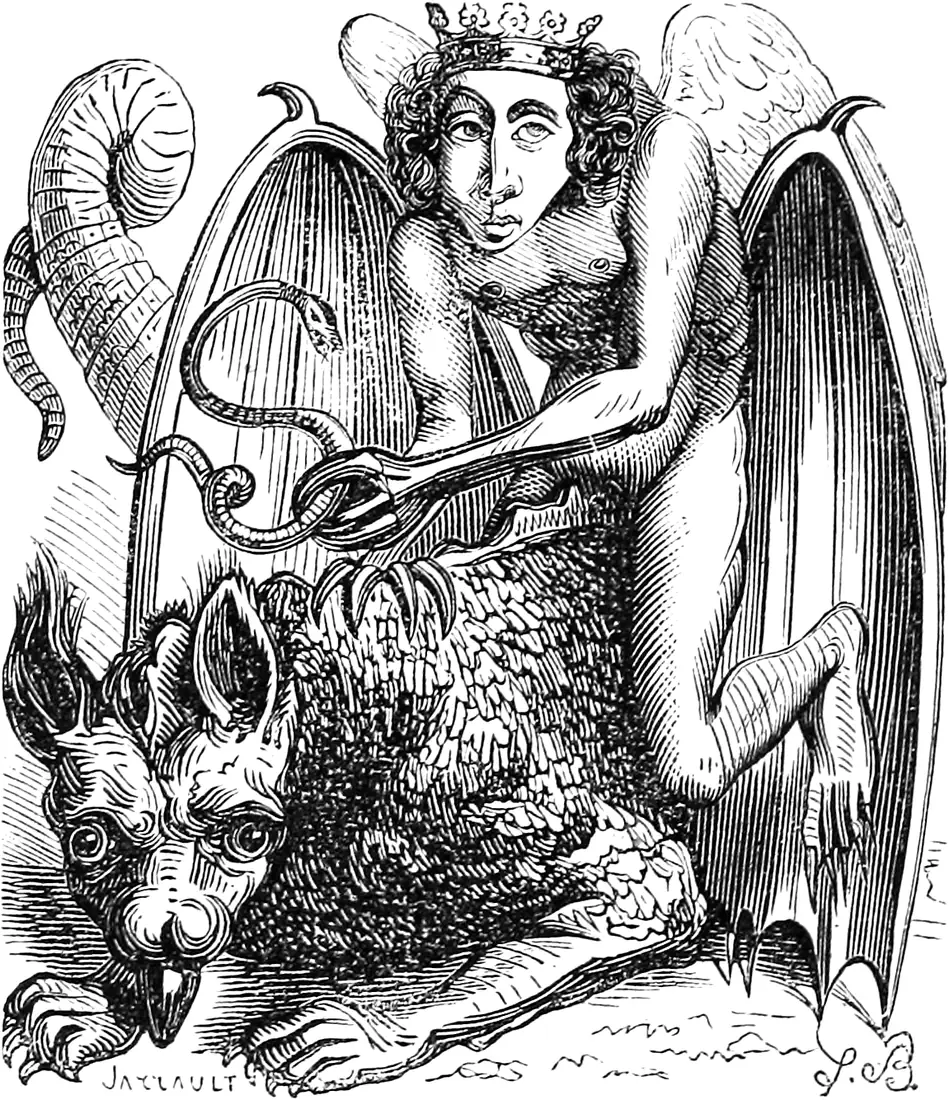
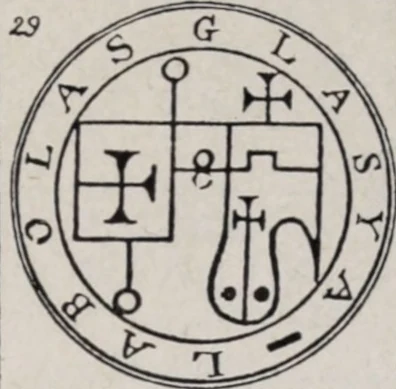
Le Breton turns the catalogue description into a compact heraldic scene. A crowned, winged rider sits astride a dragonlike beast and raises the viper as a visible attribute. The crown and upright torso make rank immediately legible, while the mount and serpent create two strong diagonals. The engraving selects the angelic rider rather than the later Faust serpent, so it fixes one of the entry’s several possible bodies as the memorable public portrait.
The portrait is figurative and narrative: it shows a body, costume, gesture, and mount. Astaroth’s Goetia seal is a separate line sign printed with spirit 29. Placing them together reveals two different acts of identification rather than two versions of one picture. The engraving tells a viewer what the character looks like; the seal marks the entry inside a ritual catalogue.
Astaroth and Ars Goetia spirit 29
Both texts retain the dragonlike mount, viper, knowledge of past and future, disclosure of secrets, instruction in liberal sciences, and a following of forty legions. Their close agreement exposes a shared catalogue lineage rather than a new nineteenth-century invention.
The Dictionnaire adds the western presidency, friendship of great lords, Wednesday association, divine-justice argument, odor and silver-ring warning, possession reports, and Faust serpent. The Goetia passage is shorter and places the warning about breath within its own ceremonial frame. Collin de Plancy turns the same basic record into an encyclopedic dossier with commentary and anecdotes.
Worked comparison: which Astaroth does the engraving choose?
Set the 1863 portrait beside the two prose descriptions and mark only visible features. Wings, crown, rider, beast, and viper all belong to the catalogue figure shared by the Dictionnaire and Goetia. The silver ring, unbearable smell, western direction, theological speech, liberal arts, and forty legions cannot be pictured directly. The English Faust serpent would require a completely different image.
The result explains why the engraving feels definitive while remaining selective. It illustrates one descriptive sentence and leaves most of the article’s argument outside the frame. The seal contributes another layer but does not resolve the choice: its lines neither portray the serpent nor encode the anecdotal additions identified by the text.