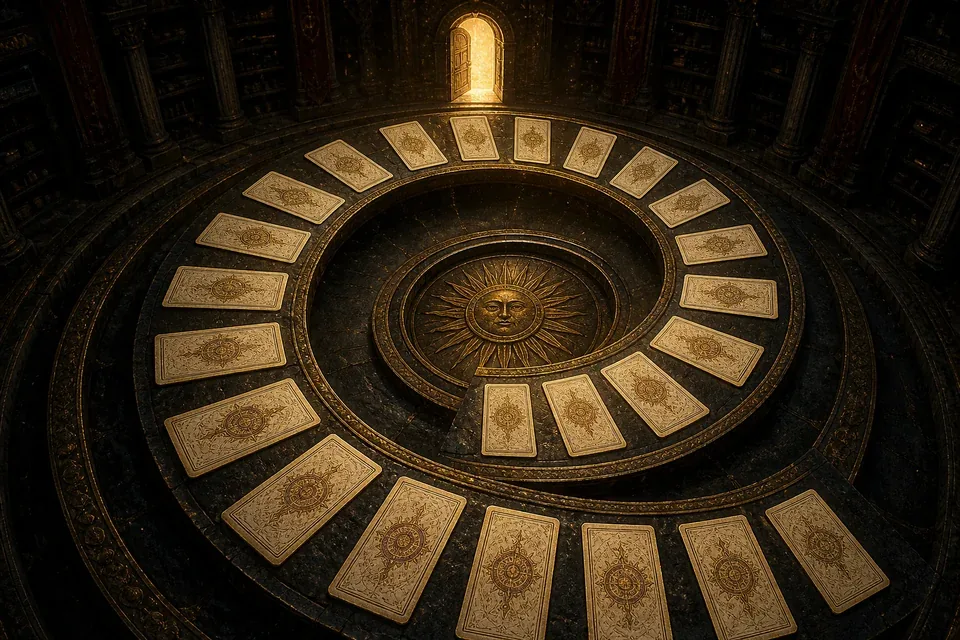
This three-card spread gives each choice a different job. The first card frames background, the second invites attention to the current situation, and the third opens a possible direction. “Future” here is a prompt for planning and reflection, not a fixed prediction.
What the three positions ask
What earlier experience, belief, or pattern may be shaping the question? A card in this position does not establish that an event happened. Compare it with what you remember and can verify.
What is happening now, and what remains an assumption? Look for a detail in the card image that helps you name a current tension or resource.
What possibility or next step would be useful to consider? The card can suggest a scenario to prepare for, a choice to test, or an attitude to examine.
Choose cards in order. The page draws from a freshly shuffled full deck and will not repeat a card within the spread. Every result links to its full guide. Read each card on its own, then consider what changes when you place all three side by side.
Read a sequence, not three isolated labels
Notice repeated suits, contrasting imagery, or a change in movement from one picture to the next. Three cards with active figures might ask where effort belongs; a quiet middle card between two busy ones might suggest a pause. These are observations rather than universal rules. Keep the question and your circumstances in view, and resist making claims about another person’s private thoughts.
Try writing one sentence for each position and one sentence connecting them. If the final card feels difficult, ask what support or information would help you approach that possibility. The spread guide offers other ways to structure a three-card question, and the beginner guide explains how card images and context work together.