
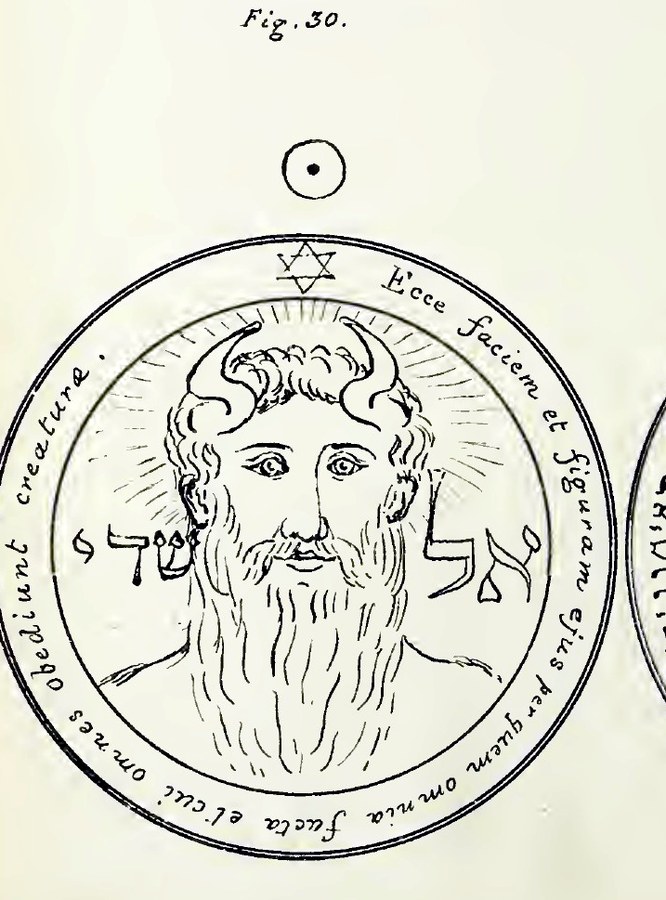
Mathers assigns yellow or gold to Sun and names gold as its corresponding metal. The 7 figures cover authority, visibility, movement, concealment, and release. Those claims belong to the historical edition; the diagrams can still be analyzed as arrangements of text, script, and geometry without treating the promised effects as measured results.
The solar sequence begins with a face identified by Mathers as Metatron, then shifts through repeated divine names and planetary characters. Seeing, invisibility, transport, and release are organized through a recurring contrast between radiating centers and enclosing borders.
How the Sun sequence changes
The collection is not one emblem repeated 7 times. Its centers range from a frontal bearded face identified by Mathers as Metatron to a small cross-centered intersection. The framing systems likewise move between the face fills the inner disk without a geometric lattice and four broad arms separate two sets of elemental names. Reading the group in order makes those structural choices visible.
The perimeter often does a different job from the center. In the first figure, Latin text and the paired name El Shaddai surround the portrait; in the last, the broken-bonds verse encloses the cross. A plate crop becomes misleading when those outer words are discarded as decoration.
7 Sun figures at a glance
First Pentacle of the Sun
Mathers identifies the face as a solar image of Shaddai’s authority before which creatures and spirits bow.
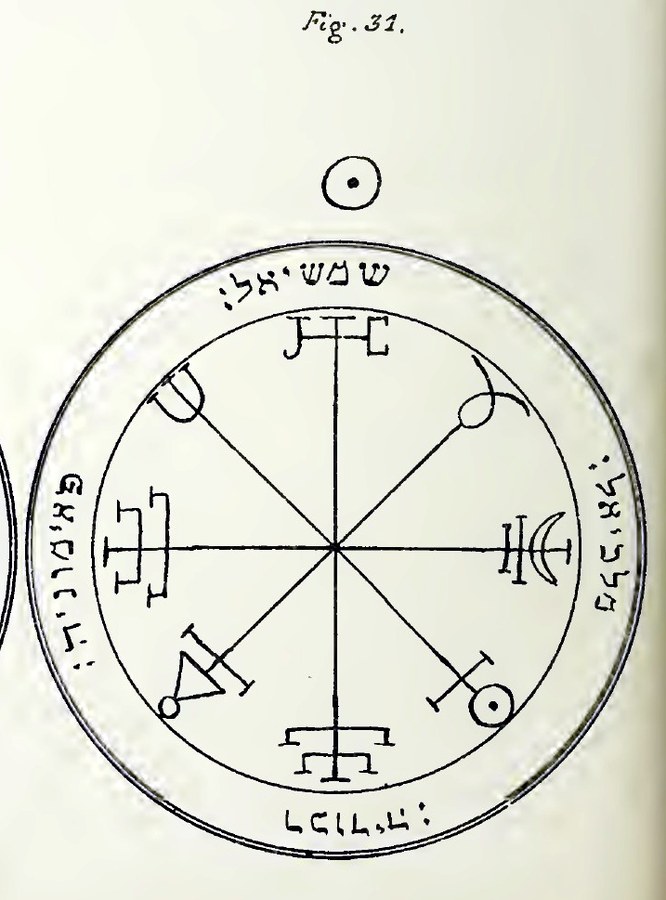
Second Pentacle of the Sun
The caption groups this with the first and third solar figures as a means to repress the pride of solar spirits.
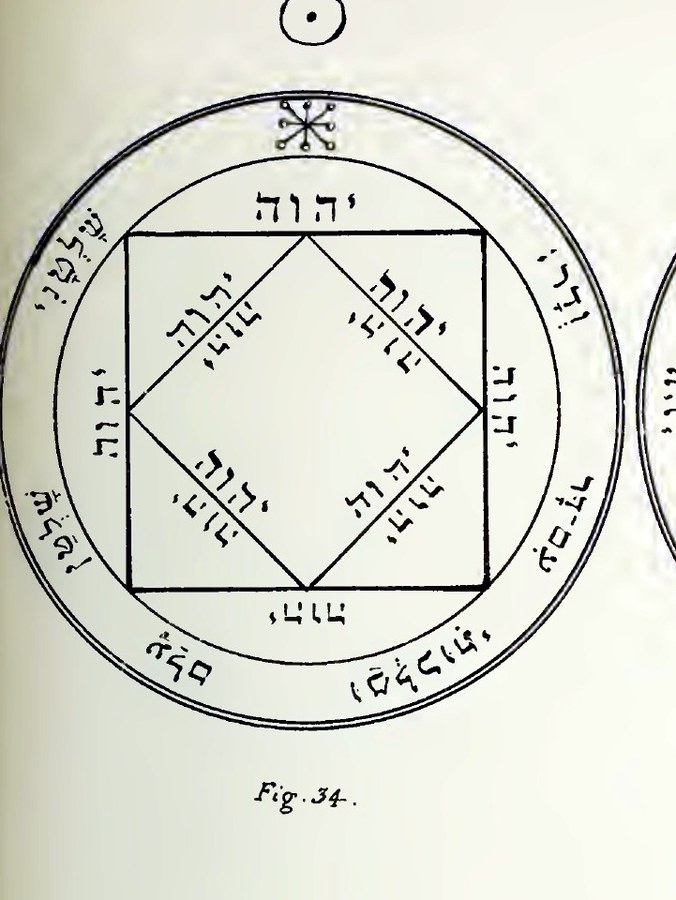
Third Pentacle of the Sun
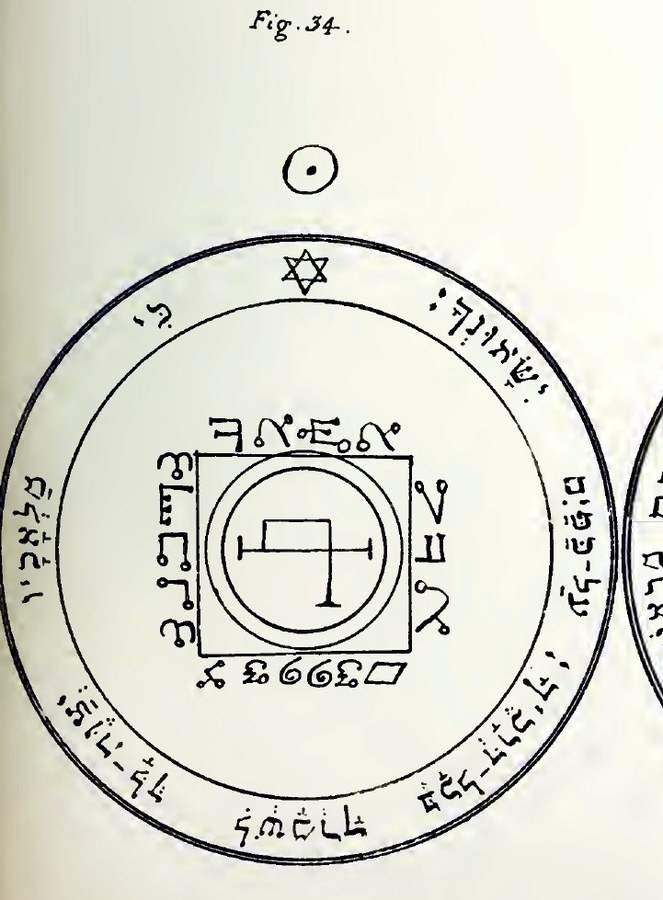
Mathers assigns the figure to rule, renown, and glory, as well as harm to others.
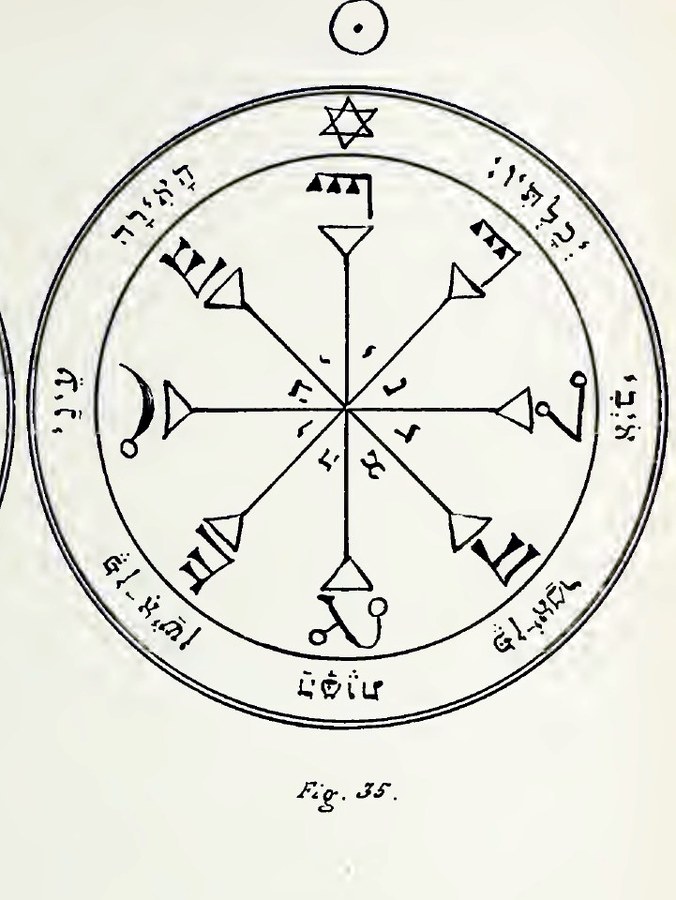
Fourth Pentacle of the Sun
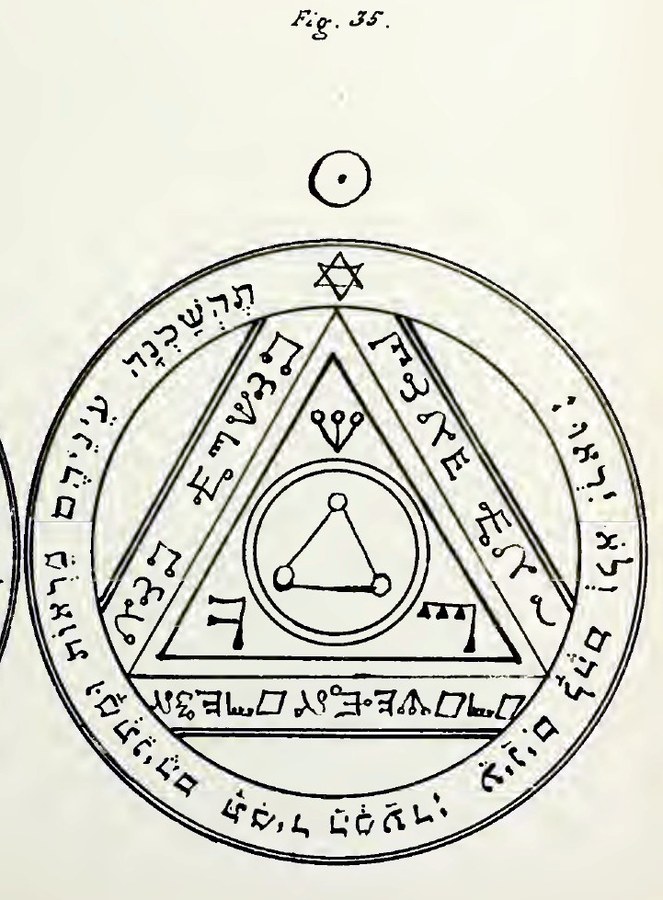
The caption says this figure makes otherwise invisible spirits visible.
Fifth Pentacle of the Sun
Mathers links this figure with spirits said to transport a person over a long distance quickly.
Sixth Pentacle of the Sun
The sixth solar caption claims an operation of invisibility.
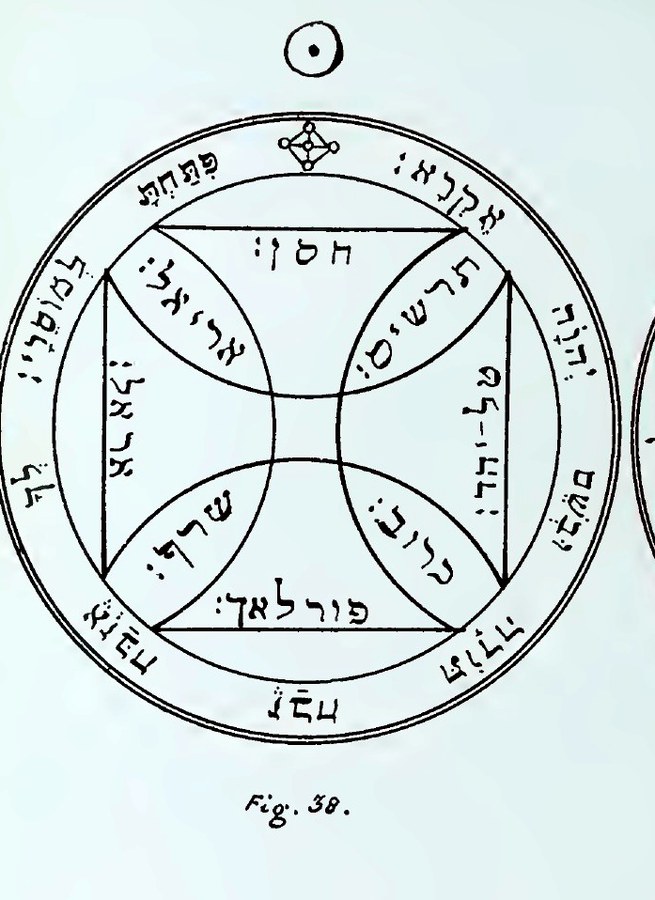
Seventh Pentacle of the Sun
The caption associates the gold figure with release from imprisonment and iron bonds.
Text and plate comparison
| Figure | Mathers’s stated theme | Textual anchor | Plate |
|---|---|---|---|
| 1. First Pentacle of the Sun | Metatron, portrait, Latin | Latin perimeter, not a biblical citation | VII, fig. 32 |
| 2. Second Pentacle of the Sun | solar spirits, angels, comparison | No biblical verse is identified | VII, fig. 33 |
| 3. Third Pentacle of the Sun | authority, twelve names, Daniel resemblance | A sentence resembling Daniel 4:34 | VIII, fig. 34 |
| 4. Fourth Pentacle of the Sun | visibility, Passing of the River, psalm | Psalm 13:3–4 | VIII, fig. 35 |
| 5. Fifth Pentacle of the Sun | transport, encoded names, angels | Psalm 91:11–12 | VIII, fig. 36 |
| 6. Sixth Pentacle of the Sun | invisibility, damaged text, editorial uncertainty | Genesis 1:1 with Psalms 69:23 and 135:16 | VIII, fig. 37 |
| 7. Seventh Pentacle of the Sun | release, elements, cross | Psalm 116:16–17 | IX, fig. 38 |
What the plate can and cannot establish
The crops preserve the figures as Mathers printed them, including damaged or uncertain readings he discusses in his notes. The linework establishes the edition’s layout. The accompanying prose supplies names, script identifications, and claimed purposes that may not be recoverable from shape alone.
Different manuscript witnesses can change spelling, letter shape, color, order, or even the set of figures. The individual pages therefore distinguish visible evidence from Mathers’s interpretation and from the broader Clavicula tradition.