
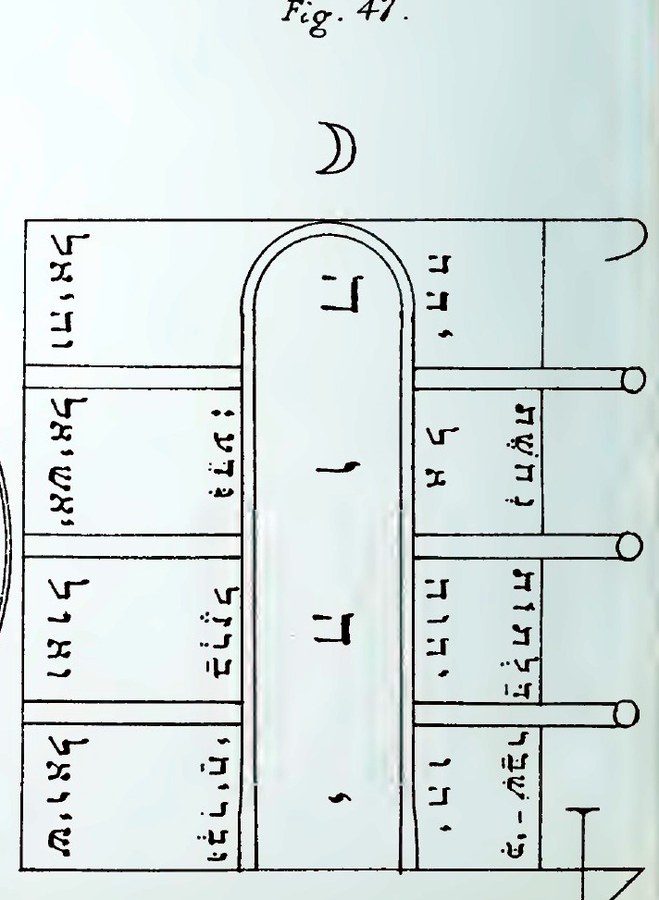
Mathers assigns silver to Moon and names silver as its corresponding metal. The 6 figures cover opening, water, night journeys, herbs and stones, dreams, and rain. Those claims belong to the historical edition; the diagrams can still be analyzed as arrangements of text, script, and geometry without treating the promised effects as measured results.
The lunar sequence is visually distinctive: a gate diagram gives way to four pointing hands and a final planetary wheel. Figure 54 appears on Plate XIII among instruments rather than beside the four hand figures on Plate XII.
How the Moon sequence changes
The collection is not one emblem repeated 6 times. Its centers range from a tall central door panel to a small center under the lunar crescent. The framing systems likewise move between side compartments and projecting bars create a gate elevation and eight equal spokes terminate in lunar characters. Reading the group in order makes those structural choices visible.
The perimeter often does a different job from the center. In the first figure, names and the broken-gates verse frame the architectural form; in the last, the flood-and-rain text encloses the wheel. A plate crop becomes misleading when those outer words are discarded as decoration.
6 Moon figures at a glance
First Pentacle of the Moon
The first lunar caption invokes Moon spirits and, like Mercury 5, claims to open fastened doors.
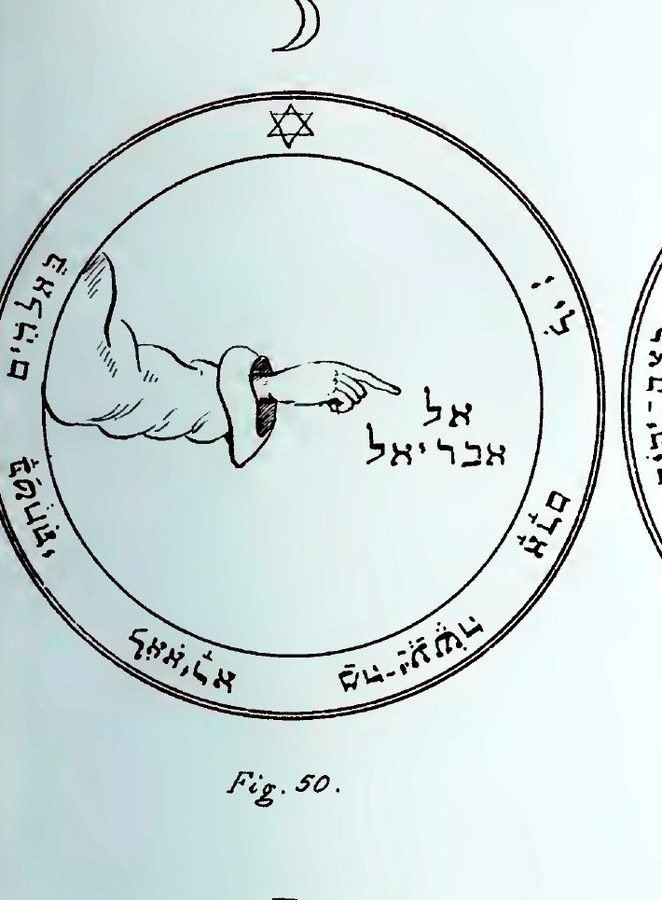
Second Pentacle of the Moon
Mathers assigns the figure to danger by water and to the cessation of rain or tempests during a lunar invocation.
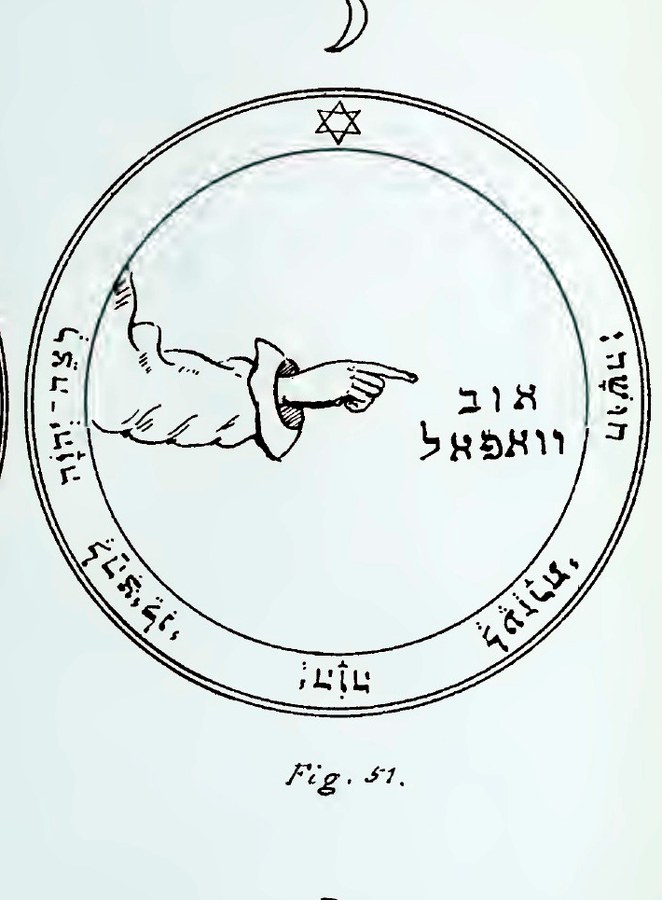
Third Pentacle of the Moon
The third lunar caption assigns the figure to protection on journeys, especially against night attacks and water danger.
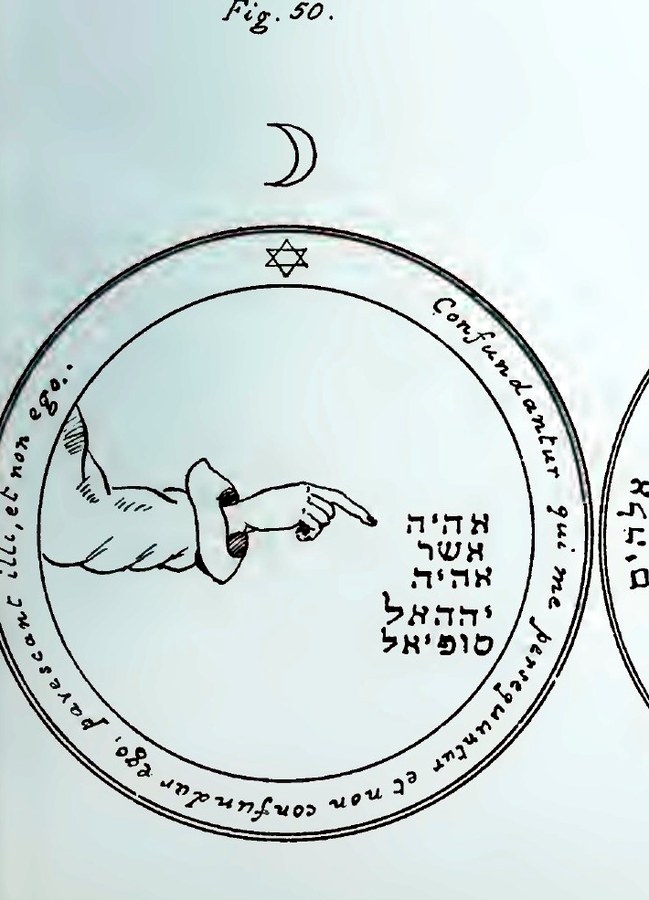
Fourth Pentacle of the Moon
Mathers describes defense from harmful sorcery and injury, and links Sophiel with knowledge of herbs and stones.
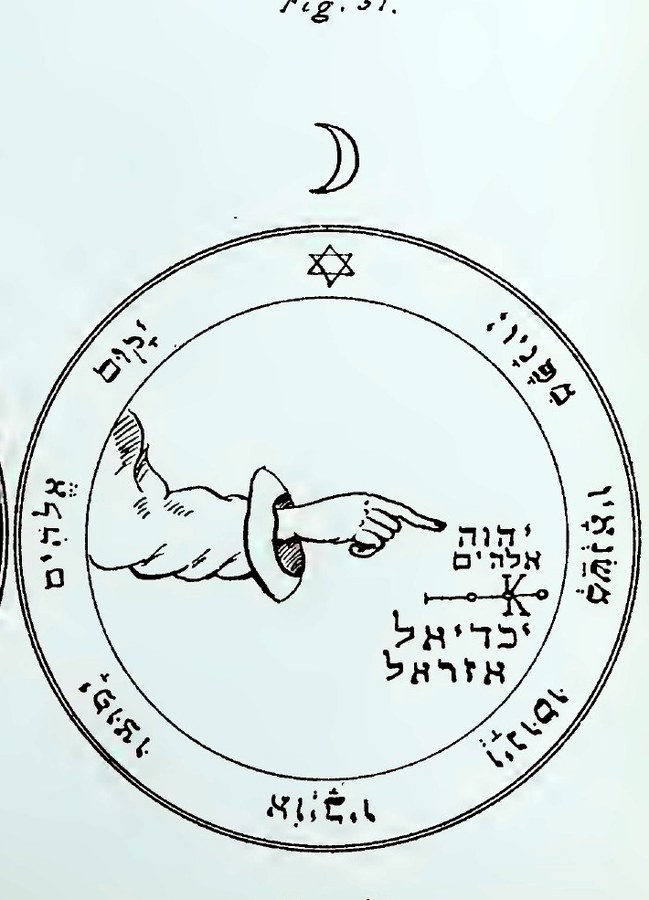
Fifth Pentacle of the Moon
The caption combines answers in sleep with hostile and necromantic claims concerning enemies, night phantoms, and the dead.
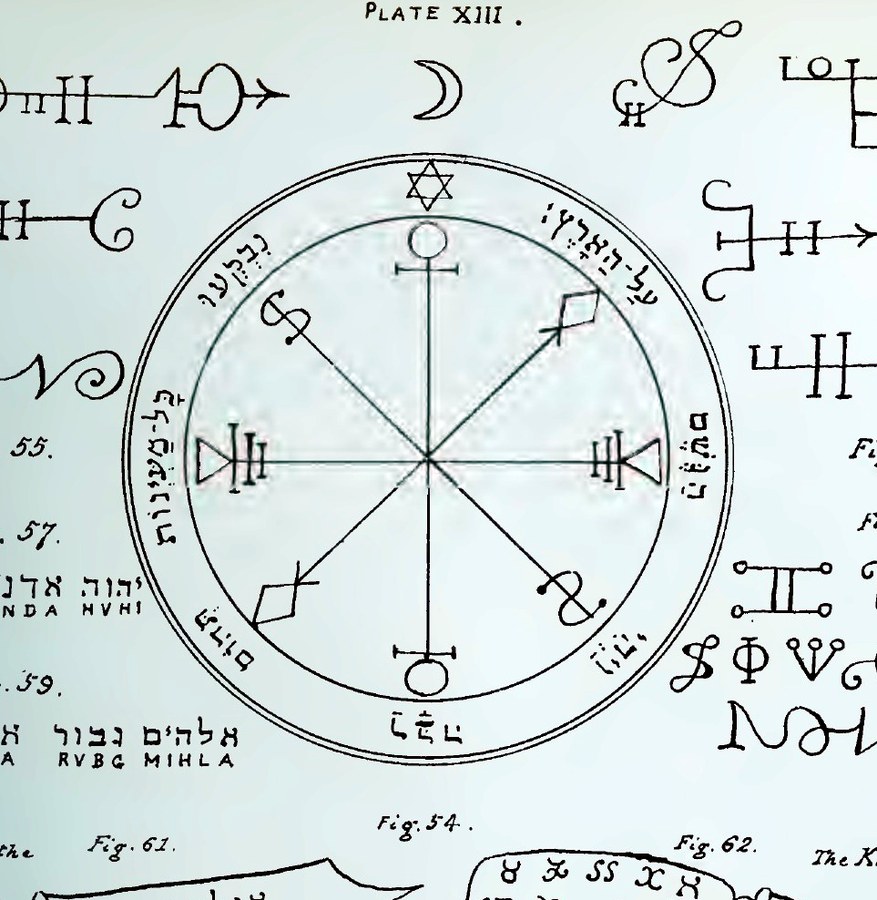
Sixth Pentacle of the Moon
The final lunar caption claims that a silver plate placed under water brings continuing rain.
Text and plate comparison
| Figure | Mathers’s stated theme | Textual anchor | Plate |
|---|---|---|---|
| 1. First Pentacle of the Moon | gate, opening, architectural diagram | Psalm 107:16 | XI, fig. 49 |
| 2. Second Pentacle of the Moon | water, storm, pointing hand | Psalm 56:11 | XII, fig. 50 |
| 3. Third Pentacle of the Moon | journey, night, comparison | Psalm 40:13 | XII, fig. 51 |
| 4. Fourth Pentacle of the Moon | herbs, stones, Sophiel | Unidentified versicle in Mathers | XII, fig. 52 |
| 5. Fifth Pentacle of the Moon | dreams, dead, multiple claims | Psalm 68:1 | XII, fig. 53 |
| 6. Sixth Pentacle of the Moon | rain, flood, plate context | Genesis 7:11–12 | XIII, fig. 54 |
What the plate can and cannot establish
The crops preserve the figures as Mathers printed them, including damaged or uncertain readings he discusses in his notes. The linework establishes the edition’s layout. The accompanying prose supplies names, script identifications, and claimed purposes that may not be recoverable from shape alone.
Different manuscript witnesses can change spelling, letter shape, color, order, or even the set of figures. The individual pages therefore distinguish visible evidence from Mathers’s interpretation and from the broader Clavicula tradition.