
Mathers assigns black to Saturn and names lead as its corresponding metal. The 7 figures cover constraint, adversity, night work, protection, and destructive claims. Those claims belong to the historical edition; the diagrams can still be analyzed as arrangements of text, script, and geometry without treating the promised effects as measured results.
The Saturn sequence moves from named divine authority and a word square toward angelic orders. Its plates repeatedly set severe claims against psalm verses about dominion, enemies, judgment, and a shaking earth.
How the Saturn sequence changes
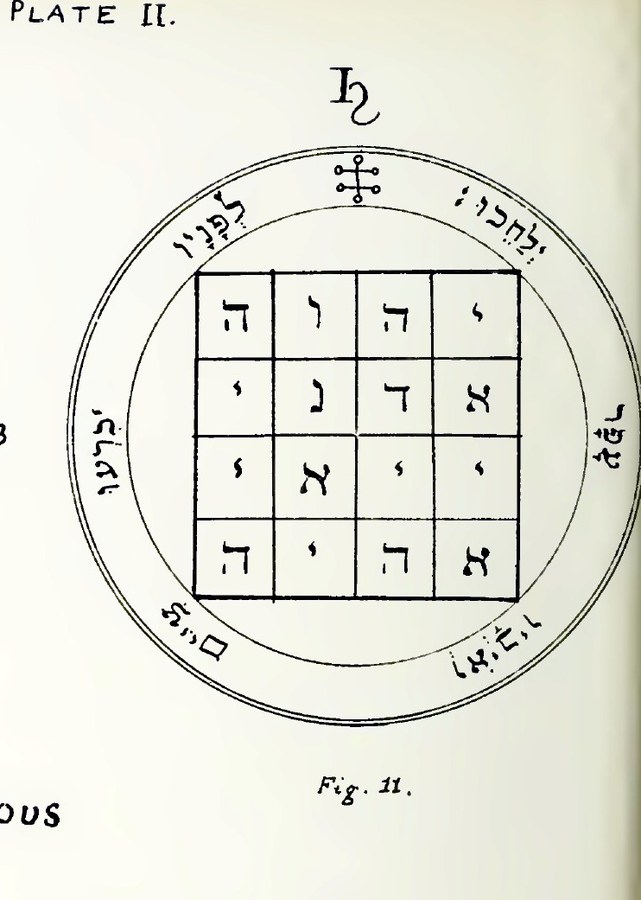
The collection is not one emblem repeated 7 times. Its centers range from a sixteen-cell square of divine names to a divided triangular field. The framing systems likewise move between the square sits inside a double circular boundary beneath the Saturn sign and names of the nine orders fill separate internal zones. Reading the group in order makes those structural choices visible.
The perimeter often does a different job from the center. In the first figure, the psalm verse closes the outer band; in the last, the earthquake verse seals the circle. A plate crop becomes misleading when those outer words are discarded as decoration.
7 Saturn figures at a glance
First Pentacle of Saturn
Mathers describes the figure as a display that makes spirits submit through terror.
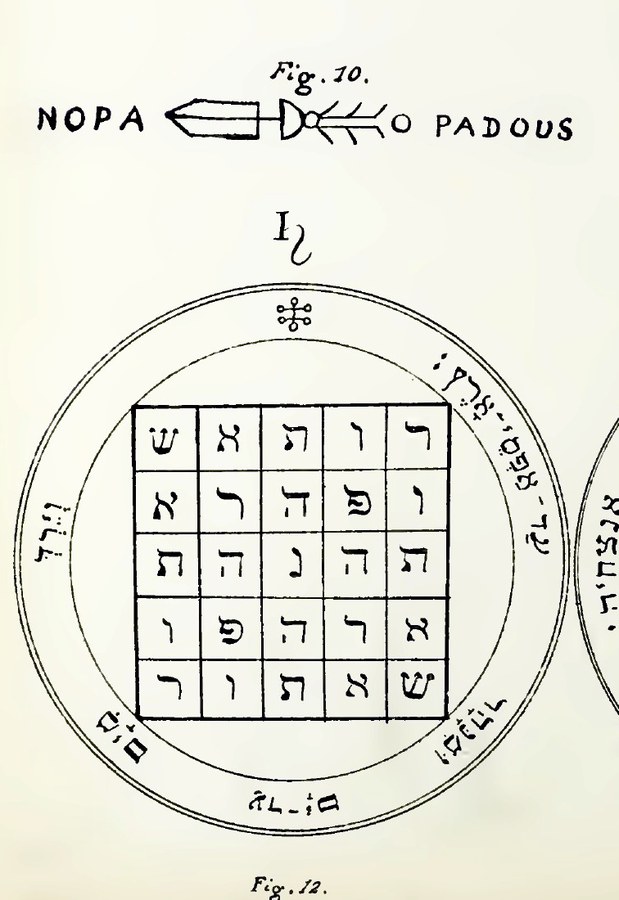
Second Pentacle of Saturn
The caption assigns the figure to adversity and the repression of spiritual pride.
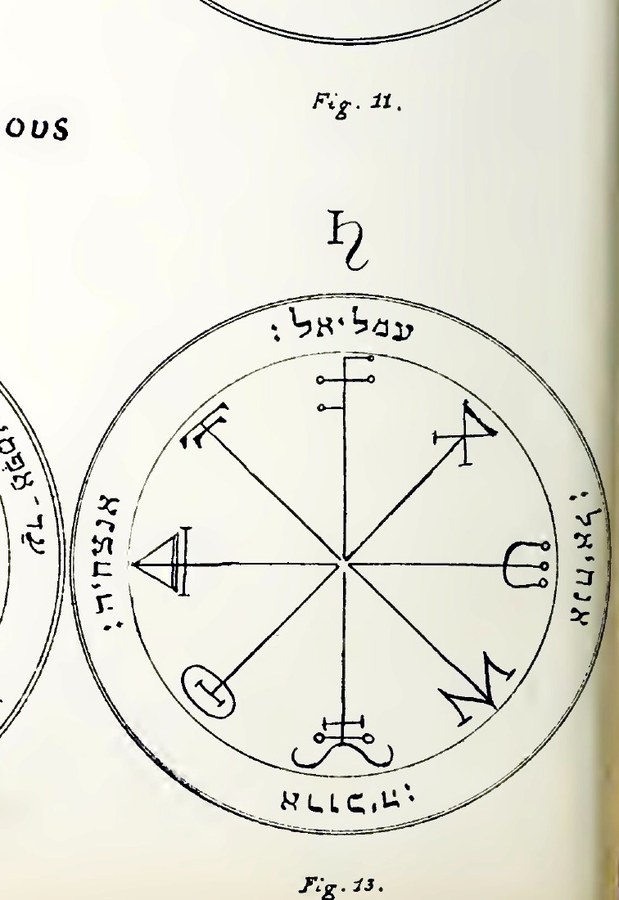
Third Pentacle of Saturn
Mathers assigns this night figure to invocations of spirits associated with Saturn.
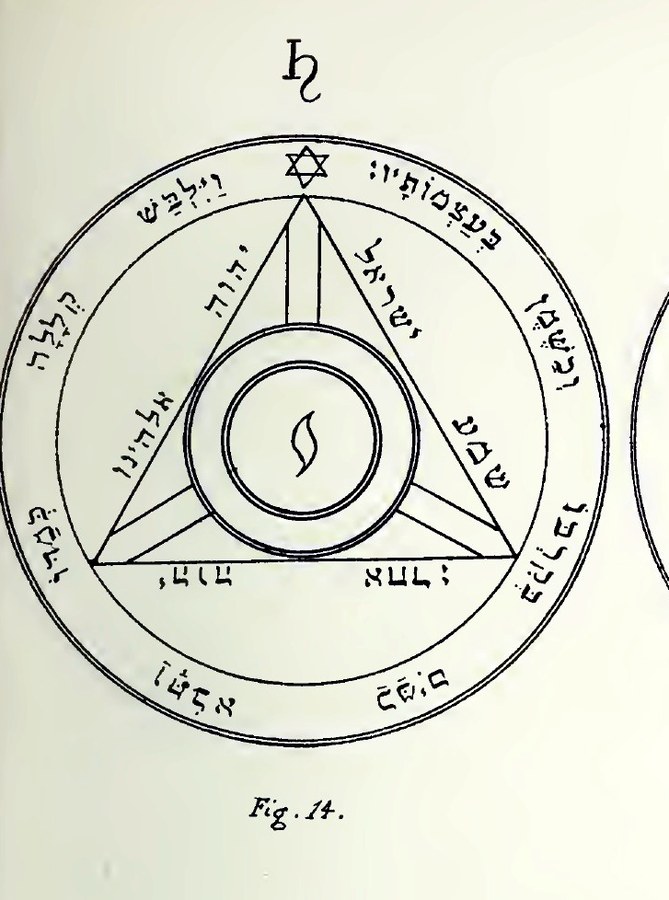
Fourth Pentacle of Saturn
The caption associates the figure with ruin, destruction, death, and spirits said to bring news from the south.
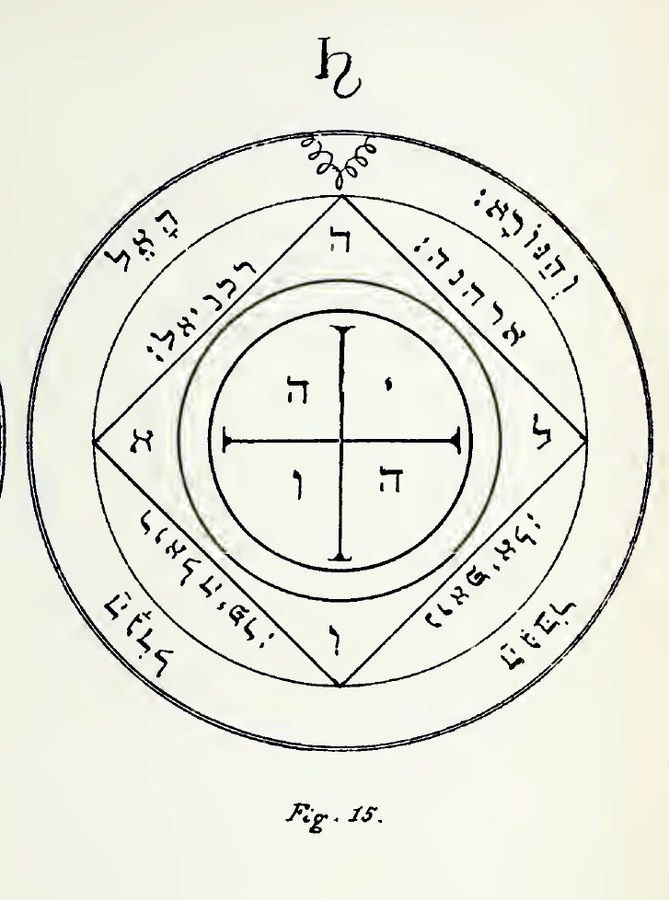
Fifth Pentacle of Saturn
Mathers says the figure protects a night invocation and drives away spirits guarding treasure.
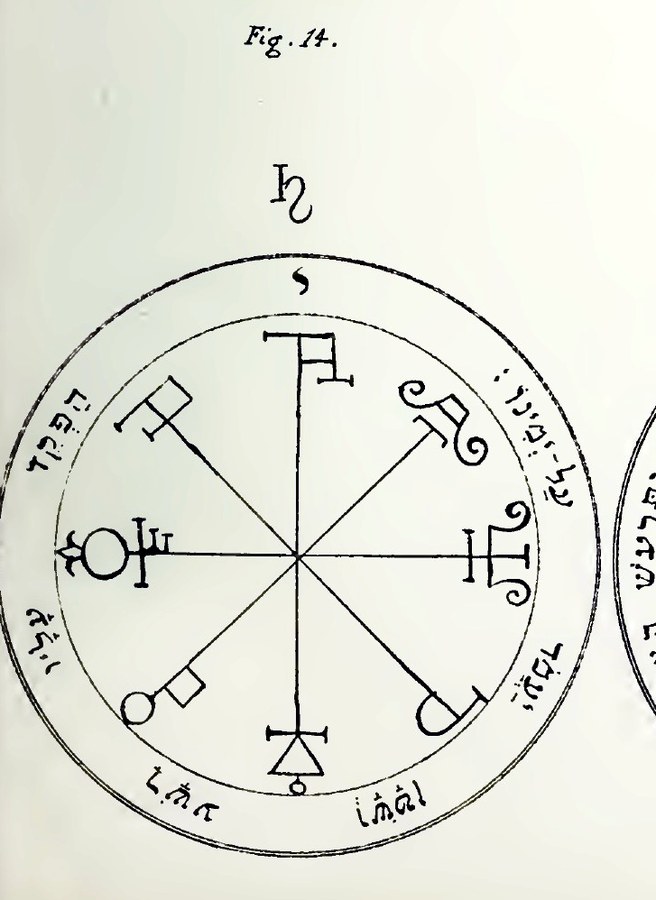
Sixth Pentacle of Saturn
The caption makes an aggressive claim that pronouncing the figure against someone brings demonic obsession.
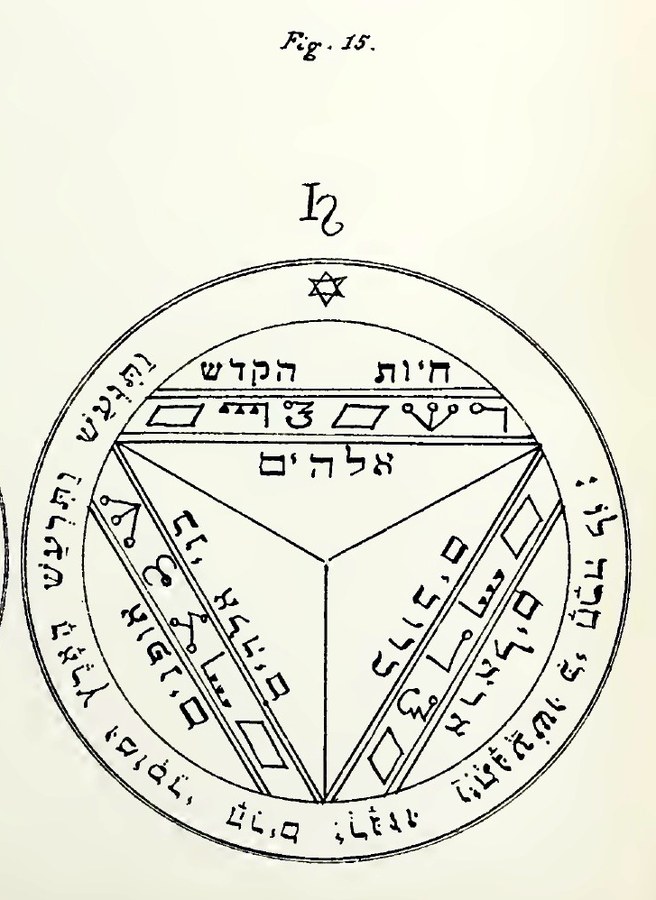
Seventh Pentacle of Saturn
Mathers connects the final Saturn figure with earthquakes through the collective power of the angelic orders named inside it.
Text and plate comparison
| Figure | Mathers’s stated theme | Textual anchor | Plate |
|---|---|---|---|
| 1. First Pentacle of Saturn | authority, spirits, psalm | Psalm 72:9 | II, fig. 11 |
| 2. Second Pentacle of Saturn | word square, adversity, psalm | Psalm 72:8 | II, fig. 12 |
| 3. Third Pentacle of Saturn | night, angels, planetary characters | No biblical verse is identified | II, fig. 13 |
| 4. Fourth Pentacle of Saturn | destruction, triangle, composite text | Deuteronomy 6:4 and Psalm 109:18 | III, fig. 14 |
| 5. Fifth Pentacle of Saturn | protection, treasure, night | Deuteronomy 10:17 | III, fig. 15 |
| 6. Sixth Pentacle of Saturn | hostility, planetary characters, psalm | Psalm 109:6 | III, fig. 16 |
| 7. Seventh Pentacle of Saturn | angelic orders, earthquake, mixed scripts | Psalm 18:7 | III, fig. 17 |
What the plate can and cannot establish
The crops preserve the figures as Mathers printed them, including damaged or uncertain readings he discusses in his notes. The linework establishes the edition’s layout. The accompanying prose supplies names, script identifications, and claimed purposes that may not be recoverable from shape alone.
Different manuscript witnesses can change spelling, letter shape, color, order, or even the set of figures. The individual pages therefore distinguish visible evidence from Mathers’s interpretation and from the broader Clavicula tradition.