
Long legs and a crown turn Le Breton’s 1863 Stolas into an elongated owl; Ars Goetia 36 attaches astronomy, plants, and stones to the prince.
- 1863 headword
- Stolas
- Ars Goetia
- No. 36 · Prince
- Legions
- Dictionnaire 26 · Goetia 26
What Collin de Plancy’s Stolas entry says
Stolas is a great infernal prince who appears as an owl and can assume human form before the exorcist. The dictionary assigns him three linked fields of knowledge: astronomy, the properties of plants, and the value of precious stones. Twenty-six legions recognize him as general. The entry is unusually economical, with no anecdote or editorial detour around the catalogue description.
The three teaching fields move from sky to living earth to mineral earth. That vertical range gives the short article an internal order even though Collin de Plancy does not explain a theory connecting the subjects. Calling Stolas a general at the close adds a military term to the princely rank without expanding the narrative.
Reading Louis Le Breton’s 1863 portrait
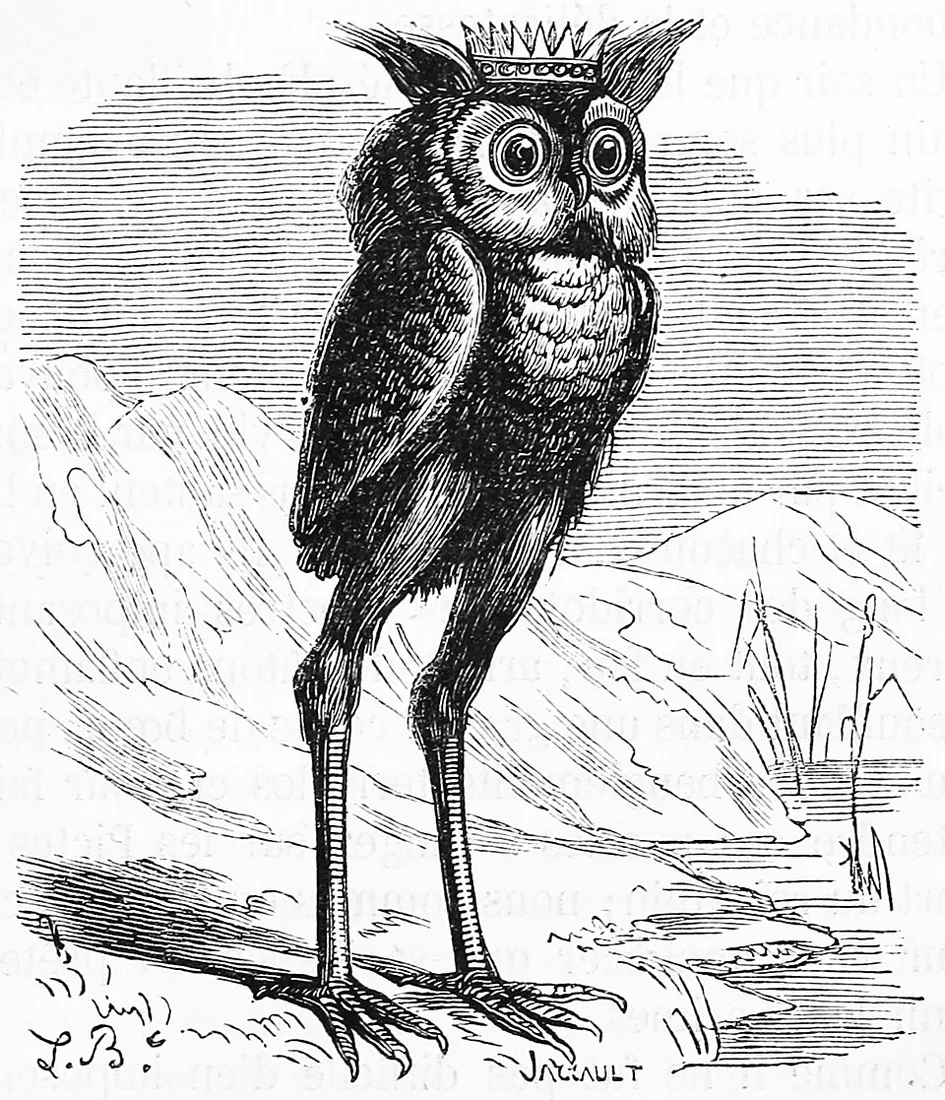
Le Breton gives the owl very long legs, a broad facial disk, and a small crown hovering above the head. The body stands frontally and nearly fills the vertical field, while dark wings frame a pale chest. The elongated anatomy makes the familiar bird strange without adding tools for astronomy, herbs, or gems.
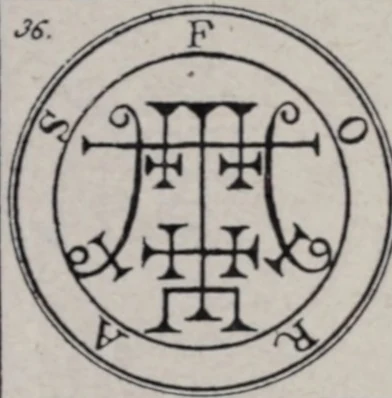
The portrait chooses the first animal form and gives rank through the crown. The Goetia print begins with a raven rather than an owl before moving to human shape, while its seal supplies a third, abstract representation. The familiar owl image therefore belongs specifically to the French dictionary’s wording and visual program.
Stolas and Ars Goetia spirit 36
Both accounts call Stolas a prince, allow a bird-to-human transformation, teach astronomy and knowledge of herbs and precious stones, and count twenty-six legions. Their offices and following align closely despite the avian difference.
The Dictionnaire says owl, calls the followers a general’s legions, and describes the worth or value of stones. The Goetia edition says a great raven and speaks of the virtues of herbs and precious stones. That single bird substitution strongly affects later art while leaving the office intact.
Worked comparison: how one bird changes the icon
Remove the caption and ask which source would identify the bird. The round face, forward gaze, and crown fit the Dictionnaire’s owl, while they do not visually communicate the Goetia’s raven. Reattach the texts and the difference becomes traceable rather than mysterious. The same astronomy, herb, stone, and legion details surround two different birds.
The portrait is strong evidence for how Stolas looked in the 1863 edition, not proof that every earlier or later witness described an owl. The Goetia seal remains useful for tracking spirit 36 but contains no ornithological answer. Because the teaching fields and twenty-six-legion total do not change, the bird variant can be isolated instead of letting it obscure the larger agreement between the entries.