
Le Breton’s 1863 Amon fuses an owl head with a serpent tail, arresting the shift from fire-breathing wolf to human form shared by Ars Goetia 7.
- 1863 headword
- Amon
- Ars Goetia
- No. 7 · Marquis
- Legions
- Dictionnaire 40 · Goetia 40
What Collin de Plancy’s Amon entry says
Amon or Aamon is a powerful marquis who first appears as a fire-breathing wolf with a serpent’s tail. His human transformation keeps only a human body: an owl-like head and sharp canine teeth preserve the composite. He knows past and future and reconciles estranged friends, with forty legions under his command. Collin de Plancy then appends an Egyptian comparison to Amon or Amoun, moving from grimoire catalogue to religious history.
The entry’s two halves operate differently. The first transmits rank, body, offices, and retinue from demonological lists. The second associates the name with an Egyptian supreme god and blue human form. That juxtaposition records nineteenth-century comparative habits but does not prove that the Goetia marquis and the Egyptian deity are historically identical.
Reading Louis Le Breton’s 1863 portrait
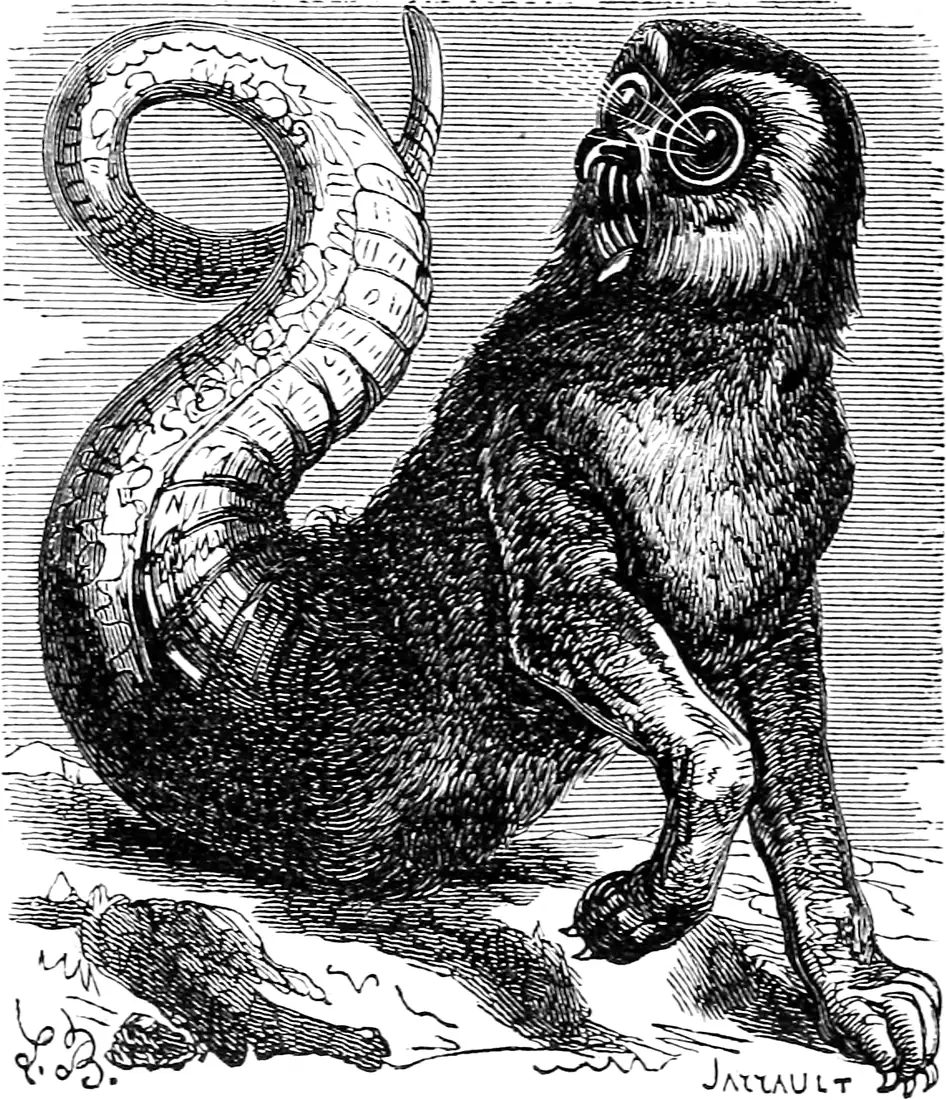
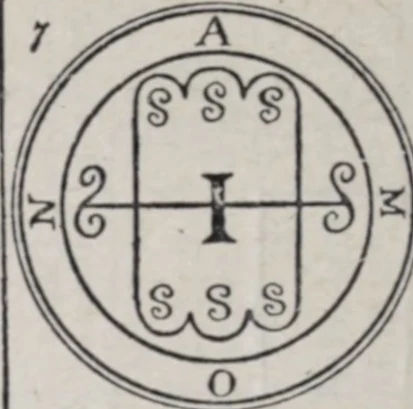
Le Breton concentrates on the transformed body. A muscular, partly human figure crouches forward under a horned owl-like head, while a thick serpent tail curls behind it. The low stance and open jaws make the creature look ready to spring. Flame is subordinated to anatomy, allowing teeth, talons, fur, and scales to carry the hybrid description.
The engraving joins features named at different moments instead of showing wolf and human forms separately. Amon’s Goetia seal contains no animal portrait; it is the printed sign for number 7. The combined display lets a reader compare an illustrator’s synthesis with a catalogue’s abstract identifier.
Amon and Ars Goetia spirit 7
Both sources call Amon a marquis, begin with a wolf and serpent tail, move to a bird-headed human form, connect the breath with fire, give knowledge of past and future, and retain forty legions. Reconciliation between friends is shared as well.
The Goetia also assigns Amon the power to cause feuds, creating a paired ability to divide and reconcile. Its transformed head is described as a raven’s, while the French text and Le Breton image favor an owl. The Dictionnaire adds the Egyptian comparison and calls Amon unusually solid or dependable among infernal princes.
Worked comparison: raven, owl, and the problem of a redrawn head
Focus on the transformed head. The Goetia print says raven; the French dictionary says owl; the engraving supplies rounded eyes and a horned silhouette that reinforce the owl reading. Everything below the neck can remain similar while one translated or inherited bird term changes the portrait’s character. The seal cannot adjudicate because it depicts neither bird.
The worked comparison isolates a real textual difference instead of harmonizing it into “bird-headed.” Le Breton’s owl belongs specifically to the 1863 presentation and records how that edition resolved the head. It does not replace the raven reading preserved by the Goetia witness.