
Fire streams from Alocer’s eyes in Le Breton’s 1863 mounted portrait; the lion-faced teacher appears as Alloces at Ars Goetia 52.
- 1863 headword
- Alocer
- Ars Goetia
- No. 52 · Duke
- Legions
- Dictionnaire 36 · Goetia 36
What Collin de Plancy’s Alocer entry says
Alocer is a powerful great duke who appears as a shaggy knight on an enormous horse. His face resembles a lion, his complexion is fiery, his eyes burn, and his voice is grave. He teaches the secrets of astronomy and the liberal arts and commands thirty-six legions. The entry binds visual heat to intellectual instruction without explaining a causal connection between them.
The grave voice and knightly posture moderate the flames. Collin de Plancy’s sequence moves from rank to mounted body, then face, skin, eyes, speech, teaching, and retinue. It reads almost like a camera moving inward before returning to the abstract scale of thirty-six legions.
Reading Louis Le Breton’s 1863 portrait
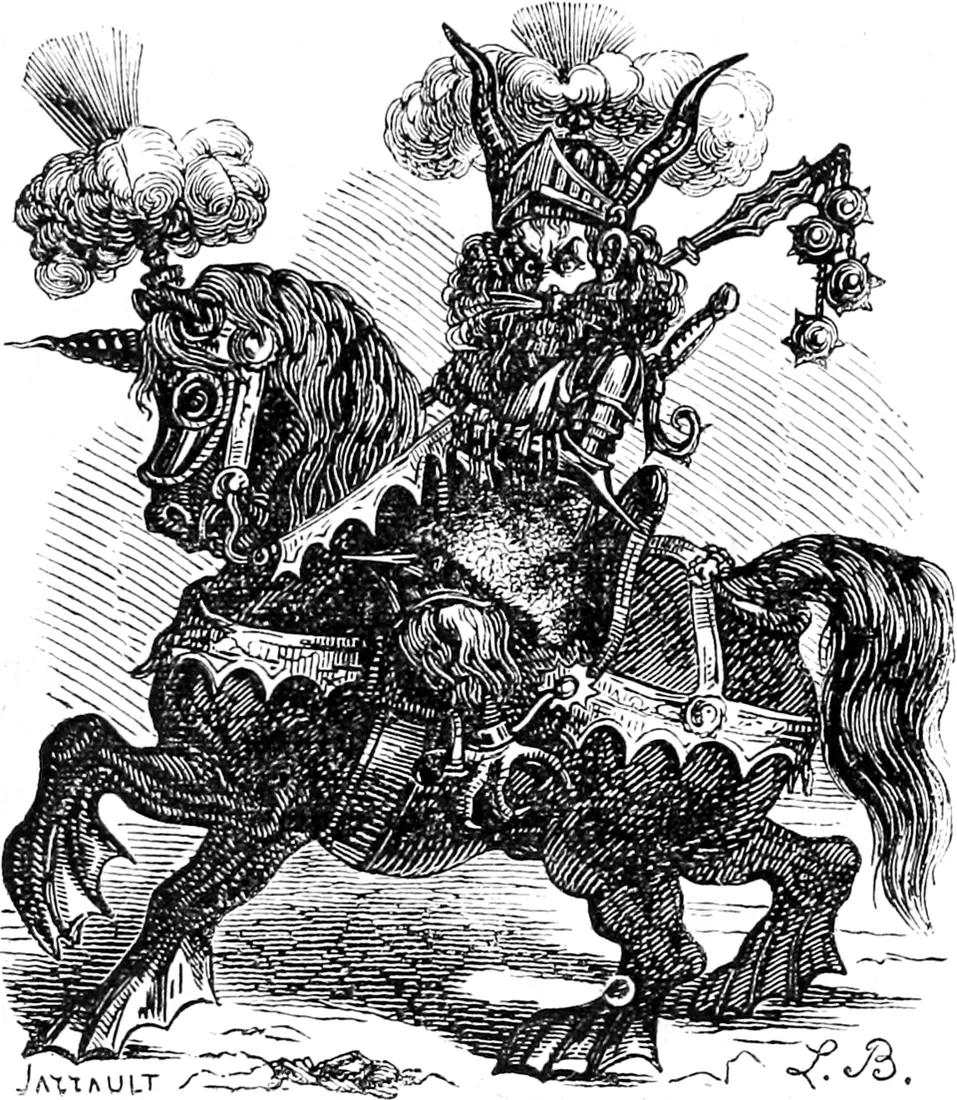
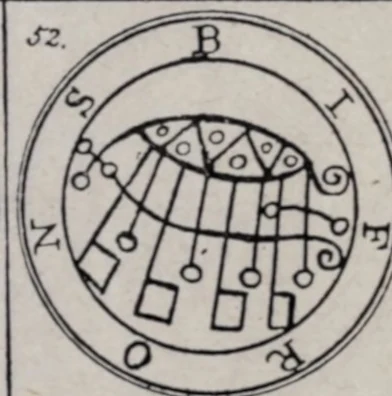
Le Breton depicts a compact armored rider with a leonine face and rays or flames streaming from the eyes. The enormous horse occupies most of the frame, making the duke appear integrated into a military mount rather than isolated as a monster. Dark mane, armor, and harness surround the bright eye motif.
A black-and-white engraving cannot render a fiery complexion literally, so radiating marks around the eyes carry the heat. Alloces’s Goetia seal remains a separate line emblem attached to number 52. The portrait translates color and light; the seal does not depict either.
Alocer and Ars Goetia spirit 52
The Goetia shares the soldier or knight on a great horse, lionlike red face, flaming eyes, grave speech, astronomy, liberal sciences, helpful familiars, ducal rank, and thirty-six legions. The visual and educational cores align closely.
The Dictionnaire emphasizes shaggy texture, fiery complexion, and secrets of astronomy but omits the Goetia’s good familiars. The names Alocer and Alloces record another small change in transmission. Le Breton develops the burning eyes more dramatically than the short prose requires.
Worked comparison: translating color into black ink
Identify the color words in the texts: red or fiery face and burning eyes. Then inspect the monochrome print. Dense shading darkens the face, while thin rays around the eyes suggest emitted light. The engraver converts color into value and line direction rather than abandoning the feature.
The example shows illustration as interpretation under a print constraint. The portrait preserves the effect of fiery sight through graphic means, while the seal remains an identifier with no claim to literal color or anatomy. Horse, armor, and solemn posture support the grave voice and ducal rank, allowing several verbal traits to reinforce one coherent mounted figure. The omitted familiars provide a final reminder that a portrait can closely match appearance while still leaving one entire office invisible.