
Aleister Crowley left a large paper trail, but he also shaped his own legend. Dated publications, library holdings, and archival finding aids place much of his life on a documented timeline. His accounts of mystical experiences and later stories about them have a different evidentiary status.
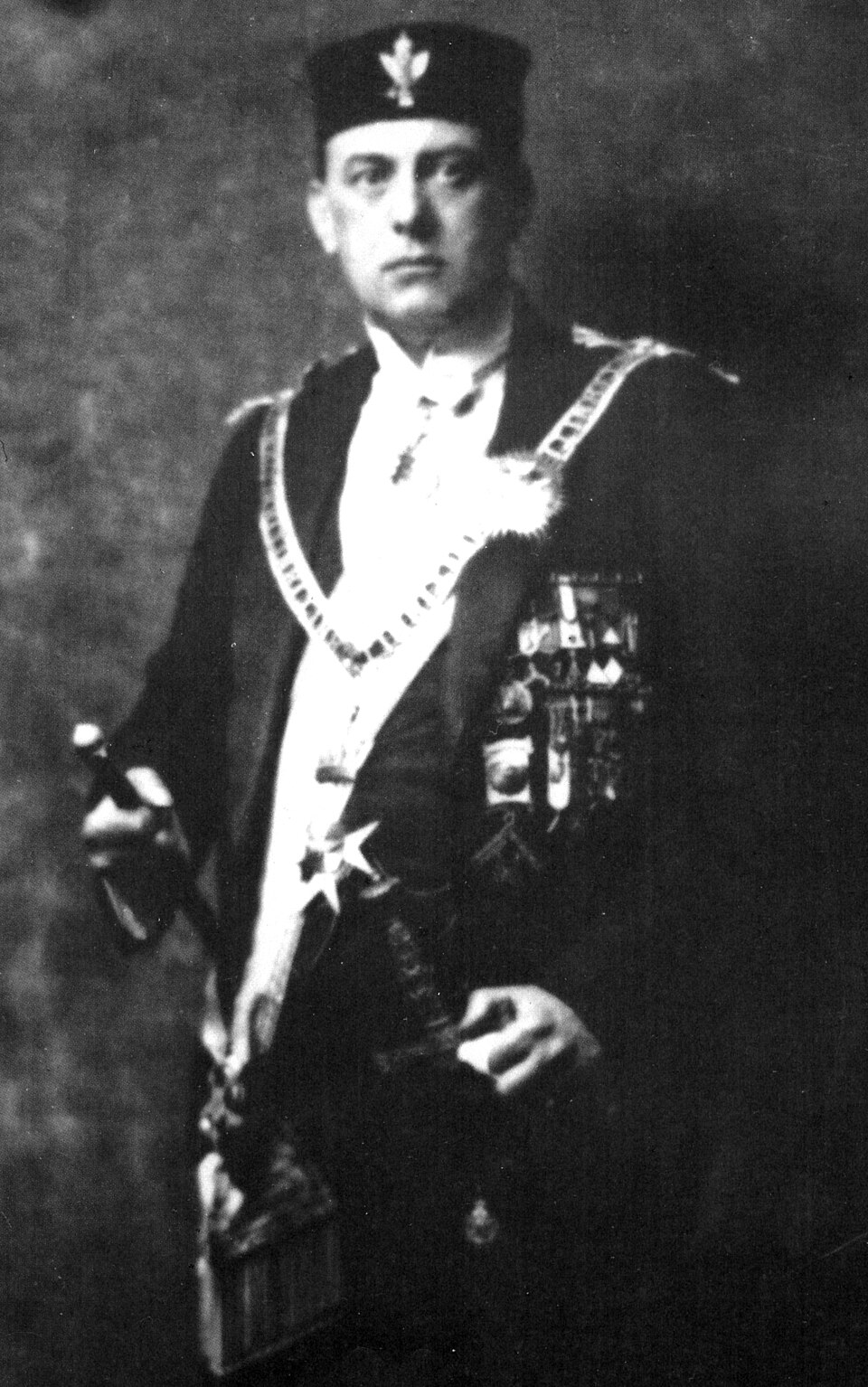
1875–1898: family, Cambridge, and first books
Edward Alexander Crowley was born in Leamington, Warwickshire in 1875. The Harry Ransom Center’s biographical sketch records his entry to Trinity College, Cambridge in 1895 and his departure without a degree in 1898. It also notes a reported mystical experience in Stockholm at the end of 1896. That experience is part of the story Crowley told about himself; a library inventory can locate the claim without independently verifying what happened inwardly. The National Library of Scotland identifies Aceldama, a privately issued poem from 1898, as his earliest known publication. Its wording “believed to be” is a useful reminder that a bibliography is revised when earlier copies or imprints come to light.
1898–1904: the Golden Dawn and the Scottish press
The Ransom Center dates Crowley’s initiation into the Hermetic Order of the Golden Dawn to November 1898 and describes his conflict with other members around 1900. The National Library of Scotland dates his acquisition of Boleskine House near Loch Ness to 1899 and his residence there through 1913. These years also explain the Foyers imprint on some of his books. The 1904 Book of the Goetia was published in Boleskine, Foyers, Inverness according to a National Library of New Zealand catalogue record. Its 1904 date is a bibliographic fact about that edition. It does not date the much older manuscript tradition behind the text or prove that Crowley personally composed the translation.
1904–1913: a reported revelation and an active publishing program
In Crowley’s account, a text later called The Book of the Law was received in Cairo in 1904. The Ransom Center finding aid retells that narrative, while the National Library of Scotland dates publication of the book to 1909. Keeping the reported reception and the printed edition apart prevents a common timeline error. Crowley’s own Scottish imprint issued three volumes of The Works of Aleister Crowley in 1905, 1906, and 1907, according to the National Library’s holdings. The Ransom Center records The Equinox beginning in 1909 and Crowley’s announcement of A∴A∴ there. These dated print objects can be checked independently of agreement with the spiritual system they promoted.
1913–1947: later orders, papers, and the tarot project
The Ransom Center describes Crowley’s involvement with the Ordo Templi Orientis by 1913, travel and residence in several countries, later writing, and his death in Hastings on 1 December 1947. Such broad biographical sketches are finding aids, not a substitute for reading each letter or diary entry. Syracuse University holds correspondence with Frieda Harris dated 1939–1943 and a 1942 memorandum concerning tarot. The Warburg Institute identifies the Crowley–Harris Book of Thoth and deck as work of 1937–43. These holdings ground the later tarot project in dated documents while leaving questions of authorship and individual card design to the objects themselves. Warburg’s Yorke Collection, built from material kept by Crowley’s associate Gerald Yorke, offers another route into surviving papers. Its folder-level descriptions can guide research, but a claim about a particular letter still needs the letter itself.
Key dates and evidence
- Born Edward Alexander Crowley in Warwickshire.Harry Ransom Center finding aid
- Entered Trinity College, Cambridge.Harry Ransom Center finding aid
- Published Aceldama; joined the Golden Dawn in November.National Library of Scotland; Harry Ransom Center
- Boleskine House came into Crowley’s possession.National Library of Scotland
- The Book of the Goetia edition appeared at Foyers; Crowley reported receiving The Book of the Law in Cairo.National Library of New Zealand; Harry Ransom Center
- Three volumes of The Works of Aleister Crowley appeared.National Library of Scotland
- The Equinox began; The Book of the Law appeared in print.Harry Ransom Center; National Library of Scotland
- Crowley and Frieda Harris worked on the Thoth tarot project.Warburg Institute; Syracuse University
- Crowley died in Hastings on 1 December.Harry Ransom Center
The dates of printed editions and surviving papers establish a publishing history. Crowley’s accounts of visions remain accounts of experiences he reported.
Sources and further research
- Harry Ransom Center: Aleister Crowley collection finding aid ↗
- National Library of Scotland: Crowley’s Scottish chapter ↗
- National Library of New Zealand: 1904 Book of the Goetia ↗
- Syracuse University: Crowley Papers finding aid ↗
- Warburg Institute: Yorke Collection ↗
- Warburg Institute: Crowley–Harris tarot exhibit context ↗
Next: The 1904 Mathers–Crowley Goetia: What the Edition Adds · Ars Goetia reference