
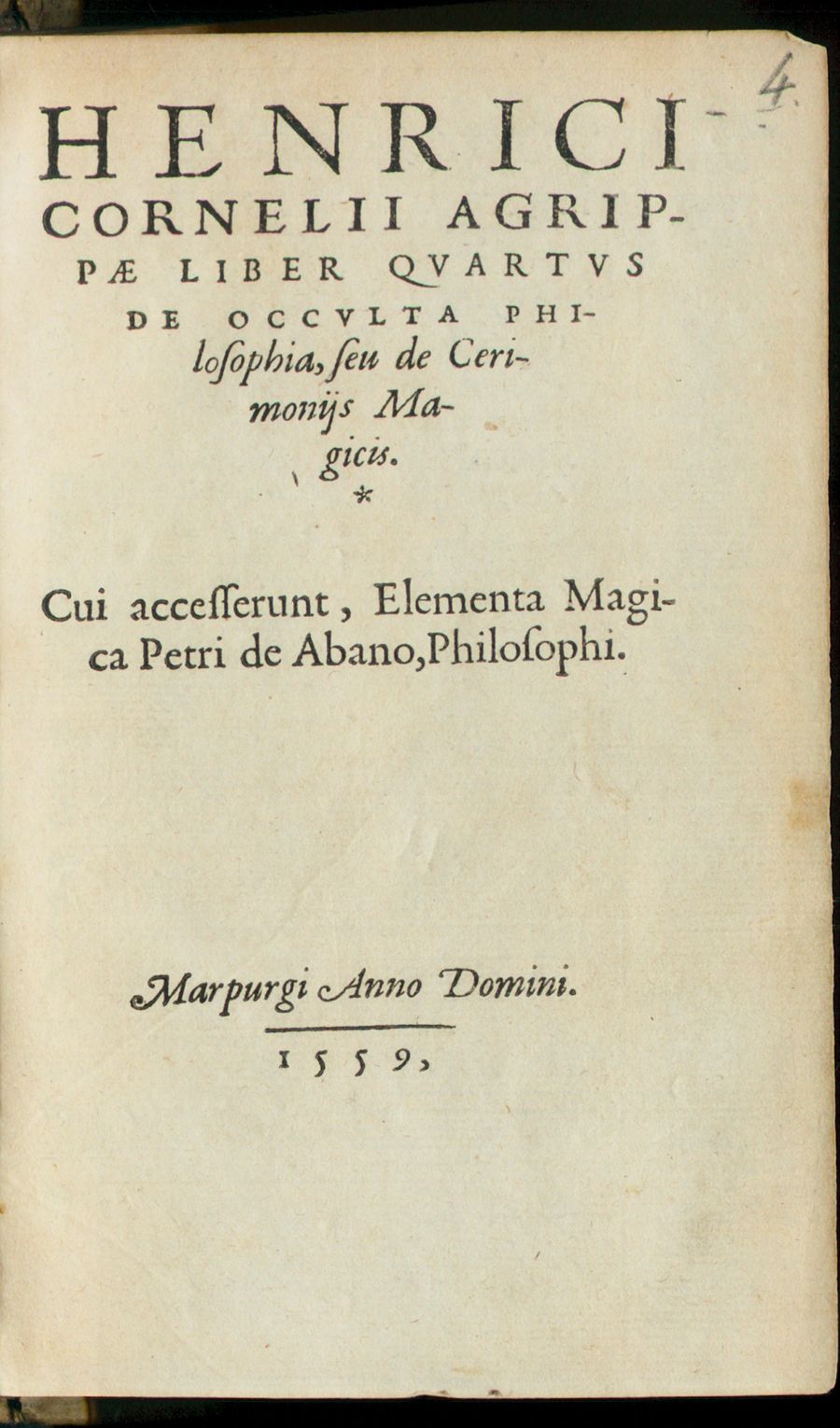
The Heptameron, also called Elementa Magica, is a compact ritual text organized around the seven weekdays. A surviving 1559 print and a 1655 English anthology show how its title, attribution, and arrangement changed.
Explore the archive
What the title page proves
The photographed Bavarian State Library page shows the Fourth Book of Occult Philosophy under Agrippa’s name and explicitly says that the Magical Elements of Peter of Abano have been added. It proves that this copy was printed with those names and that the works were paired. The printed names do not prove authorship. Wellcome’s catalog calls the attribution to Peter spurious and describes the later English compilation as a set of separately titled works.
Joseph H. Peterson’s editorial comparison relates the Heptameron to other ritual manuscripts and emphasizes how its printed weekday arrangement may differ from predecessor material. That modern analysis helps frame questions; it should not be confused with the physical 1559 copy. The printed circles and seals belong to a tradition of copying and revision; their forms can differ across witnesses.