
Sigil of Eligos
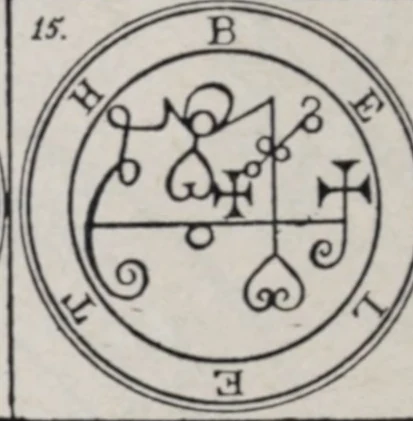
At a glance
- Entry
- 15 of 72
- Rank
- Duke
- Legions
- 60 in the text
Description in the text
Eligos is said to uncover hidden matters and foretell events, especially the course of war and the meeting of soldiers. The text also grants him influence over the affection of lords and other powerful people.
Read entry 15 on page 27 of the 1916 edition
Appearance
An armed knight carrying a lance, banner, and serpent.
Topics attributed to this entry
- Hidden matters
- Warfare
- Favor
Reading this entry
Eligos appears as an armed knight carrying a lance, an ensign, and a serpent. The text does not say whether the serpent is part of the equipment, a companion, or a symbol. His offices cover hidden information and the future, particularly wars and how soldiers will meet. The martial figure and military questions reinforce one another, while the hidden-matters office gives the entry a broader divinatory reach.
The duke is also credited with attracting the affection of lords and other powerful people. This shifts the entry from the battlefield to courtly favor without explaining the connection. It is a useful example of the catalogue’s habit of grouping intelligence and social influence under one name. Eligos commands 60 legions in the text, and the seal is presented as his identifying mark.
Read entry 15 on page 27 of the 1916 edition or compare the 1904 transcription.
A closer reading of entry 15
What the numbered text says
Eligos combines the dress of a knight with claims about information: hidden matters, future events, and how soldiers will meet. His lance, ensign, and serpent are all named objects, but the text offers no explanation for the serpent or any particular battle. The final office, gaining the affection of lords, shifts from military prediction to social favor. That change of subject is part of the entry, not evidence that every duke has one coherent specialty.
About the printed seal
Seal 15 on the third 1916 frontispiece belongs to this entry. Its linework is not described as a lance, banner, or serpent by the accompanying prose. The visual plate and the verbal knight are related by numbering, without a supplied symbolic key.
Compare another entry
Compare entry 20: Purson. Purson also receives foreknowledge and hidden knowledge, but his kingly passage specifies treasure, creation, familiars, and an animal-mounted procession. Eligos narrows the future-looking claim toward war and the assembly of soldiers, then adds favor from powerful people.