
Sigil of Leraje
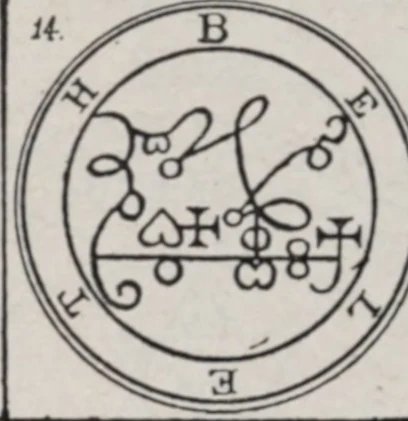
At a glance
- Entry
- 14 of 72
- Rank
- Marquis
- Legions
- 30 in the text
- Also written
- Leraie, Leraikha
Description in the text
Leraje is credited with stirring battles and contests. The account specifically links him to arrow wounds that worsen, and associates his imagery with Sagittarius.
Read entry 14 on page 26 of the 1916 edition
Appearance
A green-clad archer carrying a bow and quiver.
Topics attributed to this entry
- Battles
- Archery
- Sagittarius
Reading this entry
Leraje, with Leraikha and Leraie as variants in the passage, is a green-clad archer carrying bow and quiver. This is one of the catalogue’s clearest visual links between an attributed office and a costume. The marquis is said to stir battles and contests and to make arrow wounds decay. The passage directly associates this with Sagittarius, rather than leaving the zodiac connection for a later commentator to invent.
The wound claim belongs to historical magical literature; it is not a medical description of how injury progresses. What sets Leraje apart is the tight cluster of archer, arrows, conflict, and zodiacal archer, with little else added. His 30 legions and seal close a concise entry. The different spellings deserve to remain visible because they refer to the same numbered spirit in this edition.
Read entry 14 on page 26 of the 1916 edition or compare the 1904 transcription.
A closer reading of entry 14
What the numbered text says
The green clothing, bow, and quiver form a compact archer portrait. Leraje is credited not simply with fighting, but with beginning large contests and worsening arrow wounds. The Sagittarius sentence attaches the arrow imagery to a zodiac sign, without supplying a horoscope method or a birth-sign association. The alternative names occur across the heading and first sentence of one numbered entry, and should remain aliases rather than separate catalogue members.
About the printed seal
The 1916 third plate numbers the emblem 14. It is a witness to which sign the edition assigns to Leraje, not a coded anatomical drawing of the archer. The passage never says the green clothing or the wounds are represented in its strokes.
Compare another entry
Compare entry 23: Aim. Aim is also linked to destructive violence, but the written instrument is a firebrand rather than an arrow. Aim’s three heads and claims about wit and private answers broaden that office. Leraje’s much shorter passage stays with archer imagery, battle, and festering wounds.