
Sigil of Aim
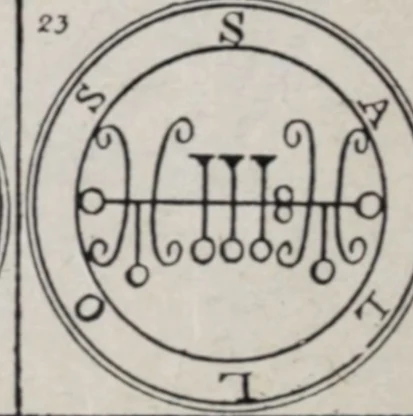
At a glance
- Entry
- 23 of 72
- Rank
- Duke
- Legions
- 26 in the text
Description in the text
Aim is associated with fire, including the burning of cities and strongholds in the traditional account. He is also said to sharpen wit and answer private questions truthfully.
Read entry 23 on page 29 of the 1916 edition
Appearance
A handsome body with three heads; serpent, star-marked human, and calf; riding a viper and carrying a firebrand.
Topics attributed to this entry
- Fire
- Wit
- Private questions
Reading this entry
Aim is described as attractive in body but bearing three heads: serpent, human with two stars on the forehead, and calf. He rides a viper and carries a firebrand. The source attributes the burning of cities, castles, and other great places to that brand. The three heads and starred brow are distinctive details; the passage does not say that they correspond to separate offices or stages of an encounter.
Aim also makes a person witty and answers private questions truthfully, a quieter pair of offices beside the dramatic fire imagery. The duke commands 26 legions in the text. Keeping the destructive and intellectual claims in the same account avoids flattening him into either a fire demon or a source of cleverness alone. These are literary and ritual attributions, not reports of documented events.
Read entry 23 on page 29 of the 1916 edition or compare the 1904 transcription.
A closer reading of entry 23
What the numbered text says
Aim’s three heads are individuated: serpent, star-marked human, and calf. The mounted viper and carried firebrand make the portrait unusually dense, and the fire is tied to destruction of cities and strongholds. The same entry then assigns wit and truthful replies about private matters. These latter offices are not consequences of the fire imagery in the text; they are additional claims in a catalogue that often groups unrelated abilities.
About the printed seal
Aim’s emblem is number 23 on the third 1916 frontispiece. The passage provides no visual key connecting the seal’s strokes with two forehead stars, three heads, or a torch. The uncoded mark and the prose portrait remain separate forms.
Compare another entry
Compare entry 14: Leraje. Leraje’s destructive office concerns battles and arrow wounds and comes with Sagittarius-linked archer imagery. Aim’s is fire spread by a carried brand, accompanied by claims about cleverness and answers. Both passages involve harm, but the written instruments and secondary offices differ.