
Sigil of Berith
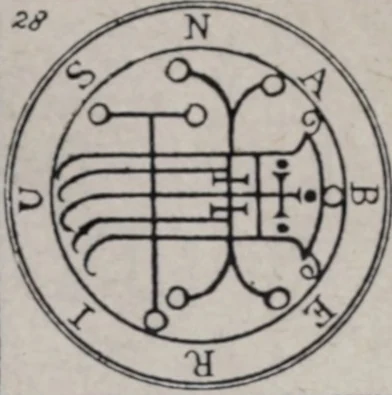
At a glance
- Entry
- 28 of 72
- Rank
- Duke
- Legions
- 26 in the text
- Also written
- Beale, Beal, Bofry, Bolfry
Description in the text
Berith is credited with true answers about the past, present, and future and with turning metals into gold. His entry also connects him with conferring or confirming dignity and supplies several later variant names.
Read entry 28 on page 30 of the 1916 edition
Appearance
A red-clad soldier on a red horse, wearing a golden crown.
Topics attributed to this entry
- Divination
- Alchemy
- Dignity
Reading this entry
Berith is a duke clothed in red, mounted on a red horse, and wearing a gold crown. The source names Beale or Beal and Bofry or Bolfry as later human names for him, marking those alternatives differently from a simple spelling variation. His offices include answers about past, present, and future, changing metals into gold, and granting or maintaining dignity. The voice is described as clear and subtle.
This entry refers back to the ring mentioned in Beleth’s description, giving it a cross-reference within the catalogue rather than presenting every ritual detail afresh. The red color is repeated in horse and clothing, but the text does not interpret its meaning. Berith commands 26 legions. His crowned soldier image, alchemical claim, name variants, and explicit link to another entry make him one of the more internally connected figures in the book.
Read entry 28 on page 30 of the 1916 edition or compare the 1904 transcription.
A closer reading of entry 28
What the numbered text says
Berith’s red clothing and horse, gold crown, and clear subtle voice make a tightly specified portrait. The passage explicitly calls Beale, Beal, Bofry, and Bolfry names given by later people, so the variants have their own chronological qualification. His stated offices combine answers across three times, metal-to-gold transformation, and the granting or confirmation of dignity. None is described as a documented historical event.
About the printed seal
The fourth 1916 frontispiece carries seal 28. Its printed number links the drawing to Berith and the later names listed in the passage. The red color scheme and crown are not inferred from the monochrome strokes of the emblem.
Compare another entry
Compare entry 17: Botis. Botis receives knowledge of past and future but not an explicit present; Berith lists all three. Botis’s social office reconciles friends and enemies, whereas Berith confers and confirms dignity. Similar answer formulas do not make the two entries duplicates.