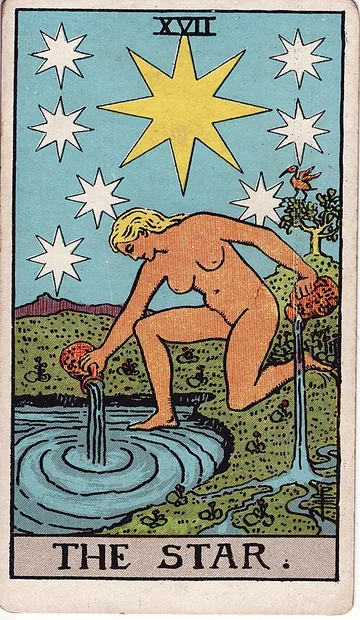
The Star tarot card can invite hope after a difficult turn, but it is a hope that needs water, time, and support. Upright, a modern reading may favor restoration and an honest next step. Reversed, it may ask whether doubt is protecting you from disappointment or whether an ideal has no practical support yet. Pamela Colman Smith shows a figure pouring water onto land and into a pool beneath one large star and seven smaller ones. The image follows The Tower in the Major Arcana, without erasing what was lost there. Its useful question is what can be replenished now and which action would make a better future more than a wish.
Look at the water and the eight stars
One large eight-pointed star shines above seven smaller ones. Below, a kneeling figure pours from two vessels: one stream returns to a pool, the other spreads across the land. Her left knee rests on earth and her right foot touches water; a bird perches near a tree behind her. Waite described these as waters of life, but his account went beyond the simple claim that the card means hope. Smith's picture makes renewal an action rather than an award: the water moves into two places, and neither vessel appears to be kept full for display. What in your situation needs replenishing, and what source can continue to supply it? The stars can orient a traveler, but the work happens close to the ground.
Upright: make hope something you can practice
Upright, The Star may favor a modest return of energy, trust, or creative direction after strain. That does not require feeling cheerful immediately. It could mean rest protected on the calendar, a conversation with someone reliable, or one manageable session on a project you still care about. Waite's historical divinatory list is strikingly mixed: it includes loss and abandonment, then records another reading of hope and bright prospects. A modern reading can honor both sides by asking what has genuinely been lost and what can be supported now. Choose an action small enough to repeat, and notice whether it restores you or merely looks inspiring from outside. The card's light is an orientation, not proof that difficulty has ended.
Reversed: when the light feels distant
A contemporary reversed Star reading may describe doubt after repeated disappointment, or an ideal that has never been given the time and resources it needs. Those call for different responses. If you are exhausted, find what practical support is missing before asking yourself for more optimism. If a plan is beautiful but vague, write down its first test, cost, and likely obstacle. Waite's own reversed list named arrogance, haughtiness, and impotence rather than the modern formula of “lost hope.” The card cannot diagnose your mood or declare that you are blocking your own future. It can invite an honest look at the gap between a desired outcome and the conditions that would make movement possible.
The Star in love and relationships
In love, The Star may bring trust, openness, and repair into view. Upright can suit a gentle conversation after conflict, especially when both people are willing to say what hurt and what would help. Reversed may raise the question of whether one person is being asked to believe things will improve without seeing a change in behavior. The card does not guarantee reconciliation or reveal a partner's private feelings. Hope in a relationship needs more than a moving promise: time, consent, consistent conduct, and room for each person to keep boundaries. Ask what would make trust grow in observable steps. If the answer is only “wait and have faith,” the water may be flowing from one person's vessel alone.
The Star in career and creative work
At work, The Star can fit the return of a reason to care about a project after criticism, a setback, or routine exhaustion. Upright may favor revisiting the part that still matters and giving it a practical next step: a small draft, a mentor's feedback, or a realistic schedule. Reversed may suggest that a team is selling an inspiring future while present staffing and pay remain unresolved. It does not predict a promotion, grant, or creative breakthrough. Compare the vision with the resources available now. If your idea has merit but not enough support, scale the first version or seek collaborators; if the work itself is draining you, recovery may require changing the conditions around it rather than finding a prettier slogan.
The Star as feelings or as a person
Asked how someone feels, The Star may suggest a theme of hope, vulnerability, or a wish for calmer contact. It cannot tell you that the other person secretly loves you or intends to return. The image may also reflect your own hope for them. As a person card, it can evoke someone who offers steadiness or shares what they have learned, without requiring them to be endlessly available. Notice what is observable: do they communicate clearly, respect boundaries, and follow through on what they offer? A bright impression is valuable, but it is not a substitute for a direct conversation. Let the other person's actual words and actions give the reading its limits.
Why does The Star follow The Tower?
In the Major Arcana sequence, The Star comes after The Tower's falling structure. That order makes its quiet scene more interesting than a generic promise that everything will be fine. The figure is not rebuilding the tower in one dramatic act; she is pouring water into a landscape that can receive it. After a disruption, ask what remains intact, who needs care, and which part of the old plan no longer deserves rebuilding. You might recover a friendship, skill, or routine in a new form. You might also need material help before reflection is possible. The Star offers a way to begin tending what is still alive, without insisting that the damage was somehow for the best.
Is The Star a yes or no card?
The Star can lean toward yes when the question is whether to take a small, supported step toward something meaningful. It is not a guarantee that the full wish will come true. Upright may favor beginning with the resources already available; reversed may suggest checking whether the plan has enough support or whether disappointment is making every option look impossible. Neither position determines another person's consent or a future award. “Should I submit a revised proposal?” is more useful than “Will everyone finally recognize me?” Decide what the first step costs, what feedback it can yield, and what you will do if the answer is no. Hope becomes sturdier when it can live alongside a fallback.
A reading example: the garden after a lost grant
Imagine a neighborhood garden loses the grant that paid for new beds. Volunteers are disappointed, and some want to announce a grand replacement project immediately. You draw The Star upright. The two streams suggest caring for what already exists while looking for another source: water the surviving plants, list the essential repairs, and ask volunteers which tasks they can sustain. Then apply for smaller funding with a budget shaped by that information. A reversed Star might warn that an inspiring announcement is outrunning the people and money available, or that the setback has made the group overlook a workable small season. The card does not promise another grant. It helps turn hope into care that can continue.
Questions to ask
- What remains worth tending after this setback?
- Which support would make a hopeful step practical?
- What small act can I repeat without draining myself?