Grimoires
Latin Picatrix transmits an Arabic astral-magic work through translations and manuscripts whose differences resist one ancient-book fantasy.

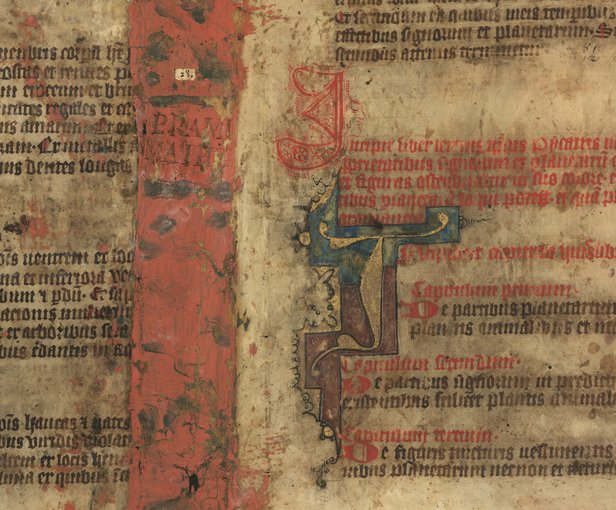
Two names and a chain of transmission
Picatrix is the title by which a Latin version of the Arabic Ghāyat al-Ḥakīm, “The Goal of the Sage,” became known to many European readers. It is a major work of astral magic, combining cosmological discussion, images, correspondences, and ritual material. Calling the Latin title an original ancient author’s name obscures the chain of language and editing. The Arabic work developed in a medieval intellectual setting; the Latin version is a translation and reworking, not a transparent word-for-word portal into that setting. The Warburg Institute’s catalogue identifies David Pingree’s 1986 critical edition specifically as the Latin version of Ghāyat al-Ḥakīm. The distinction matters for individual talismans and planetary correspondences: an Arabic witness, Latin adaptation, and modern English rendering may not use the same wording or arrangement.
Astral ideas in context
The work’s celestial vocabulary makes it attractive to astrology readers, but its account of the planets is not a modern birth-chart calculator. It assembles theories of celestial influence, materials, times, figures, and learned authority into a medieval worldview. A reader does not need to accept its claims to study its impact on European magic and natural philosophy. Texts such as Beringarius Ganell’s Summa show how later Christian compilers drew on Arabic and Latin material while arguing over its religious legitimacy. Recent Cambridge scholarship describes that intercultural movement and warns, by example, against imagining a single unchanging “Western” tradition. Picatrix thus belongs in a grimoire library as a witness to translation and intellectual exchange. It should also be handled without uncritically repeating a medieval author’s claims about peoples or faiths.
How the four books build from sky to operation
Picatrix progresses from celestial causation and degrees, through figures and configurations, to planetary properties, images, addresses, spirits, suffumigations, and ritual conditions. Stories and recipes interrupt the theory, but an extracted talisman still loses the cosmology and selection rules explaining why its figure, material, and moment belong together.
Ideas moving between languages
The four-book structure gives Picatrix a wider argument than any single striking image or ritual passage. Its discussions of astral correspondences sit alongside theories of the soul, the celestial spheres, materials, and the conditions under which medieval authors thought images gained force. Pingree’s 1986 edition preserves the Latin version as a distinct stage of this history. Comparing a passage with Arabic material can reveal a retained theme, a changed technical term, a religious reframing, or a substantial rearrangement. A dramatic excerpt detached from its chapter can look like a free-standing spell when it belongs to a longer argument about nature and celestial influence. The book’s lists also work cumulatively: a planet’s attributed color in one chapter, material in another, image in another, and time in another can be assembled into one operation by a later reader. Translation changes any one link in that chain. Its historical importance lies in that movement of systems and materials, not in measured proof that a planetary image produces an effect.
Questions to explore
- How do the Arabic and Latin forms arrange the material differently?
- Why can a celestial image change between translations and editions?
- What changed when an idea entered later European compilations?