
Sigil of Ronove
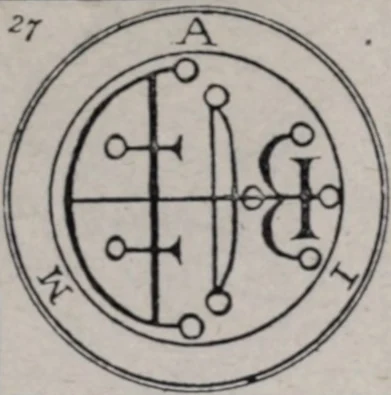
At a glance
- Entry
- 27 of 72
- Rank
- Marquis and Earl
- Legions
- 19 in the text
- Also written
- Ronové
Description in the text
Ronove is said to teach rhetoric and languages. The source also credits him with supplying good servants and gaining favor from friends or enemies.
Read entry 27 on page 30 of the 1916 edition
Appearance
A figure described only as a monster.
Topics attributed to this entry
- Rhetoric
- Languages
- Favor
Reading this entry
Ronové’s visible form is called a monster, with no animal parts or clothing described. The lack of detail matters: elaborate portraits sometimes circulated under this name cannot be traced to this numbered sentence alone. He is both marquis and earl. His attributed offices include rhetoric, languages, good servants, and favor with friends or enemies, bringing speech and social standing together in one short record.
The text gives no account of how the servants are obtained or what language knowledge entails. It also does not explicitly promise prophecy or treasure, frequent motifs elsewhere in the catalogue. Nineteen legions and a seal complete the entry. Ronové is a case where careful documentation means preserving the source’s gaps as well as its positive claims, especially when later depictions supply visual specifics the passage lacks.
Read entry 27 on page 30 of the 1916 edition or compare the 1904 transcription.
A closer reading of entry 27
What the numbered text says
Ronove’s body is called only a monster, with no animal parts or human features specified. By contrast, the office is detailed: rhetoric, tongues, servants, and favor with either friends or foes. The ranks arrive after the offices rather than at the start. The alternate accented spelling in the printed heading does not supply a second creature or separate seal; it is a spelling witness for the same twenty-seventh entry.
About the printed seal
The fourth 1916 frontispiece numbers Ronove’s sign 27. Since the prose does not describe the monster, the emblem cannot be used to reconstruct a precise body. A richly detailed beast illustration would require evidence outside this passage.
Compare another entry
Compare entry 24: Naberius. Naberius has the specific black-crane portrait and a named rhetoric office with restored honors. Ronove has an unspecified monstrous appearance and adds language knowledge, servants, and broad social favor. They share a taught art, while the supporting claims diverge.