
Sigil of Bune
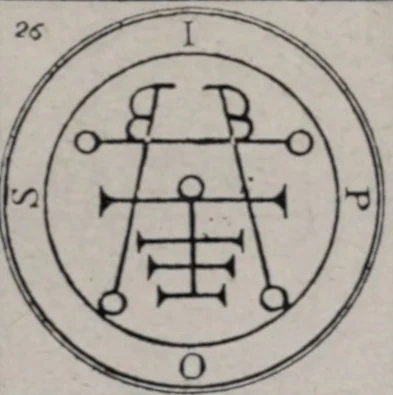
At a glance
- Entry
- 26 of 72
- Rank
- Duke
- Legions
- 30 in the text
- Also written
- Buné, Bimé, Bim
Description in the text
Bune is credited with moving the dead and gathering spirits at tombs. The text also associates this duke with riches, eloquence, wisdom, and truthful answers; it records two alternative seals.
Read entry 26 on page 29 of the 1916 edition
Appearance
A three-headed dragon with the heads of a dog, griffin, and man.
Topics attributed to this entry
- The dead
- Wealth
- Eloquence
Reading this entry
Bune, named Bimé or Bim in the printed passage, appears as a three-headed dragon with dog, griffin, and human faces. A high, pleasing voice contrasts with the composite body. He is credited with wealth, wisdom, eloquence, and truthful answers, but also with moving the dead and gathering subordinate spirits around graves. That cemetery setting is easy to omit when Bune is summarized only as a giver of riches.
The entry is unusually explicit that more than one seal exists and that the editor favors the latter of the two shown. A single crop on a modern page therefore represents a particular printed choice, not an uncontested form across copies. Bune commands 30 legions in the printed text. The variant name and alternate seal show how the profile changed as the catalogue was copied and edited.
Read entry 26 on page 29 of the 1916 edition or compare the 1904 transcription.
A closer reading of entry 26
What the numbered text says
Bune’s dragon has three unlike heads, and its high, pleasant voice is specified separately from appearance. The offices gather the dead near tombs, move their place, confer riches, and grant eloquence and truthful replies. The entry is remarkable for explicitly distinguishing two seals and judging the later one better. That sentence is evidence of variant emblem transmission within this edition, not a warrant to silently replace one historical drawing with another.
About the printed seal
The fourth 1916 frontispiece contains the numbered seal image used for Bune; the passage says a second seal also exists and ranks the last higher. The site’s single cropped illustration therefore represents only one form in a larger seal history.
Compare another entry
Compare entry 20: Purson. Purson’s kingly entry also mentions treasure and true answers, but specifies hidden things, world creation, and familiars. Bune’s is a duke’s account centered on the dead, riches, eloquence, and a rare note about competing seals. The shared wealth tag misses that difference.