
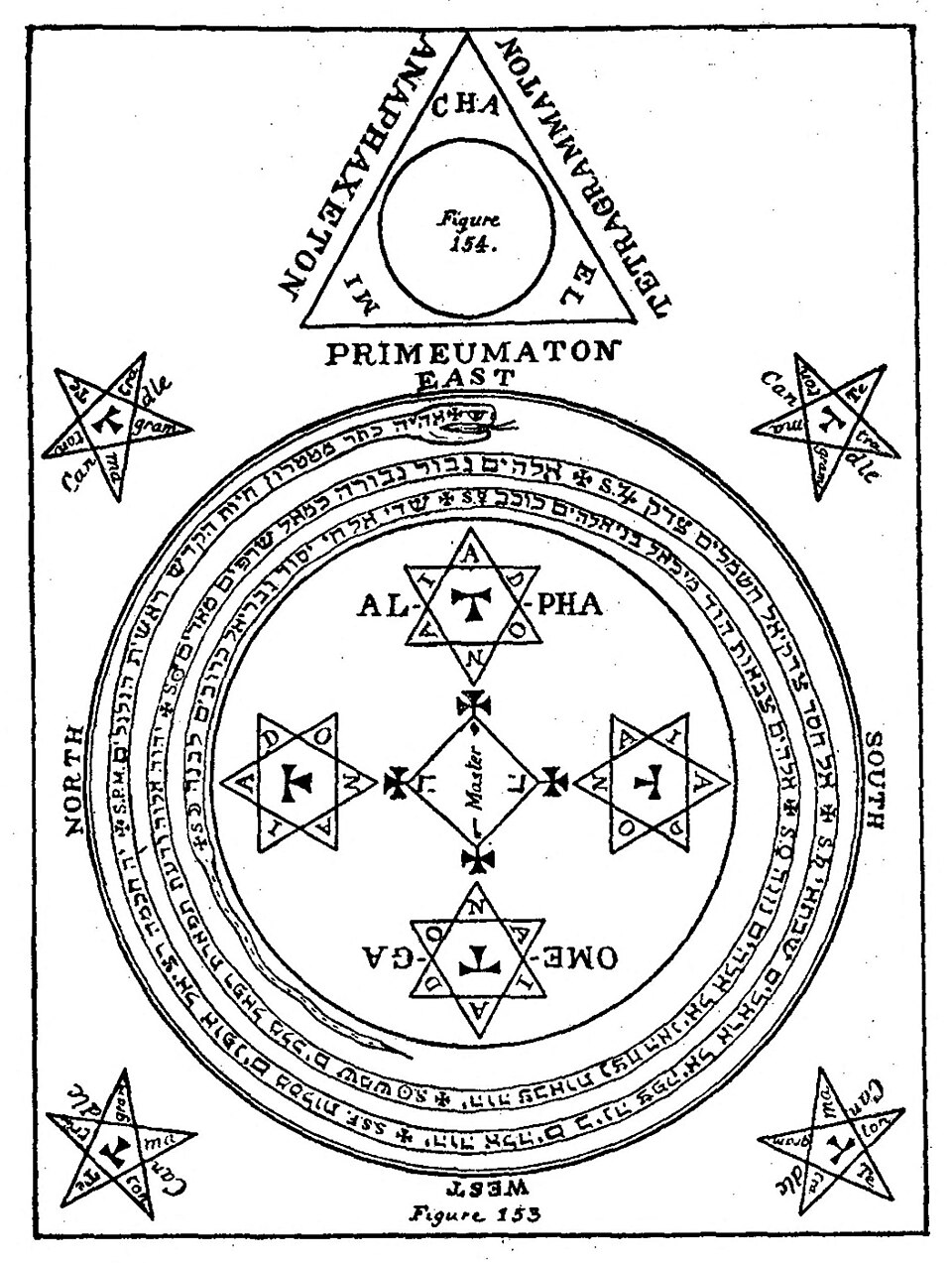
The Ars Goetia does not present communication as one dramatic sentence. Its ceremonial section builds a chain of speeches around a replaceable spirit name: an initial summons, a second appeal, a constraint, possible recourse to a superior king, an address when something is judged present, and a welcome that requires the figure to remain. The order explains what each speech is meant to change.
- Primary witness
- Sloane MS 3825
- Sequence
- Summons → escalation → address
- Later print
- Mathers–Crowley, 1904
The first summons defines the requested encounter
In Sloane MS 3825 the opening conjuration inserts a spirit’s name into a reusable frame. It demands visible appearance before the circle, a fair and human shape, peaceful conduct, rational answers, and a clear voice. Those clauses define communication before any answer is imagined: location, appearance, temperament, subject matter, and intelligibility are all specified. The catalogue entry supplies the name, rank, seal, office, and sometimes direction; the common speech supplies the desired manner of arrival. The book therefore joins a database of spirits to a generic address rather than writing seventy-two independent ceremonies.
The address also establishes a hierarchy of authorization. The speaker claims force through divine names, creation narratives, and the spirit’s own ruler. This is coercive Christian ritual language, not a conversational invitation between equals. The repeated command to answer rationally exposes the text’s underlying problem: appearance alone would not count as successful communication if the figure were silent, ambiguous, deceptive, or outside the office assigned by its catalogue entry. The ritual’s logic is a sequence of controls imposed on an expected but distrusted respondent.
Escalation diagnoses absence as a problem of rank
A second conjuration repeats the demand through a longer chain of biblical names and deliverance stories. If the spirit still does not appear, the constraint threatens loss of office and confinement. The next rubric proposes reasons for continued absence: the spirit may have been sent elsewhere by its king or may be bound beyond that king’s custody. The text then changes addressee. It calls the appropriate ruling king and orders that superior to send the named subordinate. Failure is interpreted inside the same administration that organized the catalogue, so escalation climbs rank rather than changing to a new theory of contact.
Further curses intensify the threat, but their position is more revealing than their wording. They come after two summonses and a constraint, which makes severity a staged response to delay. The operator is instructed to test an ordinary route, then an expanded route, then a binding speech, then the hierarchy above the missing spirit. This architecture lets a compiler attach borrowed formulae to an existing spirit list. It also explains why detached quotations can misrepresent the work: a curse printed alone looks like the whole rite, although the manuscript places it deep inside a contingency ladder.
Worked reading: the first summons becomes a welcome
Compare the first summons with the welcome spoken after an appearance. The opening asks spirit N to come before the circle visibly, peaceably, and with a voice the operator can understand. The welcome begins by acknowledging that the called figure has obeyed, but it immediately binds the figure to remain visible and affable until the requested work is finished without deception. The same adjectives change grammatical function. In the summons they describe a hoped-for arrival; in the welcome they become conditions for continued presence. Arrival is therefore a threshold in the sequence, not its conclusion.
Between those speeches stands an “address upon coming.” The operator displays Solomon’s pentacle, identifies the exorcist as armed by God, and demands rational answers. Peterson’s collation notes a small but consequential witness problem: Sloane 3825 reads a word that can mean a hostile enclosing or conclusion, while Sloane 3648, Sloane 2731, and the Mathers–Crowley printing give “confusion.” One reading points to containment; the later familiar wording points to threatened disgrace. A single copied word shifts the rationale of the displayed sign even though the surrounding action remains recognizable.
The worked sequence thus has three bounded moves. The first speech calls and specifies; the arrival address displays authority and tests obedience; the welcome converts presence into a temporary obligation to answer. Reading only the welcome removes the prior escalation that makes “obedience” meaningful. Reading only the first conjuration removes the later check on intelligibility and truthfulness. The manuscript’s communicative model is cumulative: every stage narrows what is supposed to count as an acceptable response.
The Heptameron supplies language but not the whole Goetia
Peterson’s parallel text shows that substantial wording in the conjurations, arrival address, and welcome comes from the Heptameron tradition, especially its Vinculum or bond. The Goetia compiler changes that material by placing it after a seventy-two-spirit catalogue and by adding a hierarchy-specific fallback. The Heptameron organizes operations by weekday, hour, wind, seasonal names, and ruling angels. The Goetia organizes its principal catalogue by numbered spirits with ranks, offices, legions, and seals. Shared sentences therefore operate inside different indexes.
The 1904 Mathers–Crowley edition is another witness layer. It regularizes spelling, typography, headings, and diagrams and adds editorial material around a seventeenth-century manuscript tradition. A reader can use it to follow the published sequence, but its polished page should not be mistaken for the exact wording or layout of every Lemegeton manuscript. The historically secure claim is structural: the Goetia turns borrowed bonds and conjurations into a reusable speech chain tied to a distinct spirit catalogue, and manuscript variants reveal where that assembly remained unstable.