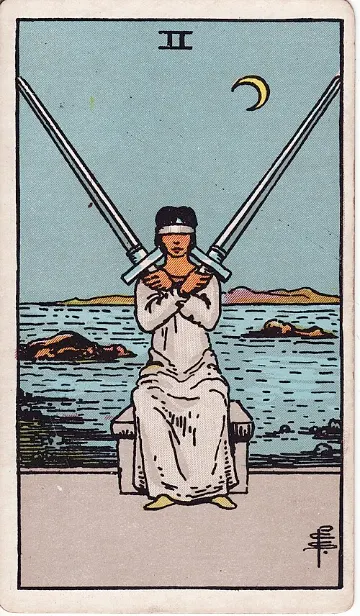
A blindfolded figure sits by the sea, holding two swords crossed before the chest. A crescent moon hangs above rocky water. The Two of Swords can show a choice held still: the pause may protect a fragile peace, but keeping both blades raised takes effort. Waite's older account emphasizes balance, courage, and qualified harmony rather than indecision alone; his reversal turns to falsehood and disloyalty. Many current readings focus on a decision stalled by missing facts or difficult feelings. The most useful question is what the pause protects, what it costs, and which fact or conversation could make a choice possible.
Look at the image
Pamela Colman Smith seats a blindfolded figure on a low bench beside the water. Each hand holds a long sword across the chest, making a symmetrical X. The pose looks controlled, but the arms cannot rest while the blades stay there. Rocky islets break the sea behind the figure, and a thin crescent appears above. The blindfold does not reveal whether the person chose it or who placed it there. The picture offers both protection and limitation: the crossed blades form a boundary, while the shore and rocks remain unseen by the person making it. Look at what balance demands before calling this stillness peace.
Upright: a guarded balance
Waite's upright Two includes balance, courage, friendship, and agreement maintained under arms. He also reports tenderness and affection, while qualifying how comfortable that harmony can be in the Swords suit. That older reading is richer than “cannot decide.” In a modern question, the card may fit a truce, a temporary boundary, or a decision held open until facts arrive. State what the pause is for and how long it can last. If a choice is pending, name the information that would change it. The figure's swords are steady, but they require continuing effort. A useful pause gives you room to see; an indefinite one consumes the energy needed to move.
Reversed: look for the broken agreement
Waite's reversed Two names falsehood, duplicity, and disloyalty. That is different from a modern reading in which the stalemate finally breaks. If you suspect an agreement has been broken, examine the concrete terms and what happened before assigning a hidden motive. In another situation, reversal may describe a rushed choice, a fact you have avoided, or a truce that cannot hold its weight. Ask which reading has evidence. What was promised, who relied on it, and what would restore trust? If the main problem is incomplete information, obtain it or name the uncertainty honestly. The blindfold is a reason to investigate, not proof that someone else lied.
Two of Swords in love and relationships
In a relationship, the Two can describe a careful ceasefire after an argument or a conversation both people hesitate to begin. Upright, a pause may help if each person knows when and how the discussion will resume. Waite's qualified harmony also fits affection that survives despite an unresolved point. Reversed, review whether an agreement has actually been kept and whether one person is carrying all the work of keeping the peace. Ask a specific question rather than testing a partner with silence. “Can we talk about the plan before Friday?” invites a response; waiting for them to guess your concern leaves both swords in place.
Two of Swords as feelings
For your own feelings, this card may capture the effort of holding two truths together: you care about someone and need more information, or you want change and fear its cost. Give both sides a sentence without forcing an instant verdict. If you are asking how another person feels, a blindfold and crossed blades cannot reveal their private mind. Notice what they say about timing, what questions they avoid, and whether their actions match an agreed pause. Upright may fit caution with real goodwill. Reversed raises the need to verify an account or reopen a strained conversation. Direct words offer more than guessing at the face behind the swords.
Two of Swords in career and money
At work, the Two may appear when two proposals are close, a negotiation is delicate, or a team has agreed to stop arguing without resolving the underlying issue. Define the choice and the evidence each option needs. A short trial, written comparison, or decision date can preserve working relationships while moving the work forward. Reversed, check for missing figures, inconsistent promises, or a condition that has quietly changed. In money matters, avoid treating equal-looking options as equal in cost; compare fees, time, and what happens if plans change. The rocky water behind the bench matters only if the decision will eventually have to cross it.
Two of Swords versus Ace of Swords
The Ace of Swords raises a single crowned blade and can feel like the moment a sharp idea arrives. The Two holds two blades in balance while the person wearing the blindfold remains seated. One clear fact from the Ace may define a problem; it does not automatically decide between two real options. If both cards appear, write the Ace's insight as a plain claim, then ask what the Two still needs to weigh. Is there a cost, another person's consent, or a missing fact? A strong argument can help the decision without pretending the crossroads has disappeared.
Is the Two of Swords a yes or no card?
For a choice with meaningful unknowns, the Two usually answers “not yet” more usefully than a flat yes or no. That can be an active answer: agree on a date, seek one missing figure, or arrange the conversation that makes consent possible. Upright may support a temporary truce if its terms are clear. Reversed calls for a closer look at trust, evidence, or an agreement that may not hold. Replace “Should I choose this job?” with “Should I ask for the written schedule before accepting?” The narrower question has a next step, and the information gained may change which option deserves your yes.
A reading example: choosing between roles
A person is offered two jobs with similar pay and draws the Two of Swords. One role promises flexible hours; the other offers better training, but neither offer explains how those benefits work. Rather than accept immediately, they request the schedules, training plans, and deadlines for replying. They make a short comparison that includes commute time and the cost of leaving either role early. They also decide which difference would matter most after six months. The card does not choose an employer for them. It turns an exhausting stalemate into a defined pause, a list of facts to collect, and a date to decide.
Questions to ask
- What does this pause protect, and what does it cost?
- Which fact or conversation would make the choice clearer?
- Is the current peace supported by an agreement both sides understand?