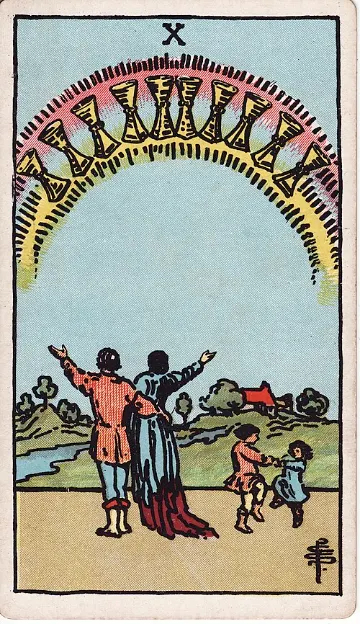
Ten cups arc across a rainbow above two adults who gesture upward and two children who dance together. Water, trees, and a distant home complete Smith's scene. The Ten of Cups can speak to happiness shared with others: a loving relationship, a household, friendship, or a place where people feel they belong. Upright, it asks what sustains that contentment beyond a beautiful moment. Reversed, Waite's older language points to false peace and anger, while a quieter modern reading may notice strain behind an ideal image. The picture is one historical vision of family, not a requirement that a good life take its exact shape.
Look at the image
Pamela Colman Smith places ten cups along a rainbow while two adults lift their arms toward it. Nearby, two children face each other in a dance. A red-roofed home and trees sit beyond a ribbon of water. The adults and children do not share one identical reaction, yet the image holds them in the same open landscape. Waite read the scene as contentment in love and friendship and also associated it with a town or place of belonging. The home makes that broad meaning visible without proving who the figures are or what their daily lives are like. A joyous image can begin a question about shared life; it cannot settle it on its own.
Upright: happiness built with others
Upright, the Ten of Cups can mark a time when a relationship, household, or circle of friends feels welcoming and steady. It may also name the kind of shared life people are trying to build. The rainbow is a moment; the ordinary home in the distance suggests what must continue after the celebration. Who makes space for each person, shares the work, and keeps a promise when the day is less beautiful? Recognizing a good period is valuable without claiming it will last unchanged. If you are planning a future together, speak about the routines, resources, and responsibilities that would allow more days like this one.
Reversed: when the picture conceals conflict
Waite's reversed list is sharper than a simple dip in family happiness: he names false repose, indignation, and violence. A modern reading may see a group pressured to look harmonious while an important grievance goes unheard. It may also fit an ordinary disruption in an otherwise caring home. Those situations are not equivalent. Look at what people are doing, how disagreements are handled, and whether anyone feels afraid or excluded. If there is intimidation or harm, the appealing image is no reason to minimize it. If the issue is a manageable disagreement, honest conversation and changed arrangements may restore the shared ease pictured here.
Ten of Cups in love and relationships
In love, the Ten often points toward an enjoyable shared life rather than a single dramatic declaration. A couple may be making a home, meeting each other's friends, or discovering that daily routines fit. It need not forecast marriage or children; the painted family is one way of showing belonging. If one partner wants a future the other has never agreed to, the rainbow should prompt a conversation, not substitute for one. Reversed, ask whether both people can name what is working and what hurts without losing the right to be heard. Warmth grows more credible when it survives that kind of honesty.
Ten of Cups as feelings and reconciliation
For your own feelings, the Ten may describe affection joined to a wish for stability, shared rituals, and people who feel like home. If you draw it about someone else, their feelings remain theirs to express. Notice whether they make time, speak about a shared future, and act in ways that support it. Reconciliation after conflict asks more than a return to the old picture. Both people must want contact, acknowledge the rupture, and agree on what would change. Reversed does not prove that someone secretly longs to reunite or that peace is impossible. The words and actions following the disagreement matter more than the scene overhead.
Ten of Cups in career and community
The Ten can also appear around a workplace, volunteer group, or neighborhood where people genuinely support one another. A successful event can feel like the rainbow, but long-term belonging depends on less visible work: fair schedules, credit, pay, care, and a way to resolve conflict. In a job decision, ask who benefits from the culture being advertised and how a new person is treated once the welcome is over. Reversed, a team might be celebrating publicly while members carry private resentment. A small, specific change in responsibilities can be more meaningful than another speech about being a family.
Ten of Cups versus Nine of Cups
The Nine of Cups seats one figure before a display of vessels. The Ten opens the scene to several people, a home, and a rainbow of cups above them. The Nine can focus on a personal result or pleasure; the Ten asks how happiness is lived with others. Neither card outranks the other. Someone may need private rest before they can enjoy company, and a group celebration can be rewarding even when one person's goals remain unfinished. If both appear, ask what you can genuinely enjoy for yourself and what arrangements allow the people close to you to share in the good outcome.
Is the Ten of Cups a yes or no card?
For a modest question about enjoying time with supportive people, the upright Ten often leans yes. Accept the invitation or make space for a celebration that everyone actually wants. For a question about whether a relationship will stay happy forever, the picture cannot promise permanence. Reversed need not mean a final no; it can point to a conflict that deserves attention before making a larger commitment. Ask what a yes would require from each person. If the answer depends on one person's unspoken sacrifice, the apparent harmony needs another look. A useful reading identifies the agreement beneath the rainbow.
A reading example: after the celebration
Imagine two friends who have just opened a small community studio. At the launch, their volunteers and families fill the room, and one founder draws the Ten of Cups upright. The event is a real success worth enjoying. A week later, the founders discover they assumed different things about who will handle evening classes and cleaning. One person feels the cheerful launch makes it hard to raise the problem. The card's shared happiness becomes more useful when they write a schedule, ask volunteers what time they can offer, and budget for work that cannot remain unpaid. The rainbow marked a good beginning; the daily arrangement decides whether the studio remains a welcoming place.
Questions to ask
- What creates belonging for the people actually here?
- Which daily practice keeps our shared world healthy?
- Where is an ideal picture hiding a real need?