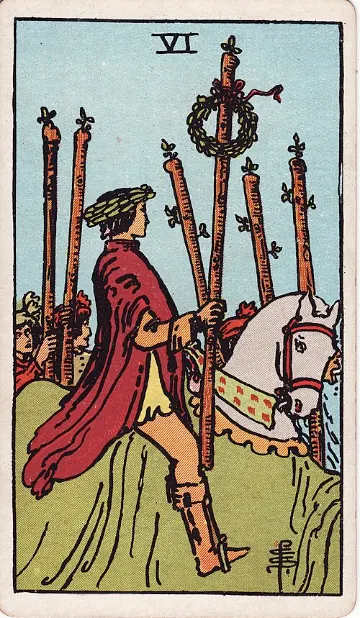
A laurel-crowned rider moves on a white horse, carrying a wand topped with another wreath while people with staffs surround the procession. The Six of Wands can mark a public result, welcome news, or recognition that gives a project new visibility. Waite's upright meanings include triumph and a courier bearing great news; his reversal turns toward fear, disloyalty, or an indefinite delay. The card asks what has truly been won, who helped make it possible, and what must happen after the applause. In love or work, being seen matters most when the praise fits the result and reaches the people who earned it.
Look at the image
Pamela Colman Smith places a rider above the surrounding figures on a white horse. A laurel wreath rests on the rider's head, and another circles the top of the central wand. Five more staffs rise around the procession. The rider is visible because other people are there to see the passage; this is no private moment of satisfaction. The picture does not show the contest or work that came first, nor how the group will act once the parade ends. Notice how the symbols of victory belong to one figure while the scene itself needs the crowd. A reading can examine both the achievement and the story told about it.
Upright: a victory becomes news
Waite connects the upright Six with a victor's triumph, great news brought by a courier, and hope crowned by expectation. The card can fit a successful presentation, selection for a role, a public result, or an announcement that changes what is possible next. Describe the outcome precisely. Was the project approved, the work praised, or a date set for a future decision? These are different kinds of news. Accept a genuine success without making it carry more than it has earned. If others contributed, name their work while attention is on the result. Visibility can create momentum, but it also creates a new obligation to follow through on what the announcement promises.
Reversed: fear, loyalty, or delay
Waite's reversed Six includes apprehension of a victorious enemy, treachery or disloyalty, and indefinite delay. That differs from the modern shorthand of late praise or vanity. In a current question, ask whether there is evidence of a postponed decision, a broken agreement, or worry that someone else's success threatens your position. These call for different responses. A missed announcement date can be confirmed; a fear about loyalty needs a conversation and observable conduct. Contemporary readings may also notice credit given to the wrong person. Reversed, check the result and the relationships behind it before deciding whether the procession is stalled or simply telling an incomplete story.
Six of Wands in love and relationships
In love, the Six can describe the pleasure of being seen and celebrated by someone close to you. A partner may acknowledge a difficult effort, introduce you proudly, or make space for your achievement without turning it into a contest. Upright, shared recognition can strengthen trust when both people's contributions are visible. Reversed, one person may feel overshadowed, or a promised public step may keep being delayed. Ask what kind of acknowledgment matters to each of you. A social announcement is meaningful only if the everyday relationship supports it. The horse and wreath show a public moment, while affection also lives in what happens after the crowd disperses.
Six of Wands as feelings
When asking about your own feelings, the Six may reflect pride, relief, or a desire to have your efforts noticed. It can also show how much another person's approval matters to you. If the question is about someone else's feelings, the crowd cannot tell you what they privately intend. Notice whether they congratulate you sincerely, share credit, and remain present when no audience is watching. Reversed, anxiety about being overlooked or replaced may be real, but it should not be assigned to another person from an image alone. Ask what each person needs to feel recognized, and compare the answer with their actual actions.
Six of Wands in career and money
At work, the Six can fit a promotion announcement, award, completed pitch, or news that a team has won an opportunity. Confirm what the public result changes: role, pay, budget, customer demand, or simply visibility. Waite's courier image makes the message itself part of the meaning, but a headline may precede the written terms. Record the outcome and the people who earned it before planning the next stage. Reversed, a delayed approval or disputed credit can undermine morale even when the work succeeded. A useful response separates what is confirmed from what the procession merely suggests, then follows up on the missing terms.
Five versus Six of Wands
The Five of Wands shows five figures crossing staffs in a crowded contest with no clear winner. The Six gives one rider a laurel wreath and a public route through staff bearers. Together they can show a transition from competition to a recognized result. The result still needs an honest account of the contest and of everyone who helped. If both appear, decide when debate is over, what the decision actually rewards, and how the group will work after it. Victory can focus energy that was scattered in the Five; it can also revive rivalry if the rules or credit remain unclear.
Is the Six of Wands a yes or no card?
For a question about presenting finished work, acknowledging a real result, or accepting deserved visibility, the upright Six can lean yes. It does not promise a prize merely because someone hopes to ride at the front. Reversed suggests checking what is delayed, who can confirm the outcome, and whether the people involved trust the process. Ask “Should we announce the pilot's results now that the agreed measures are complete?” rather than “Will everyone admire us?” The first question has evidence and a timing decision. The card's favorable answer is strongest when the wreath corresponds to work that others can actually see.
A reading example: an award with missing credit
A small design team wins a local award for a public garden sign system and draws the Six of Wands. The announcement names the lead designer but leaves out the illustrator and accessibility reviewer whose work shaped the finished signs. The lead accepts the award, then asks the organizer to add both contributors to the online record and names their specific work in the team announcement. The group also records what the award does and does not change: it brings interest from new clients, but no new contract yet. The recognition becomes more accurate, and the team can use its visibility without pretending one rider made the whole procession.
Questions to ask
- Which result has been confirmed, and by whom?
- Whose work belongs in the public account?
- What new responsibility follows the announcement?