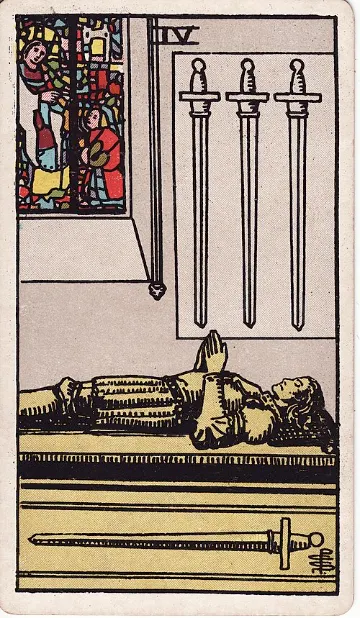
A knight's tomb effigy lies with hands joined beneath a stained-glass window. Three swords hang on the wall; a fourth runs along the tomb. The Four of Swords sets the suit's conflict against a still, enclosed space. Waite's upright meanings include vigilance, retreat, and solitude, while his reversal moves toward caution and careful administration. Modern readers often see rest after strain and the need to return deliberately. The effigy is a carved memorial rather than a person sleeping in a room. In a reading, the practical question is what can pause, how the pause will be protected, and what will be different when activity resumes.
Look at the image
Pamela Colman Smith depicts the effigy of a knight lying full length on a tomb, hands joined in prayer. Three swords are fixed above it on the wall, and another runs horizontally along the tomb face. A stained-glass window breaks the otherwise quiet interior. Waite explicitly calls the figure an effigy, so the scene is not a literal sleeper taking a nap. That distinction makes the stillness feel deliberate and lasting. The swords remain visible, but none is being swung. Ask what the room preserves and what its boundaries keep at a distance. The card can invite a pause without pretending that the wider conflict has vanished.
Upright: retreat with attention
Waite pairs retreat and solitude with vigilance in his upright Four. The card's quiet is therefore attentive rather than absent-minded. In a contemporary reading, it may fit a period of recovery after pressure, a private interval to think, or a temporary step back from an argument. Make the pause real: identify which demand can wait, who needs to know, and when the issue will be revisited. If another person depends on your answer, give them a date or a way to handle urgent matters. Rest has more power when its edges are clear. The knight's carved hands are still; your practical work may be arranging enough cover to become still for a while.
Reversed: plan a careful return
Waite's reversal includes wise administration, caution, economy, and precaution; he also includes avarice. That is a different emphasis from the common modern idea that reversed Four means restlessness or a break cut short. The older meaning can ask how resources will be managed when activity resumes. Which commitment deserves energy first, and where has caution become hoarding? A modern reading may also notice pressure to return before recovery is possible. Check the actual conditions: workload, available help, and any promise to reply. The reversed card can turn a vague wish to “get back to normal” into a measured plan with a manageable first step.
Four of Swords in love and relationships
In relationships, the Four can suggest taking agreed space after a difficult conversation. A pause helps when each person understands its purpose, what contact is welcome, and when they will speak again. Silence without an agreement can feel like abandonment to one person and protection to another. Upright, use the interval to hear your own thoughts rather than rehearse the same argument. Reversed, decide whether the pause has helped and what needs to be said on return. If the same issue keeps restarting unchanged, a new conversation format may matter more than a longer retreat. The window hints at life beyond the quiet room; the point is to rejoin it with clearer terms.
Four of Swords as feelings
For your own feelings, this card may describe exhaustion, the need for privacy, or the relief of stepping away from constant response. Name what you want from the interval: calm, perspective, or simply fewer demands. If you are asking about another person's feelings, the image cannot tell you why they have gone quiet. Look at what they communicated before the pause and whether they keep the agreed time to reconnect. Upright may fit a sincere need for space. Reversed may fit a return made cautiously or a withdrawal that needs clearer limits. A direct message about timing can do more than trying to read emotion into silence.
Four of Swords in career and money
At work, the Four can point to a recovery period after a launch, dispute, or run of urgent deadlines. Decide which meetings can wait, who covers essential tasks, and what will be reviewed when the team returns. A manager who wants people to rest may need to reduce demands, not merely recommend quiet. Waite's reversed emphasis on careful administration can fit a budget or workload review: preserve what matters, but notice when excessive caution stops necessary investment. In money matters, use a pause before a large commitment to compare terms and build a reserve. The useful move is a protected interval that produces a better decision, not an endless postponement.
Four of Swords versus Three of Swords
The Three of Swords shows a pierced heart in rain; the Four places a still knightly image within an interior where swords remain on the wall. The Three can name the wound or break. The Four concerns the space after it, when immediate reaction may no longer help. If both cards appear, first identify what changed and what it cost, then arrange a realistic interval before the next decision. Rest does not rewrite the event, and the tomb in the Four need not turn a personal disagreement into a prediction of literal death. The contrast is useful because it separates acknowledging pain from choosing how to carry it forward.
Is the Four of Swords a yes or no card?
If the question is whether to take a defined break or seek time to consider, the upright Four often leans yes. If the question is whether to launch another demanding phase immediately, it may suggest waiting until the essentials are covered. Reversed can support a cautious return when there is a clear plan, but not simply because someone else is impatient. Narrow the question: “Should we delay the review by one week and assign emergency cover?” is more actionable than “Will I be ready soon?” The card favors an interval with a purpose, a boundary, and a date at which you can reassess.
A reading example: after a difficult launch
A small team finishes a product launch with unresolved bugs and several exhausted members. Their lead draws the Four of Swords before setting the next sprint. They make a short list of urgent fixes, assign one rotating contact for incoming problems, and postpone feature planning for a week. Everyone knows when the review meeting will happen and what information to bring. At that meeting, they decide which recurring failure needs a process change before more work is added. The pause does not erase the launch's problems. It keeps the team able to address them without treating constant urgency as the only form of vigilance.
Questions to ask
- What can pause without leaving others guessing?
- Who or what will protect the interval?
- What is the first manageable decision on return?