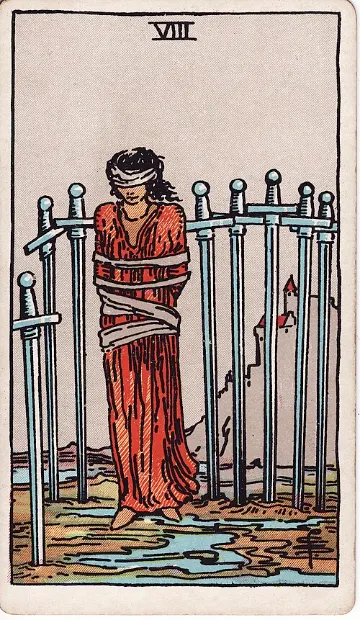
A bound, blindfolded figure stands on wet ground among eight upright swords. The blades leave visible gaps, but the figure cannot see them and remains tied. Waite calls the predicament temporary, while his upright meanings include crisis, censure, and obstructed power; his reversal continues with difficulty and opposition. Modern readers often emphasize the limits of a frightened perspective or interpret reversal as an opening. Neither view makes the bonds imaginary. In love or work, the Eight asks which barriers are real, which facts are missing, and who can help make the next move safer and more workable.
Look at the image
Pamela Colman Smith places a blindfolded figure in an orange dress on watery ground. Cloth binds the torso, while the feet remain visible below. Eight swords rise mostly behind and to either side, with spaces between them. A building stands far away on a hill, offering no obvious immediate route. The viewer can see gaps that the figure cannot, but the ties are real in the picture. The image holds two truths at once: perspective is limited, and movement is genuinely difficult. Before proposing an escape, ask what the person would need to see, what would have to be loosened, and who might be able to help.
Upright: locate the actual constraint
Waite calls the Eight a temporary predicament rather than permanent bondage, but his upright list includes crisis, bad news, censure, and obstructed power. A modern reading often emphasizes fear and a restricted view of options. Both can matter. Write down which limits are observable: a rule, a debt, a deadline, another person's authority. Then separate predictions about what would happen if you asked for help or tested a different route. The first group needs practical resources; the second can be checked with information. If an institution has created the obstacle, a new attitude alone will not change it. A small opening becomes useful when the person can reach it with enough support.
Reversed: difficulty or an opening?
Waite's reversed Eight continues with difficulty, opposition, and unexpected trouble; it is not his symbol for instant release. Many current readings use the reversal for bonds beginning to loosen or a person recognizing an option. If that interpretation fits, identify what has actually changed: a new ally, a revised rule, or a safer place to speak. If the old obstacles remain, reversal may instead show how much planning the move still requires. Do not equate a visible gap in the swords with an easy passage. The figure is blindfolded and bound. The most useful reversed question may be which piece of information or assistance can turn a possible route into one that can be taken.
Eight of Swords in love and relationships
In love, the Eight can describe a relationship in which someone feels unable to raise a concern, change a pattern, or leave a role that has become narrow. Upright, name the concrete barrier before deciding that fear is the whole problem. Is there a shared obligation, a financial dependency, or a conversation that has repeatedly gone badly? Reversed, look for an actual change in conditions rather than a promise alone. Ask what support and boundaries would make honest choices possible for both people. If a partner needs more information or space, discuss the terms directly. The card's blindfold invites a fuller view, not a verdict about who created every tie.
Eight of Swords as feelings
For your own feelings, this card may capture frustration, vigilance, or the exhausting sense that every option has a cost. Begin by naming the choice that feels blocked and what would make one path safer. If asking about someone else's feelings, the image does not show their inner account. What have they said about their limits, and what do their actions confirm? Upright may fit caution under real pressure. Reversed may reflect a newly visible possibility, or continued opposition that needs a different plan. Taking another person's stated constraints seriously can open a more useful conversation than telling them they could leave whenever they wished.
Eight of Swords in career and money
At work, the Eight may fit a policy that limits authority, a project stalled by approval, or someone held responsible without the resources to act. Put the rule and the decision maker in writing. Ask what exception, support, or escalation route exists, and bring evidence of the work affected. Reversed, check whether a new option is real or merely discussed. In money matters, list the obligations that cannot be ignored and the costs that may be renegotiated. A clear picture of fees, dates, and alternatives can reveal a gap in the swords. It may also show that outside advice or collective action is needed before moving.
Eight of Swords versus Seven of Swords
The Seven shows one figure moving with five swords, apparently pursuing a private plan. The Eight shows a bound figure with eight blades around them and no easy way to see the route. One card raises questions about strategy and disclosure; the other asks what constrains action. If both appear, do not assume a clever Seven-style maneuver will solve an Eight-style barrier. Identify who has power over the situation and what information must be shared. A private draft or quiet inquiry may help, but a rule, debt, or physical obstacle calls for resources and support as well as ingenuity.
Is the Eight of Swords a yes or no card?
For a major step taken before the limits are understood, the Eight often says pause. That is not a permanent no; Waite describes the predicament as temporary. Ask a narrower question such as “Should I request the written policy and ask for an exception?” rather than “Will I ever get out?” Upright favors gathering the facts and support that can make a choice real. Reversed may support a cautious first move if conditions have changed, but it also asks you to check for opposition you did not expect. A useful yes here depends on a route the person can actually use.
A reading example: an approval bottleneck
A coordinator is told to deliver an event but cannot sign contracts without a director's approval. Vendors need answers, and the director has not responded. The coordinator draws the Eight of Swords. They list the blocked decisions, the latest dates each vendor can wait, and the cost of losing each booking. They send the director a short request with two approval options and ask who can act if the deadline passes. A colleague helps identify a permitted backup venue. The card does not turn the bottleneck into a personal failure. It helps show the real constraint and the information needed to create a workable route.
Questions to ask
- Which limit is material, and which prediction remains untested?
- Who has the information or authority that would help?
- What is the first move that does not increase the risk?