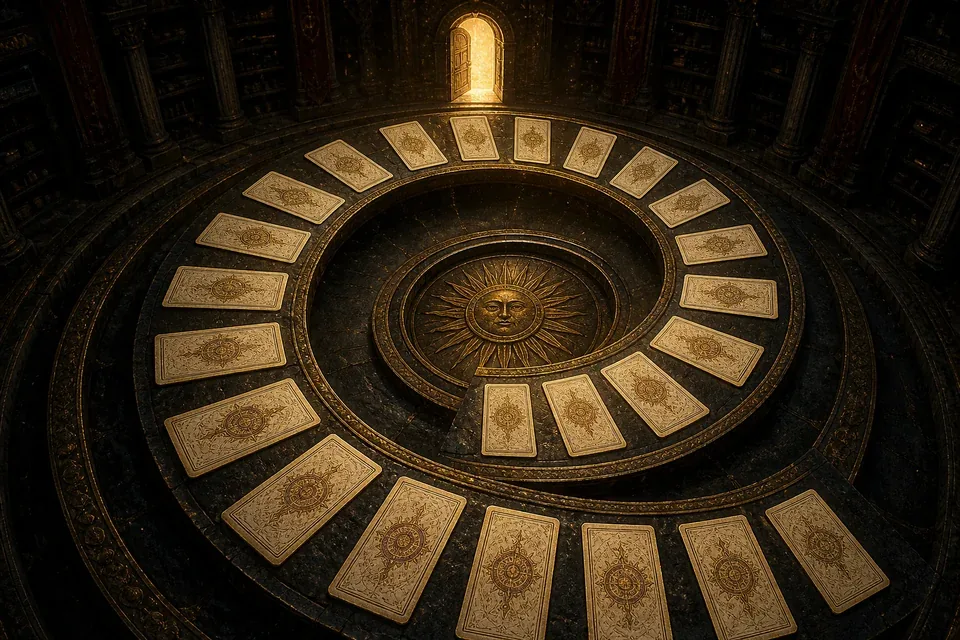
Creative Project moves from spark to audience, materials, obstacle, practice, and release. Use it when an idea remains exciting but vague. The six cards can turn inspiration into a sequence of decisions about making and sharing.
A useful question for this spread
How can I turn this idea into work that reaches an audience?
The question can be made more specific to your circumstances before you draw. Keep the wording open enough for an unexpected card and grounded enough to connect the cards to something you can observe or decide.
The 6 positions, in order
The position labels below follow this version of the spread. Keep the order visible while reading so a compelling card does not cause its place to change after the draw.
- 1Spark
Use this card to establish the question’s starting point.
- 2Audience
Connect this card with its neighbors while keeping this position’s label fixed.
- 3Material
Connect this card with its neighbors while keeping this position’s label fixed.
- 4Obstacle
Name the difficulty precisely enough to see what can be addressed.
- 5Practice
Turn the card into one observable step rather than a fixed prediction.
- 6Release
Read this as a possibility or action that can change with new information.
How to read the pattern
Spark is not the whole project. Audience changes how the work is framed, while Material names what you actually have or need. Practice should describe a repeatable action; Release asks when and how the work leaves your private desk. An obstacle card may reveal a missing resource rather than a lack of talent.
After looking at the cards individually, compare the first position with the final one. Notice what changed in between and which cards complicate a simple story. A repeated suit or image can focus attention, but its meaning still depends on the question and the position.
An example reading
Ace of Wands in Spark may point to strong initial energy. Three of Pentacles in Audience could suggest collaborators or readers who value craft. Seven of Cups in Obstacle may reveal too many formats; Eight of Pentacles in Practice brings the focus back to a small daily draft.
This example shows how a card can open a question without proving a hidden fact or fixing the outcome. The next useful step is to compare the idea with the real situation and revise it when new information arrives.
Creative Project tarot spread FAQ
How many cards are in the Creative Project tarot spread?
This version uses 6 cards in a fixed order: Spark, Audience, Material, and 3 later positions ending with Release. The numbered diagram and position list use the same sequence, so the role of a card stays stable while you interpret it.
What question works best for the Creative Project spread?
Begin with “How can I turn this idea into work that reaches an audience?” and replace any broad wording with the situation, decision, or time period you actually want to examine. The spread works best as a structured reflection rather than proof of another person’s private thoughts or a guaranteed prediction.
How should I compare Spark with Release?
Treat Spark as the opening frame and Release as the closing frame. Use Obstacle and the other middle positions to explain what connects them instead of jumping directly from the first card to a fixed outcome.