
Sigil of Orobas
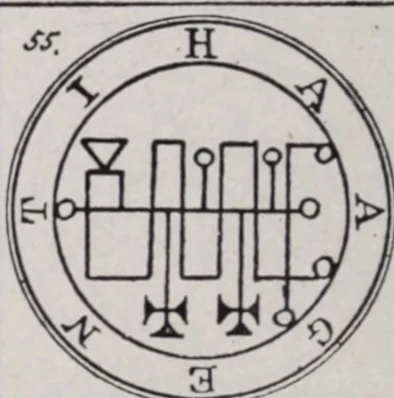
At a glance
- Entry
- 55 of 72
- Rank
- Prince
- Legions
- 20 in the text
Description in the text
Orobas is credited with truthful answers about the past, present, and future, as well as questions about divinity and creation. The source also says he grants dignities and favor and protects the summoner from other spirits’ deception.
Read entry 55 on page 40 of the 1916 edition
Appearance
A horse that later takes human form.
Topics attributed to this entry
- Divination
- Dignity
- Protection
Reading this entry
Orobas first appears as a horse and then takes human form. The prince is credited with reports about past, present, and future, the granting of dignities and religious offices, and favor with both friends and enemies. He also answers questions about divinity and the world’s creation. These theological subjects give the entry a reach beyond courtly advancement.
The text presents Orobas as particularly faithful to the operator and as a guard against temptation by other spirits. That is a character judgment made by the grimoire, not an assurance of safety. He commands 20 legions and has a seal. Compared with other horse-form figures, the combination of truthfulness, protection, and cosmological answers is what makes this numbered description distinctive.
Read entry 55 on page 40 of the 1916 edition or compare the 1904 transcription.
A closer reading of entry 55
What the numbered text says
Orobas first appears as a horse and later as a human figure. The text couples knowledge of past, present, and future with questions about divinity and the world’s creation, then turns to offices of dignity and favor. Its strongest character judgment is fidelity to the summoner: the passage says Orobas will not permit temptation by another spirit. That is a claim within the source, not a reason to treat a prediction as reliable. No independent narrative explains why the horse form is connected to the broad answering office.
About the printed seal
Seal 55 is assigned on the fifth printed plate. A visible horse in the prose and an abstract numbered emblem in the image are separate forms of evidence. The edition does not provide a key for deriving the animal, the later human shape, or the promise of truthful answers from the seal strokes.
Compare another entry
Compare entry 64: Haures. Haures also answers about time and the creation of the world, yet its entry warns that answers may be deceptive outside a specified ritual boundary. Orobas is characterized as faithful without that same condition. The contrast concerns the texts’ assertions, not measured truthfulness.