
Sigil of Focalor
At a glance
- Entry
- 41 of 72
- Rank
- Duke
- Legions
- 30 in the text
- Also written
- Forcalor, Furcalor
Description in the text
Focalor is associated with winds and seas and, in the text, with drowning people and overturning ships. His passage says he can be restrained from harm and records a hope of returning to the seventh throne after a thousand years.
Read entry 41 on page 35 of the 1916 edition
Appearance
A human figure with griffin wings.
Topics attributed to this entry
- Winds
- Seas
- Ships
Reading this entry
Focalor, also Forcalor or Furcalor, is a human figure with griffin wings. The duke’s attributed power lies over wind and sea, especially drowning people and overturning warships. The passage adds that he will refrain from harm if commanded. That conditional restraint is part of the text’s characterization; omitting it would make the source sound more absolute than it is.
Focalor is also said to hope for return to the seventh throne after 1,000 years, a shorter period than the 1,200 years named for Marchosias and Phenex. The figures are claims inside a theological narrative, not an agreed chronology. He rules 30 legions and bears a seal. The combination of maritime violence, restraint under command, and restoration hope makes this more than a generic storm spirit.
Read entry 41 on page 35 of the 1916 edition or compare the 1904 transcription.
A closer reading of entry 41
What the numbered text says
Focalor’s human form with griffin wings is followed by a violent maritime office: winds and seas are named as the setting for attacks on people and warships. The passage also says this harm may be withheld under command, a qualification that belongs to the historical ritual narrative. The promised return to the seventh throne is set at 1,000 years, shorter than the 1,200-year claims made for Marchosias and Phenex.
About the printed seal
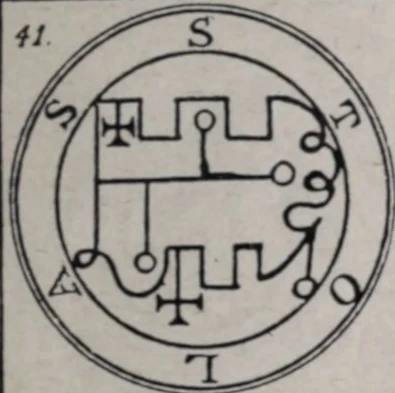
Seal 41 is on frontispiece 4, although its neighboring numbered entries are split between plates. Its numbered label is the reliable identifier; no feature of the wings, ships, or sea is explained by the source as part of the sign.
Compare another entry
Compare entry 42: Vepar. Vepar also governs water and ships, yet that account emphasizes guidance of armed vessels, apparent fleets, storms, and diseased wounds. Focalor’s entry centers on destructive winds and seas and includes a stated restraint. The two maritime dukes are related by setting, not identical in office.