
Sigil of Vepar
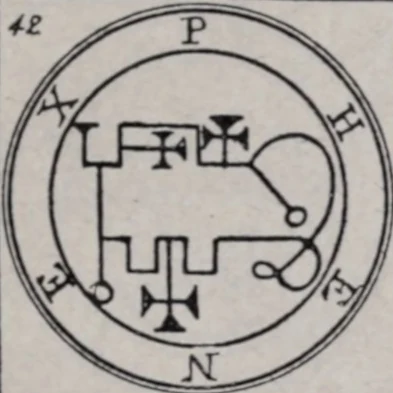
At a glance
- Entry
- 42 of 72
- Rank
- Duke
- Legions
- 29 in the text
- Also written
- Vephar
Description in the text
Vepar is credited with governing waters and guiding ships carrying arms. The entry also describes storms and ships that seem to appear at sea, as well as a darker attributed power over infected wounds.
Read entry 42 on page 35 of the 1916 edition
Appearance
A mermaid-like figure.
Topics attributed to this entry
- Waters
- Ships
- Storms
Reading this entry
Vepar, or Vephar, appears as a mermaid. The duke is said to govern waters and guide ships carrying arms and ammunition. The entry can also make seas appear stormy and crowded with ships. That language of appearance leaves room to distinguish an illusion in the narrative from the separate claim of steering vessels. The maritime military setting is specific, unlike a broad description of sea magic.
The passage adds a harsh claim about wounds that decay and bring death in three days. This is a supernatural attribution in a historical source, not medical guidance or a verified disease course. Vepar rules 29 legions and has a seal. The mermaid form, armed ships, manufactured storm scene, and injury claim all belong in a responsible summary, even though they do not make a tidy single theme.
Read entry 42 on page 35 of the 1916 edition or compare the 1904 transcription.
A closer reading of entry 42
What the numbered text says
Vepar is described in a mermaid-like form and assigned water and seafaring functions. The ships named at first carry arms and supplies; later the sea may appear full of vessels, a claim about seeming as well as movement. The account ends with a graphic attributed disease of wounds and sores. That abrupt turn from navigation to bodily harm is part of the passage’s structure and should not be softened into a generic “ocean” domain.
About the printed seal
The numbered Vepar sign, 42, appears on frontispiece 4. The passage calls it a seal but does not say its lines portray a mermaid, ship, wound, or wave. The plate is a printed witness to this catalogue entry, not an illustration of the attributed office.
Compare another entry
Compare entry 41: Focalor. Focalor’s winds and seas are linked to drowning and overturned warships; Vepar’s waters support armed ships and an apparent fleet before the wound claim. The neighboring entries share an environment while assigning it different narrative actions.