
The Galdrabók is often reduced to a page of “Viking symbols.” The surviving object tells a different story: an early modern parchment anthology, built by several hands and filled with Christian prayer, Icelandic prose, learned names, lists, circles, and angular signs.
Explore the reading room
Why the physical manuscript changes the answer
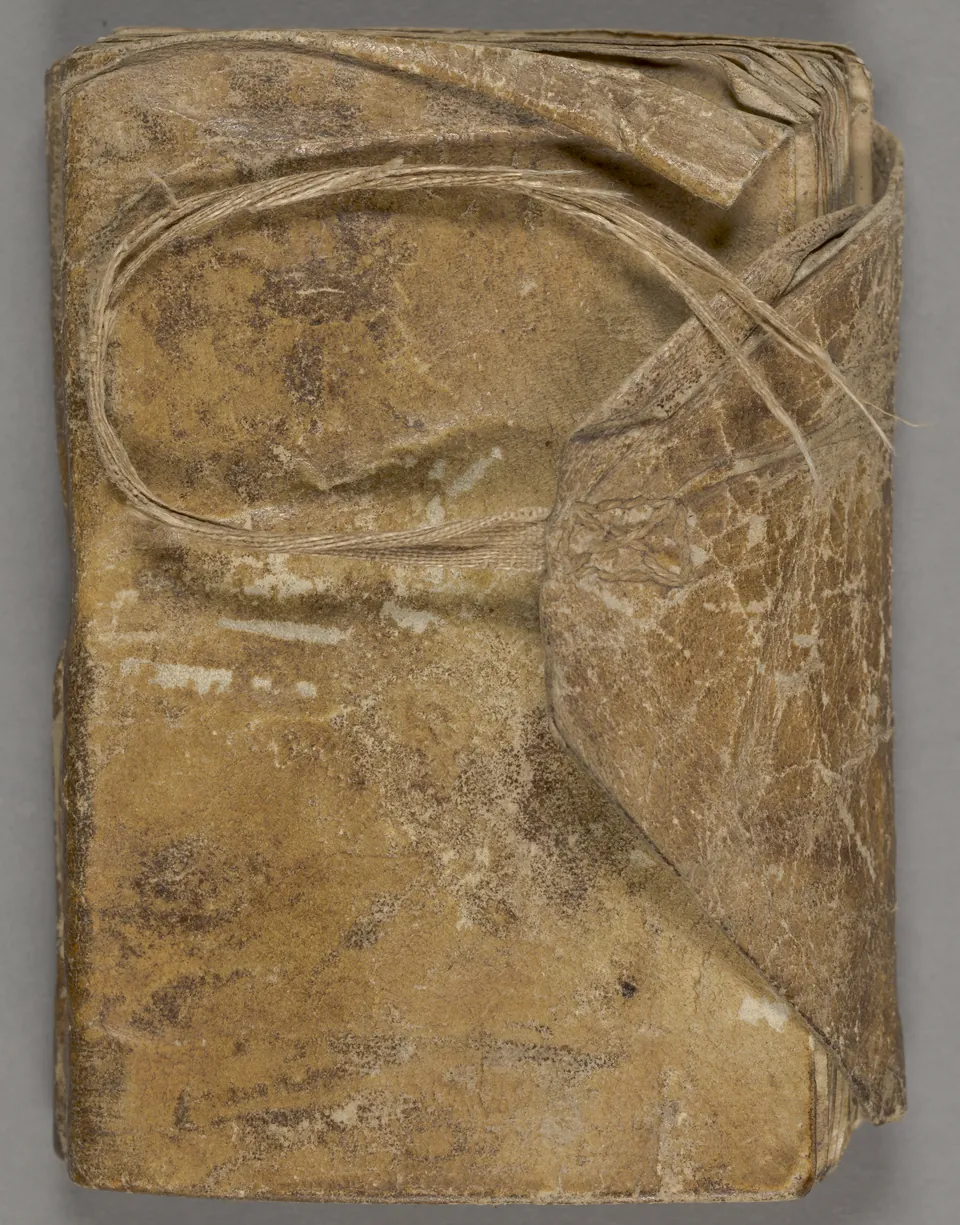
The Stockholm volume is not interchangeable with every Icelandic magic book. Its archive shelfmark, ATA Ämb 2, F 16:26, identifies a particular set of thirty-two parchment leaves acquired in Copenhagen in 1682. The widely reproduced Huld manuscript is a paper book made by Geir Vigfússon in 1860 and catalogued as ÍB 383 4to. Lbs 143 8vo, usually called Galdrakver, is another skin manuscript dated 1670. Their signs overlap in theme, yet their forms, layouts, and dates differ.
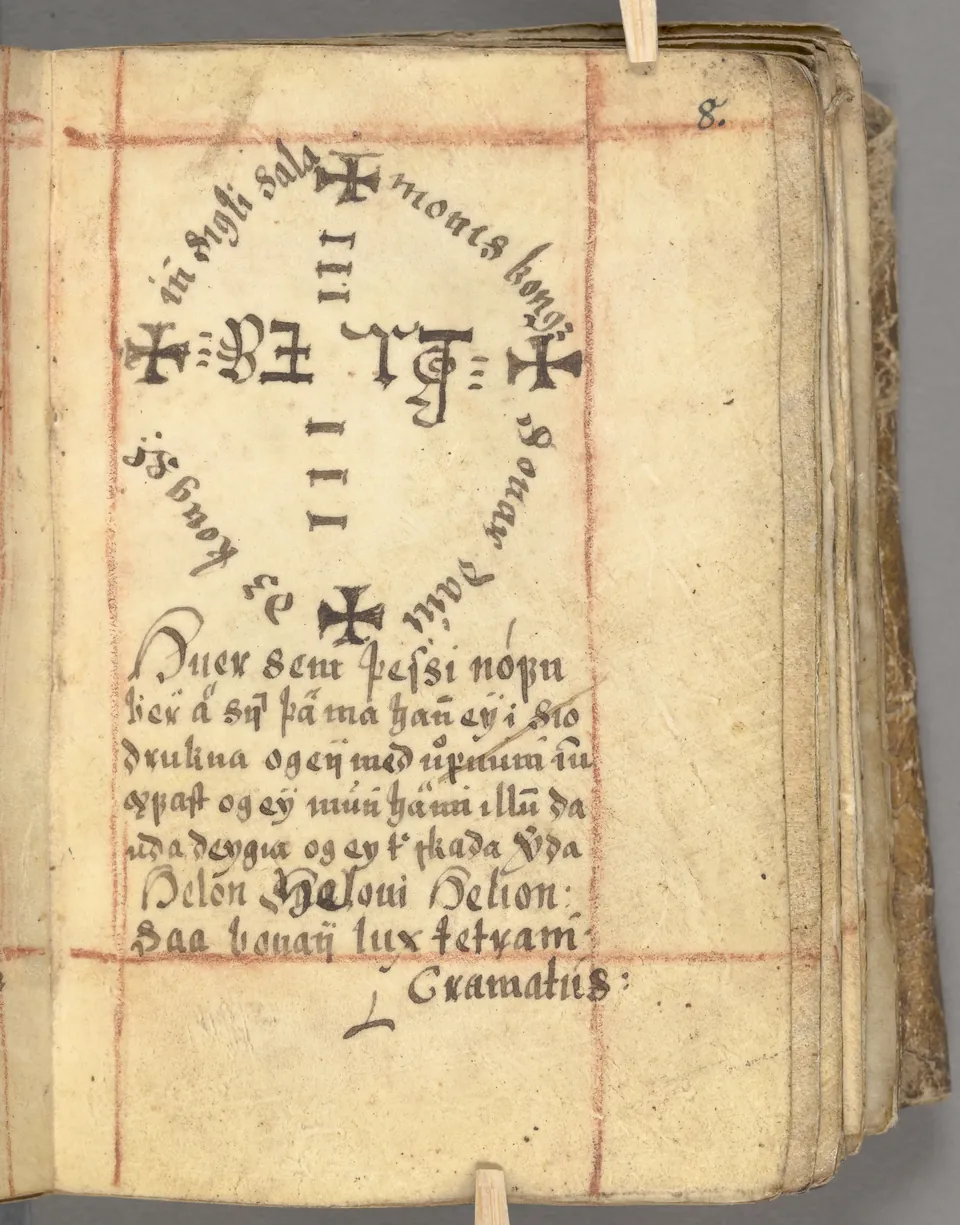
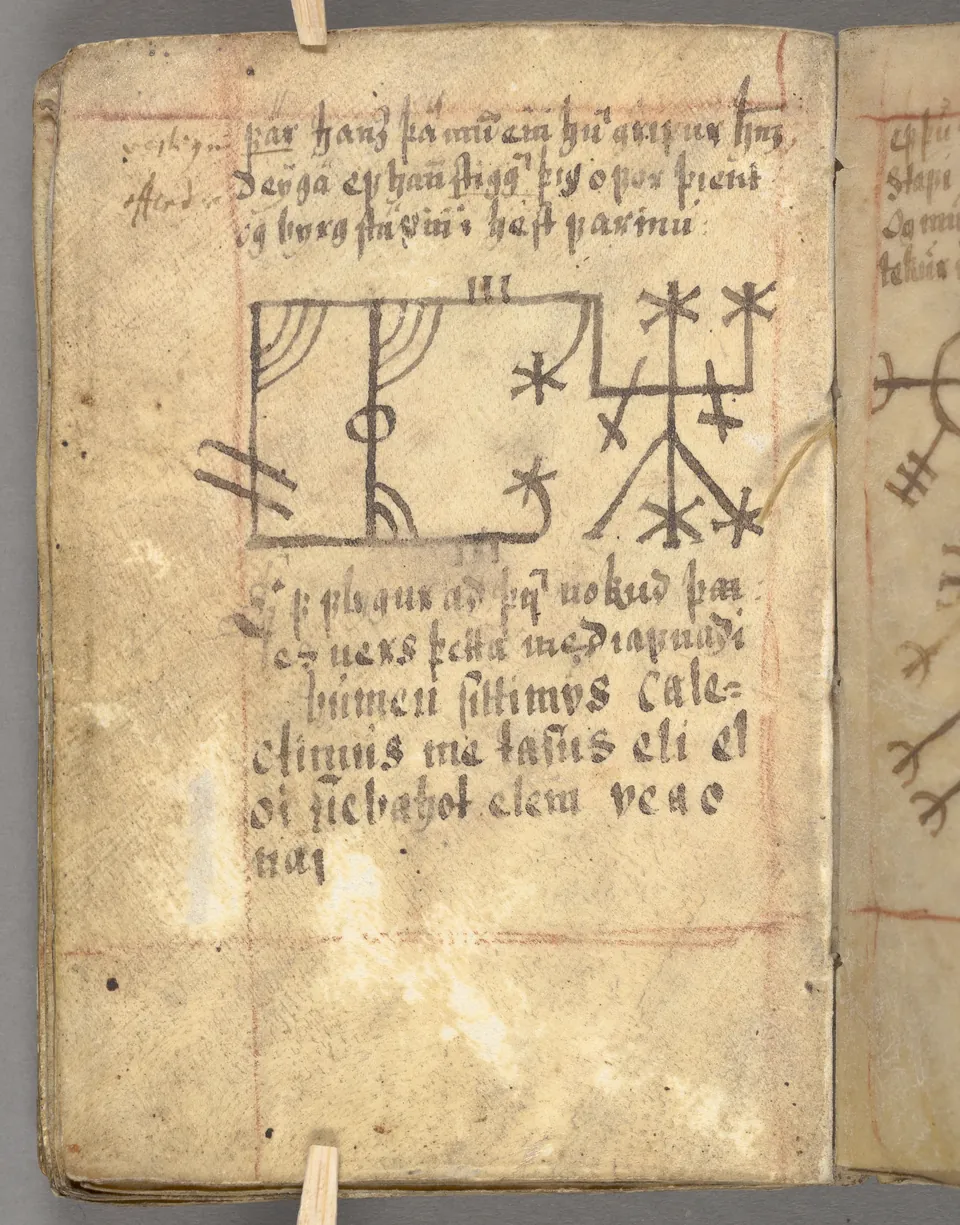
Starting from the object also restores the words around the images. A sign in the Stockholm book sits inside a page ruled in red and beside directions written by one of several copyists. Long prayers and psalms occupy other leaves. The collection’s forty-seven entries range from protection and healing to divination, coercion, and harm. These categories describe what the text claims; they do not verify its promised outcomes.
Three questions this cluster answers
A small parchment codex with a wraparound cover, four writing layers, and seventy-three archive views.
An accumulated set of prayers, directions, names, calendars, circles, and staves rather than a uniform symbol dictionary.
A shelfmark-led comparison of the Stockholm Galdrabók, the 1670 Galdrakver, and the 1860 Huld manuscript.
Archive records and scholarship
- Alvin, Stockholm Galdrabók catalogue record (ATA Ämb 2, F 16:26) ↗
- Natan Lindqvist, En isländsk svartkonstbok från 1500-talet (1921) ↗
- Stephen A. Mitchell, Leechbooks, Manuals, and Grimoires (Arv, 2014) ↗
- Roberto Luigi Pagani, The Mediterranean Origin of the Galdrastafir (Gripla) ↗
- Handrit.is manuscript record, Lbs 143 8vo ↗
- Handrit.is manuscript record, ÍB 383 4to (Huld) ↗