
Liber Resh vel Helios is Crowley’s compact solar observance organized around four points in a day. It was printed in The Equinox I, no. 6 in 1911 as Liber CC, or 200. Its Egyptian names can make the work appear ancient at a glance, but the document is a modern Thelemic construction that arranges selected solar figures within Crowley’s training system.
- First setting
- The Equinox I, no. 6 (1911), pp. 29–32
- Document
- Liber Resh vel Helios, sub figura CC
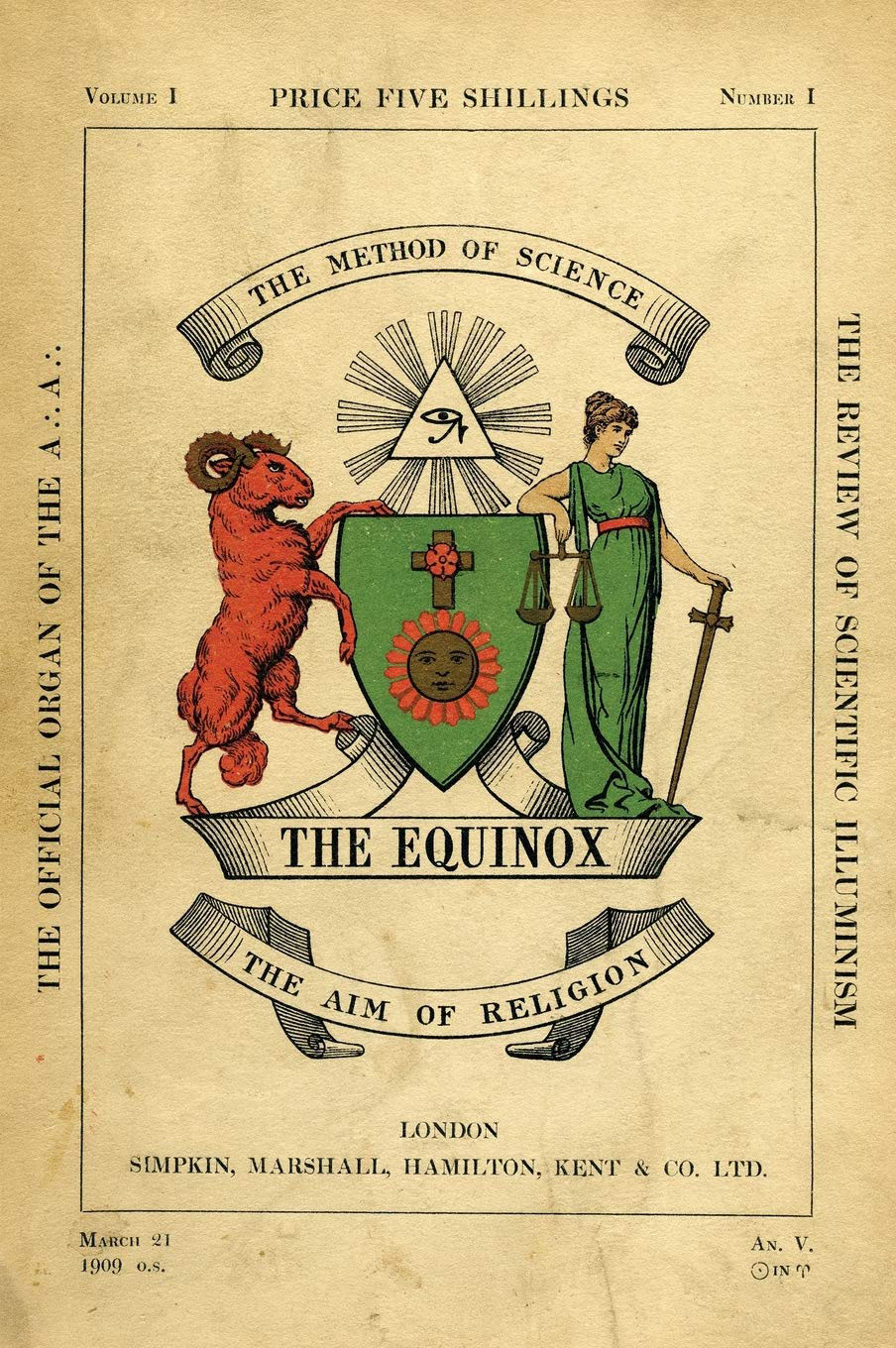
The 1911 Equinox document
The sixth number of The Equinox volume I was published by Wieland & Co. in London in 1911. Its contents identify Liber Resh vel Helios, sub figura CC, and the printed text occupies pages 29–32. “Resh” is the Hebrew letter associated with the Sun in the correspondences Crowley used, while Helios is the Greek sun god. The figure CC gives the number 200.
The document is concise and highly patterned. Four numbered moments divide the civil day: sunrise, noon, sunset, and midnight. Each station has a direction, a solar form, a bark crossing the heavens, and attendant divine figures. The final paragraphs state the discipline’s intended effects in Crowley’s own system, connecting repeated remembrance with meditation and the Great Work.
Ra, Ahathoor, Tum, and Khephra
The four stations name Ra at sunrise, Ahathoor at noon, Tum at sunset, and Khephra at midnight. These are Egyptianizing spellings and selections used by Crowley, not a neutral map of all ancient Egyptian solar religion. Ra and Khepri have deep ancient histories; Hathor’s roles extend far beyond a noon station; and Atum carries creation and evening associations that vary across periods and sources.
Liber Resh makes those figures serve a new daily cycle. It also places Tahuti and Ra-Hoor in the solar bark, combining names from different Egyptian contexts inside a Thelemic liturgical design. Historical reading should therefore distinguish ancient deities from their modern arrangement. The document tells us directly how Crowley’s system deployed the names in 1911, not how every Egyptian community understood them.
A discipline built from time and direction
Unlike a one-time dramatic mass, Liber Resh depends on recurrence. Four stations distribute attention across waking time and symbolically include the hidden midnight sun. East, south, west, and north become a temporal compass as well as spatial directions. The sequence binds ordinary clock time to a mythic solar voyage without requiring an astronomical calculation beyond recognizing the relevant part of the day.
The 1919 A∴A∴ curriculum describes the work as adoration of the Sun four times daily, intended to compose the mind for meditation and regularize practice. That institutional summary is revealing because it emphasizes rhythm and attention rather than spectacle. It also demonstrates continuity: eight years after the first printing, the paper remained part of the organization’s named course of instruction.
The Equinox version and later collections
Liber Resh was reprinted in later collections of Crowley’s ritual papers, including the appendices associated with Book 4. Reprinting could change typography, page numbering, explanatory notes, and the surrounding documents even when the central sequence remained familiar. A reference to “Liber Resh” therefore identifies a work, while a page number or exact spelling may identify a particular edition.
The Equinox scan is the strongest control for the 1911 public form. Its title page and issue contents establish the serial context, and the printed leaves show the early arrangement. A later curriculum supplies a contemporary organizational gloss. Modern web transcriptions are useful for searching, but they often remove the issue boundary and can silently standardize unusual spellings such as Ahathoor or Tum.
The solar cycle beside other Crowley rituals
Liber Resh and the Mass of the Phoenix both focus on the Sun, but the resemblance should not erase their differences. Resh marks four daily stations and presents an ongoing discipline. The Mass focuses on sunset, stages a Eucharistic drama, and includes a hazardous bodily act. Their numbers, first publications, and literary forms are distinct even when later books place them near one another.
The Star Ruby offers another useful comparison. Its directional circuit creates a centered ritual space, while Resh links directions to the passing day. Liber O supplies the earlier training vocabulary behind many bodily and spatial techniques. Reading the group in publication order; 1909, 1911, 1913, then later collected forms; shows Crowley repeatedly revising how time, space, voice, and symbolic identity could be coordinated.
Source scans and records
Continue through the ritual history
This article describes publication history, symbolism, and reception. It does not promise ceremonial effects or reproduce a ritual script.