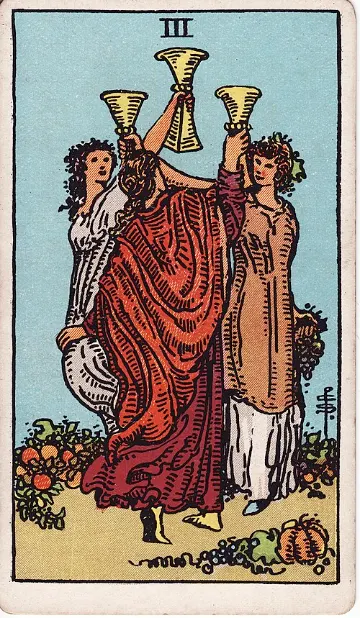
Three figures raise separate cups above fruit and flowers. The Three of Cups pictures joy shared with other people: friends gathering, a team reaching a milestone, or support that makes a difficult period easier. Upright, it favors recognition and belonging. Reversed, it may ask whether the celebration has become tiring, exclusive, or unfair to someone who helped make it possible. The card does not turn a third person into proof of an affair. Its central question is whether the people around the moment can genuinely take part in it.
Look at the image
Pamela Colman Smith groups three figures closely, each lifting a cup. The central figure turns away from the viewer, while the two at the sides remain visible in profile. Grapes, flowers, and a pumpkin cover the ground around their feet. A. E. Waite described three maidens in a garden with cups raised as though pledging one another, and associated the card with a happy conclusion, solace, and healing. The image gives no single figure the central prize. What matters is the shared gesture and the abundance around it. It can suggest a gathering, but it does not tell us whether everyone who helped create the moment is included.
Upright: share the good news
Upright, the Three of Cups can mark a reunion, a successful group effort, a welcome invitation, or a reason to celebrate after strain. The pleasure is social: someone else can witness the moment and answer with a raised cup of their own. If a project has finished, thank the people whose work made it possible before rushing to the next deadline. If a friend has supported you through a hard month, let them know what mattered. Celebration need not be loud or expensive; three people around a kitchen table can carry the same warmth. What makes the card strong is shared recognition, not the size of the event.
Reversed: when celebration costs too much
Reversed, the gathering may be crowded but still leave someone out. One person might organize everything while others receive the applause, or a full calendar of social plans may leave no room to rest. It can also describe pleasure pushed past its enjoyable limit. Waite's older reversed list includes haste, completion, and excess; it does not make gossip or infidelity the card's fixed meaning. Look at the actual situation before assigning blame. Is an invitation missing, has a contribution gone unrecognized, or do you simply need a quieter week? Each calls for a different response, and none can be read from the overturned cups alone.
Three of Cups in love and friendship
In a love reading, the Three often widens the scene beyond the couple. Friends, family, and chosen community can support a bond or make it harder to find private time. For someone dating, a relaxed group gathering may reveal how two people relate to others without promising a romance. For an established relationship, shared friendships can be a source of joy, provided the partners still speak directly about their needs. Reversed, ask whether social obligations are crowding out closeness or whether someone feels excluded. The appearance of three figures is not evidence of a third-party affair. Their raised cups first point to a social setting whose quality must be learned from real behavior.
Three of Cups as feelings
If you are asking about your own feelings, this card can name relief at belonging, pride in a shared accomplishment, or the wish to see a friend again. Those are different from romantic attraction, though both can be present. If you ask how someone else feels, the card cannot disclose their private thoughts. Their invitation, warmth, and follow-through tell you more than a pictured toast. Reversed may fit social fatigue, mixed feelings about a group, or disappointment at being left out. Before deciding what another person feels, notice what they actually said and ask whether they want to spend time together. The answer may be simpler than a crowded spread.
Three of Cups in career and teamwork
At work, the Three can appear when a team finishes a launch, a colleague shares an opportunity, or people recover momentum after a difficult stretch. Upright, mark the result and name the contributors. Recognition is more convincing when it includes the designer who revised the last draft, the organizer who handled logistics, and the person who kept a promise under pressure. Reversed, a celebration may hide uneven labor or credit going to the loudest voice. Ask who did the work, who is missing from the room, and whether the next project will repeat the pattern. A shared win lasts longer when the conditions for sharing it are fair.
Two of Cups versus Three of Cups
The Two of Cups brings two people face to face with separate offers; the Three opens the scene to a small group. That difference matters in a relationship question. A strong private connection does not automatically mean a person feels at home among the other's friends, and a joyful group night does not establish intimacy between two particular people. In work, the Two may point to the terms of a partnership, while the Three asks how a wider team's contributions are recognized. Neither card is a mandatory next stage after the other. Read the number of people in the image alongside the actual question, then decide whose participation matters.
Is the Three of Cups a yes or no card?
For a clear invitation or a modest chance to celebrate with people you trust, the upright Three can lean yes. Attend the reunion, thank the team, or make space to enjoy a result. It is a much weaker answer to “Will everyone like me?” or “Will this group last forever?” because no card can secure other people's future choices. Reversed may suggest checking the cost of the plan before agreeing: time, money, energy, or an unresolved conflict. Ask a question you can act on, such as whether to invite a friend to a small gathering. Then let their response, not the image alone, guide what happens next.
A reading example: a team milestone
Imagine your volunteer group has finished a neighborhood garden and plans an opening day. You draw the Three of Cups upright. The image fits the relief of seeing several people's work become visible, so you invite the volunteers to share the moment and thank them by name. Then you draw it reversed while thinking about the event budget. One person paid for materials and another has been quietly doing the watering; neither can attend the planned party. The reversal need not spoil the achievement. It can prompt a simpler gathering, repayment, and a way for absent contributors to be recognized. The joy becomes more convincing when it reaches the people who made it possible.
Questions to ask
- Who helped make this moment possible?
- Who is missing from the celebration or carrying extra work?
- What kind of gathering would feel good to everyone involved?