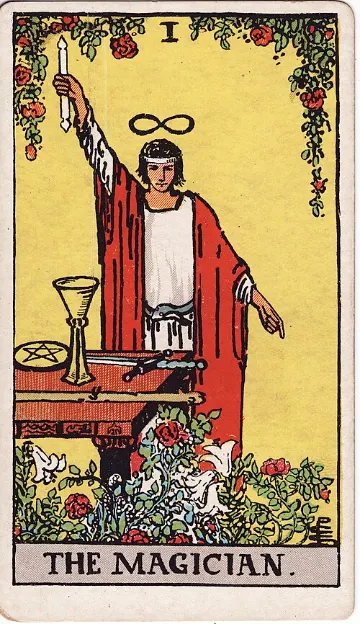
The Magician tarot card points to the moment when an idea needs a method. Upright, it can favor initiative, skill, and using what is already within reach. Reversed, it can ask whether your attention is scattered or a confident presentation is outrunning the work behind it. Pamela Colman Smith shows a figure lifting a wand while the other hand points down toward a table of four suit symbols. The image does not promise that desire alone will produce a result. It asks which tools you have, what you can actually do with them, and whether your words and actions match.
Look at the image
In Pamela Colman Smith's card, the Magician raises a wand with one hand and points toward the ground with the other. A cup, sword, pentacle, and wand rest on the table: all four suits are present before anything has been made with them. Above the figure is a horizontal figure-eight; around the waist is a serpent biting its tail. Roses and lilies grow below. A. E. Waite described the upward and downward gestures as a movement of spiritual power into earthly life, and he connected the flowers with cultivation. You need not adopt his theology to notice the visual story: attention moves from possibility to the materials at hand. The symbols make this more than a generic picture of confidence. They invite you to ask which resources are real, which are only imagined, and what the figure might make of them.
Upright: turn resources into action
Upright, The Magician can describe initiative backed by an actual skill, tool, or opportunity. A draft becomes a proposal; a lesson becomes a first attempt; a conversation becomes a clear request. The card does not mean you already know everything. Its table is stocked, but the work still has to be done. Ask what is within your control and what result would show that you are making progress. If you are collaborating, name your role and invite the other person to name theirs. Confidence helps when it makes you willing to begin, explain your method, and learn from feedback. It becomes less useful when it substitutes for the method. Waite's old list included skill, diplomacy, self-confidence, and will; the modern practical reading here connects those words to visible action.
Reversed: scattered effort or an impressive display?
Reversed, The Magician can point to energy spread across too many plans, a pitch that sounds stronger than its evidence, or a skill you have not yet practiced enough to trust. It does not prove that someone is lying or trying to manipulate you. In a reading about yourself, check whether you have gathered tools but avoided the uncomfortable first attempt. In a reading about another person, separate what they have actually done from what they say they can do. Ask for a sample, a timeline, or an agreed next step instead of making a character judgment from one card. The surrounding cards and the question can shift the emphasis: a pause may be sensible preparation, or it may be a way to stay in control of an outcome you cannot guarantee.
The Magician in love and relationships
In love, The Magician often raises the question of initiative. If you want to know someone better, a direct invitation gives them room to answer; charm alone cannot tell you what they feel. Upright may encourage honest expression, active listening, and a specific plan to spend time together. In an established relationship, it can point to the work of turning a shared wish into a habit both people have chosen. Reversed may ask whether one person is doing all the persuading, or whether promises of change have been followed by change itself. It can also describe nerves that make a sincere person sound rehearsed. The card cannot confirm attraction, loyalty, or deception. Let the other person's words, consent, and repeated actions carry more weight than a dramatic reading.
The Magician in career and money
In a career reading, the table of tools can suggest a useful inventory: skills, examples of past work, time, contacts, and help you can ask for. Upright, The Magician may fit a presentation, application, launch, or negotiation that benefits from preparation and clear delivery. Reversed, it can ask whether you are selling a result before you know its cost, or postponing a manageable task while refining the pitch. For a money question, the card is a prompt to examine the numbers and terms, not a sign that a venture will pay off. If someone else makes an attractive offer, request the scope, price, and evidence in writing. A convincing speaker can be capable, mistaken, or both; ordinary checks matter more than the card's orientation.
Does The Magician mean manifestation?
Many contemporary readings connect The Magician with manifestation: giving a desired outcome enough attention to move toward it. The image supports a grounded version of that idea, because the figure has materials and a task in front of them. It does not show a wish producing a finished object by itself. Waite's own account emphasizes spiritual power and the four suit emblems, while his divinatory list includes both confidence and more troubling possibilities. Modern phrases such as “make it happen” are interpretations, not a line printed under Smith's 1910 card. If you use manifestation language, make it practical. State the aim, name a resource, take one action, and look at what happened. That leaves space for obstacles, other people's choices, and revision.
Is The Magician a yes or no card?
The Magician can lean toward yes when the question is about taking a prepared, reversible step with tools you actually possess. “Should I send the finished proposal?” is different from “Will this proposal certainly be accepted?” The card can encourage the first action without answering the second. Upright may favor acting with a clear plan; reversed may suggest checking the plan, the evidence, or the promise before committing. Neither position guarantees another person's response or a financial result. If your yes-or-no question hides several conditions, bring them into view: what can you do now, what depends on someone else, and what would you need to know before taking a larger risk?
A reading example: the promising idea
Imagine you want to offer a weekend workshop. You have taught the subject informally, a friend can lend a room, and several people have expressed interest. You draw The Magician upright. The four objects on the table resemble your real resources, but the card does not prove that tickets will sell. Draft one session, set a capacity and price, ask interested people whether they would attend on a specific date, then decide whether to book the room. If the card were reversed, the same situation might call for a smaller trial or a clearer account of what participants will receive. The difference is not fate. It is whether a good idea has been translated into a testable plan and an honest invitation.
Questions to ask
- Which skill or resource can I use now?
- What claim needs a small test or clearer evidence?
- What is one action I can take without promising the outcome?