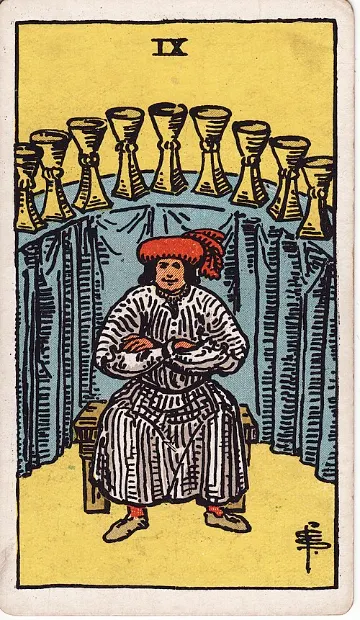
A seated figure faces us before nine cups displayed in a wide arc above a blue-draped counter. The Nine of Cups is often called the wish card, but its strongest use is to notice a result that has actually arrived. Upright, it can mark contentment, a finished effort, or time to enjoy what is available. Reversed, the question becomes more complicated: Waite's older list includes truth and loyalty as well as mistakes, rather than simply a wish denied. In love and work, the card invites a close look at what satisfies you now, what only looks like success, and who shares in the pleasure.
Look at the image
Pamela Colman Smith seats one figure before a blue-draped counter, with nine cups set in an arc above it. Their arms are folded, but the pose alone does not settle whether they feel proud, guarded, or simply at ease. We cannot see what fills the cups, and no companions appear in the scene. Waite described a person who has feasted and seems to have more refreshment ahead; he also warned that the picture shows only the material side of satisfaction. That is a useful limit. The abundance is visible, while the person's deeper experience and the company they may keep beyond the frame are open questions.
Upright: let a good result count
Upright, the Nine of Cups can mark a wish fulfilled, a task completed, or a welcome stretch of comfort after work. It is reasonable to enjoy such a result without turning immediately to the next deficiency. Name what has actually happened: a finished exhibition, a repaired friendship, a place to rest, or a goal met on its stated terms. The popular wish-card name can be inviting, but it does not promise that every hoped-for outcome will appear. If the result is here, ask how it changes your day and what part you want to celebrate. Satisfaction is easier to recognize when it belongs to something specific rather than a vague image of a perfect life.
Reversed: truth, imperfection, and desire
Waite's reversed list is mixed: truth, loyalty, and liberty appear alongside mistakes and imperfections. It is not simply “the wish fails.” One reversed reading might ask for honesty about a pleasant result that cost more than expected. Another may reveal that something imperfect is still worth keeping, or that freedom matters more than the impressive display behind the figure. Modern readers sometimes use the reversal for satisfaction that looks convincing from outside but feels thin within. Test that idea against the real situation rather than assuming disappointment. What did you want, what arrived, and which part of the difference matters enough to act on?
Nine of Cups in love and relationships
In love, the Nine can be a moment of genuine ease: a partner keeps a promise, an old tension softens, or you enjoy time together without needing it to prove the whole future. For someone dating, it may describe contentment in their own life as well as interest in another person. It does not guarantee a particular partner or a commitment from someone else. Reversed, ask whether the relationship is meeting the needs both people have actually expressed, rather than the picture of romance either carries privately. A satisfying bond can still have unfinished conversations. Pleasure is more durable when both people can say what they value in it.
Nine of Cups as feelings
If this card speaks to your own feelings, it may be relief, gratitude, pride, or pleasure in a connection that has become comfortable. Those emotions are not the same as a decision to deepen the relationship. If you ask about someone else's feelings, the figure's folded arms cannot disclose a private thought. Consider their words, their willingness to spend time, and the way they treat you when plans change. Reversed, a person might be honest about wanting something different, or might still value an imperfect connection. A direct conversation gives that possibility shape; a painted expression cannot stand in for one.
Nine of Cups in career and money
At work, the Nine can mark a result you can point to: a completed launch, steady income after an uncertain period, or recognition for work that took real effort. Before chasing the next title, ask whether the achievement improved the part of working life you cared about. A higher salary may be welcome even if the schedule remains difficult; a smaller project may bring more satisfaction than a public award. Reversed, compare the visible success with the actual terms: pay, hours, autonomy, and the people affected. If the goal has changed, you can keep the benefit of what you achieved without pretending it must be enough forever.
Nine of Cups versus Ten of Cups
Smith's Nine places one person before a display of cups; the Ten shows two adults, two children, a home, and a rainbow of cups across the sky. The pictures suggest different scales of contentment. The Nine can focus a reading on a person's own achieved pleasure or comfort, while the Ten invites a question about shared life and the bonds that sustain it. This does not make the Nine selfish or the Ten automatically happy. A person may celebrate privately with generous intent, and a pictured household can still have conflict. If both cards appear, ask what feels good for you and how the people around you experience the same arrangement.
Is the Nine of Cups a yes or no card?
For a question about enjoying a result that is already within reach, the upright Nine often leans yes: receive the invitation, mark the milestone, or allow yourself the rest you earned. For a question about whether a specific person will grant a wish, the same image gives no reliable guarantee. Reversed is not an automatic no; Waite's reversal includes truth and loyalty as well as imperfection. Make the question concrete. “Would this offer meet the pay and time I need?” can be checked against terms. “Will this make me happy forever?” asks a single painted moment to carry more than it can show.
A reading example: the promotion arrives
Imagine someone wins the promotion they pursued for a year and draws the Nine of Cups upright. They can enjoy the result: the pay is higher, their work was recognized, and a difficult application is over. After a month, they notice the role also takes two evenings each week. A reversed Nine in a later reading need not erase the original success. It may fit an honest review of the new terms. They ask whether those evenings are temporary, negotiate which meetings they must attend, and decide what amount of time at home they will protect. The wish arrived; the next choice is how to make a satisfying life around it.
Questions to ask
- What result can I genuinely enjoy?
- Am I seeking the experience or the appearance of success?
- Who helped make this comfort possible?