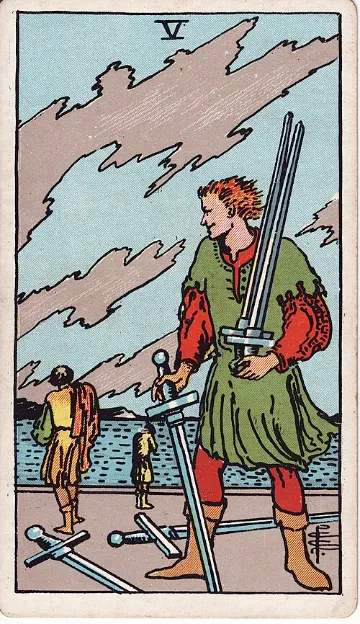
A foreground figure holds three swords while two others walk away; two blades lie on the ground beneath a broken sky. The Five of Swords presents the aftermath of a conflict, with possession of the weapons separated from the question of what anyone gained. Waite's older account emphasizes loss, dishonor, and destruction, while many current readings ask about victory that costs trust or belonging. His reversal does not promise reconciliation. Whether you identify with the person holding the swords or those leaving, the card invites a clear view of the outcome, the damage, and what response is still possible.
Look at the image
Pamela Colman Smith places one figure close to us with two swords over a shoulder and a third pointed downward. Two more lie on the shore. Farther back, one person bows their head while another walks toward the water, and sharp-edged clouds cut across the sky. The foreground figure has the weapons, but the card does not show what began the dispute or what the retreating people will do next. Read it from both positions. Holding the field may feel like success; leaving may be a necessary refusal to keep fighting. The distance between the figures is as important as the count of swords.
Upright: count the cost of conflict
Waite's upright Five emphasizes degradation, destruction, dishonor, and loss. Modern readers often call it a hollow victory, but the image can also describe the person who has been defeated or chooses to walk away. Ask what the conflict settled and what it damaged. A firm boundary or justified decision can still carry a social cost; losing an argument does not mean the other person's conduct was fair. Identify the practical result before deciding whether to repair, appeal, or withdraw. If you won on procedure but lost cooperation, the next task may be rebuilding a working relationship. If you were harmed, preserving distance may be the most honest outcome.
Reversed: the aftermath is not erased
Waite gives the reversed Five much the same severe meaning as the upright card, adding funeral language in an older divinatory register. That is not a forecast that someone will die. Many contemporary readings instead use reversal for regret, de-escalation, or an attempt to make amends. Look for evidence of changed conduct before choosing that softer account. Has the argument stopped because the issue was resolved, or because one person has left the room? An apology can begin repair when it names the action and a different practice. If the cost is still being borne, reversing the card does not make it disappear; it asks how the consequences will be addressed.
Five of Swords in love and relationships
In a relationship, the Five can appear after a cutting exchange, a struggle to win the last word, or a boundary that leaves both people unsettled. Upright, ask what each person wanted from the disagreement and whether those needs were ever spoken plainly. The foreground figure's possession of the swords is not the same as closeness. Reversed, a quieter period may allow repair, but check whether the pattern has actually changed. A specific acknowledgment and a plan for the next disagreement help more than declaring everything forgiven. If contact repeatedly becomes harmful, stepping away can be a considered choice rather than a failure to reconcile.
Five of Swords as feelings
For your own feelings, the Five may hold anger, humiliation, vindication, or relief at leaving a fight. More than one can be present. Name the emotion without deciding that it explains every other person's motive. If you are asking how someone else feels, the picture offers no access to their private thoughts. Notice whether they seek a fair conversation, defend the same behavior, or keep their distance. Upright can fit the tension of an unresolved contest; reversed may fit regret only if words and actions support it. The useful inquiry is not “Who secretly feels defeated?” but “What is happening between us now?”
Five of Swords in career and money
At work, a team may win a dispute over process or credit and still lose trust needed for the next project. Document the decision, separate the legitimate issue from personal attacks, and identify who now has to carry the result. If you lost, ask whether an appeal, a revised proposal, or a new team would change the practical outcome. Reversed, do not rush to declare a conflict over while the same incentives remain. In money matters, compare the value of pressing a claim with its cost in time, fees, and relationships. A necessary negotiation can be firm without making every interaction a contest to be won.
Five of Swords versus Six of Swords
The Five leaves swords scattered on a shore after a dispute. The Six puts six swords in a boat that moves across water with passengers aboard. One image asks what the conflict cost; the next asks how to make a passage while carrying some of its weight. If both cards appear, do not pretend a change of setting has already repaired the damage. Name the unfinished issue under the Five, then decide what support, route, and limits make movement possible under the Six. Leaving a contest can be a strategy, but the question of what travels with you remains.
Is the Five of Swords a yes or no card?
For a question about escalating a fight simply to prove a point, the Five often leans no: the cost may exceed the gain. It may support a firm yes to protecting a boundary or leaving a damaging contest. The answer depends on the action, not just the card's uncomfortable mood. Reversed invites a check on whether repair is real or only promised. Ask “Should I request a written resolution of this dispute?” rather than “Will I win?” The first question leads to evidence and a choice. The second can trap the reading in the same contest pictured on the card.
A reading example: the meeting after the win
A project lead proves that their team followed the agreed brief, and a manager withdraws a complaint. The lead draws the Five of Swords. They have won the point, but two colleagues now avoid the weekly meeting. Instead of reopening the whole argument, the lead records the decision, asks each colleague what work was disrupted, and proposes a clear review process for future changes. One person welcomes the discussion; another wants distance for now. The lead respects both responses while protecting the team's responsibilities. The card helps distinguish a valid outcome from the additional work of living with its aftermath.
Questions to ask
- What did this conflict actually settle?
- Who is bearing a cost that the formal outcome missed?
- Is repair, appeal, or distance the most useful next step?