
The Black Pullet does not treat a drawn figure as a self-sufficient charm. Its recurring unit is an assembly: a silk talisman in a specified color, metallic embroidery, a bronzed-steel ring bearing characters, a bodily position, a cluster of invented command words, an attributed power, and sometimes a miniature demonstration. The catalogue becomes intelligible when those parts are read together and when its twenty-two material specifications are kept distinct from the numbering of wand, circle, talisman figures, and separate ring characters.
- Material inventory
- 22 numbered specifications
- Repeated pair
- Silk talisman + bronzed-steel ring
- Worked figures
- 3, 5, and 20
Each entry is a control surface, not only an emblem
After the sage introduces a serpent-headed wand and forms circles, he opens a casket of rings and talismans. The later entries repeat a grammar. A pair is selected; the ring is assigned to a finger or held in a particular hand; the textile figure is placed at the heart, ear, head, arm, or another location; words are spoken; and an appearance or effect is narrated. Image, metal, cloth, anatomy, voice, and result function as one interface. Extracting the black lines as a gallery of “sigils” removes most of the system the prose actually describes.
The pairing also distributes information across surfaces. Some figures show the talisman and ring together, while adjacent lines say that additional characters belong inside the ring. The textile carries a larger colored design that the monochrome transcription can only outline. The ring condenses another mark into wearable metal. Spoken words supply a third code that cannot be seen in the plate. The operator’s body then becomes the frame that combines them. The text’s fascination lies in this multi-part fit, not in a claim that any one symbol has an independent timeless meaning.
The color list turns twenty-two figures into luxury objects
A final composition section specifies bronzed steel for the rings and silk cloth for the talismans, then lists twenty-two textile treatments. White, red, sky blue, black, green, violet, golden yellow, lilac, poppy red, puce, dark blue, pale grey, rose, orange, dark green, cherry, and grey-white all appear. Gold and silver embroidery dominate, with black silk, shaded silk, and a final mixed design as exceptions. The inventory turns flat diagrams into imagined portable objects whose sheen and contrast mattered as much as their outlines.
The list does not explain a single planetary color theory that generates every choice. Black can receive silver in one position and gold in another; golden-yellow can take gold or silver; white can take gold or black. That variation cautions against reverse-engineering a neat correspondence table that the source never states. Color behaves like part of a numbered product specification. The lavish combinations also match the pyramid’s treasure rooms and jeweled casket: the material richness of the apparatus makes claimed mastery visible before any spirit or result appears.
| No. | Ground | Stitch or contrast |
|---|---|---|
| 1 | White satin | Gold embroidery |
| 2 | Red satin | Silver embroidery |
| 3 | Sky-blue satin | Silver embroidery |
| 4 | Black satin | Silver embroidery |
| 5 | Green satin | Gold embroidery |
| 6 | Violet satin | Silver embroidery |
| 7 | Golden-yellow satin | Gold embroidery |
| 8 | Lilac satin | Shaded silk |
| 9 | Poppy-red satin | Silver embroidery |
| 10 | Yellow satin | Black silk |
| 11 | Puce satin | Gold embroidery |
| 12 | Dark-blue satin | Silver embroidery |
| 13 | Pale-grey satin | Gold embroidery |
| 14 | Rose satin | Silver embroidery |
| 15 | Golden-yellow satin | Silver embroidery |
| 16 | Orange satin | Silver embroidery |
| 17 | Dark-green satin | Gold embroidery |
| 18 | Black satin | Gold embroidery |
| 19 | White satin | Black silk |
| 20 | Cherry satin | Silver embroidery |
| 21 | Grey-white satin | Shaded work |
| 22 | Red satin | Gold center, silver border, black-and-white signs |
Command words divide broad promises into smaller operations
The invented words do more than decorate an invocation. They act as verbal switches. One cluster is assigned to calling spirits and another to dismissing or redirecting them. Figure 7 adds a third word to change private thought-reading into public disclosure by an enemy. Figure 9 attaches separate pairs of words to different elemental effects. Figure 13 distinguishes knowing thoughts, granting prosperity, and punishing an adversary. Figure 20 gives different short words to a simple selection, paired numbers, dice, four numbers, or five. The catalogue repeatedly takes an enormous attributed power and breaks it into addressable cases.
This is also where the book resembles a demonstration manual more than a dictionary of symbols. The sage often tells the narrator how a response will be recognized: figures appear, bags are emptied, a distant conversation is heard, a lock opens, or a storm later yields. Other entries receive no staged proof and remain assertions within the catalogue. The unevenness matters. A narrated trial gives selected objects dramatic evidence inside the fiction, while untested entries borrow confidence from their neighbors. Demonstration is distributed strategically rather than supplied for every claim.
Worked comparison: Figures 3, 5, and 20 change the control surface
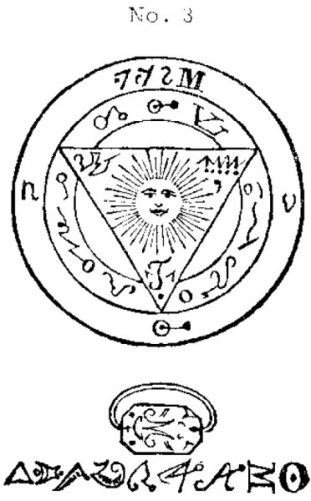
Figure 3 is the broad gateway. The talisman is placed over the heart, the ring is worn, and three short words are said. The narrative answers with many differently shaped spirits and a command to issue orders. Its visual center is a radiant face inside a triangle, surrounded by circular writing, with a separate ring below. Body position, central light, and general spirit appearance all support an undifferentiated access claim. The sage then postpones requests, teaching that the appearance itself is the demonstration.
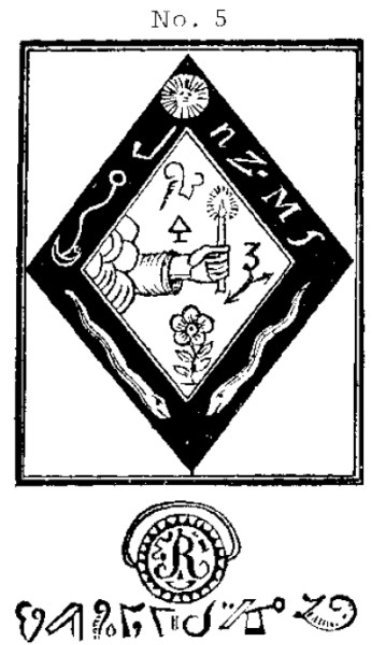
Figure 5 narrows general access to treasure. Ring and talisman divide between right and left hands, three words are spoken, and seven bronze-colored spirits empty bags of coin. A hooded black bird foreshadows the later hen. The operation recruits counted agents, cargo, and an animal sensor rather than pointing vaguely toward wealth.
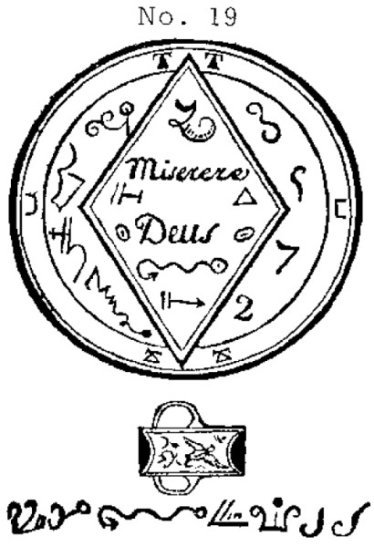
Figure 20 moves from spirits and treasure chests to games of chance. The talisman is fixed to the left arm with a white ribbon, the ring goes on the right little finger, and different words correspond to kinds of wagers. The user is also told to conceal the gestures from opponents. Its logic resembles a menu: choose the game state, select the verbal key, and repeat at the relevant moment. Figure 3 promises command, Figure 5 assigns treasure recovery to agents, and Figure 20 converts uncertainty into a set of conditional inputs. The same pair format supports three very different fantasies of control.
The claimed powers form clusters rather than a random list
The sequence moves through recognizable families. Early figures establish spirit access, attraction, treasure, distant hearing, secret thoughts, and command of operations. The middle expands into destructive weather, invisibility, rapid transport, locks, remote sight, and defense against hostile plans. Later figures promise moral or material transformation, medicine, animal language, judgment of intentions, artistic mastery, gaming advantage, and offense or defense against infernal powers. The order alternates spectacular public effects with private information and portable advantage.
Several entries combine powers that a modern index might separate. Figure 9 joins catastrophe with protection of friends. Figure 13 couples surveillance with beneficence and punishment. Figure 15 promises both virtues and transformation of bad substances. These bundles reveal the compiler’s unit of thought: a numbered pair is a small treasury of related outcomes, not a single searchable function. Grouping the entries helps navigation, but the historical record remains attached to the composite claims printed beside each figure.
| Cluster | Figures and attributed scope |
|---|---|
| Spirit command | Figure 3 calls celestial and infernal powers; figure 8 starts or stops spirit operations; figures 21–22 direct or detect infernal projects. |
| Knowledge and surveillance | Figures 6–7 concern distant speech and concealed thoughts; figure 13 combines remote sight, thought-reading, benefit, and punishment. |
| Movement and access | Figure 10 claims invisibility, figure 11 transport, and figure 12 the opening of locks. |
| Treasure and chance | Figure 5 discovers treasure through spirits and a hooded black bird; figure 20 divides command words among lottery and gaming cases. |
| Elements and protection | Figure 9 claims storms, earthquakes, destructive force, and preservation of friends; figure 14 defeats hostile projects. |
| Body, skill, and judgment | Figures 15–19 promise virtue or transformation, medical and botanical knowledge, animal control, discernment of intentions, and artistic mastery. |
Numbering and moral conditions expose the editorial seams
The English transcription presents a wand as Figure 1 and a magic circle as Figure 2, then demonstrates talisman and ring pairs from Figure 3 through Figure 22. The composition list nevertheless numbers twenty-two satin specifications. Separate images of ring characters sometimes interrupt the sequence. This creates a real editorial tension: apparatus numbers, pair numbers, image files, and material numbers do not align as neatly as a modern “twenty-two talismans” gallery implies. The safest reading states which numbering layer is being used rather than silently forcing them into one table.
After the material list, the sage adds a moral condition. Purity, honor, prayer, and freedom from harmful intent are said to govern whether the apparatus responds; guilt would make the powers rebel and punish the user. Inside the book, this protects every prior promise from falsification. The colors, rings, placements, and words can all be present while failure is relocated to invisible moral fitness. The section also returns the sensational catalogue to the providential frame established in the pyramid story. Material precision and spiritual qualification work together: one makes the system look reproducible, while the other keeps its claimed success beyond ordinary testing.