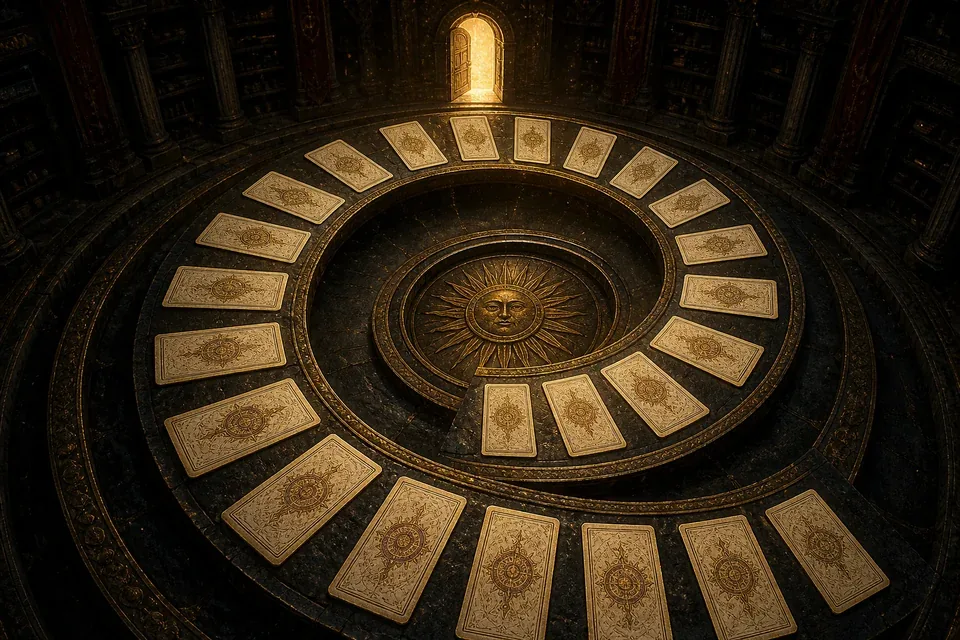
Grand Temple has twenty-one positions: seven Earlier, seven Now, and seven How it fits cards across self, relationships, work, money, hidden issues, beliefs, and future plans. It is a large review spread for a period of transition, best read slowly in rows rather than as twenty-one isolated verdicts.
A useful question for this spread
How have seven life areas changed from earlier to now, and how do they fit?
The question can be made more specific to your circumstances before you draw. Keep the wording open enough for an unexpected card and grounded enough to connect the cards to something you can observe or decide.
The 21 positions, in order
The position labels below follow this version of the spread. Keep the order visible while reading so a compelling card does not cause its place to change after the draw.
- 1Earlier: self
Recall the role you carried before the change.
- 2Earlier: relationship
Name the earlier pattern in this relationship.
- 3Earlier: work
Describe what work required of you then.
- 4Earlier: money
Recall the earlier state of resources or debts.
- 5Earlier: hidden issue
Notice a concern that was easy to overlook.
- 6Earlier: beliefs
Identify a belief shaping the earlier period.
- 7Earlier: future plans
What future did you imagine at that point?
- 8Now: self
Describe your present stance without comparing it to an ideal.
- 9Now: relationship
What is happening between people now?
- 10Now: work
Which responsibility or opportunity is visible today?
- 11Now: money
What do current numbers and obligations show?
- 12Now: hidden issue
Which issue still sits outside the main story?
- 13Now: beliefs
Which belief still guides a present choice?
- 14Now: future plans
What plan is active now, rather than merely wished for?
- 15How it fits: self
How does the earlier role shape your present choices?
- 16How it fits: relationship
Connect the old and current relationship patterns.
- 17How it fits: work
What changed in the work and what remains?
- 18How it fits: money
How do past and current resources constrain the plan?
- 19How it fits: hidden issue
Where does the overlooked issue affect another area?
- 20How it fits: beliefs
How do changed beliefs alter the whole picture?
- 21How it fits: future plans
Which future plan fits the other six areas?
How to read the pattern
Read each life area vertically from Earlier to Now to How it fits. Then scan across a row for a common pattern. A card in Hidden issue should prompt reflection, not an accusation of secret facts. The future-plans column concerns the plans you hold, not a guaranteed destination.
After looking at the cards individually, compare the first position with the final one. Notice what changed in between and which cards complicate a simple story. A repeated suit or image can focus attention, but its meaning still depends on the question and the position.
An example reading
Earlier: work might show Eight of Pentacles, Now: work Two of Wands, and How it fits: work the Chariot. That column could tell a story from practice through choice to directed effort. A parallel money column might show whether the plan is resourced enough to move.
This example shows how a card can open a question without proving a hidden fact or fixing the outcome. The next useful step is to compare the idea with the real situation and revise it when new information arrives.
Grand Temple tarot spread FAQ
How many cards are in the Grand Temple tarot spread?
This version uses 21 cards in a fixed order: Earlier: self, Earlier: relationship, Earlier: work, and 18 later positions ending with How it fits: future plans. The numbered diagram and position list use the same sequence, so the role of a card stays stable while you interpret it.
What question works best for the Grand Temple spread?
Begin with “How have seven life areas changed from earlier to now, and how do they fit?” and replace any broad wording with the situation, decision, or time period you actually want to examine. The spread works best as a structured reflection rather than proof of another person’s private thoughts or a guaranteed prediction.
How do I keep a 21-card Grand Temple reading coherent?
Read it in three passes: first the individual positions, then nearby groups, and finally the movement from Earlier: self to How it fits: future plans. Write one sentence for each pass so a striking card does not overwhelm the rest of the layout.