People
Dee’s notebooks preserve dates, questions, corrections, and Kelley’s reported visions, exposing the negotiated production later systems conceal.

A documented partnership
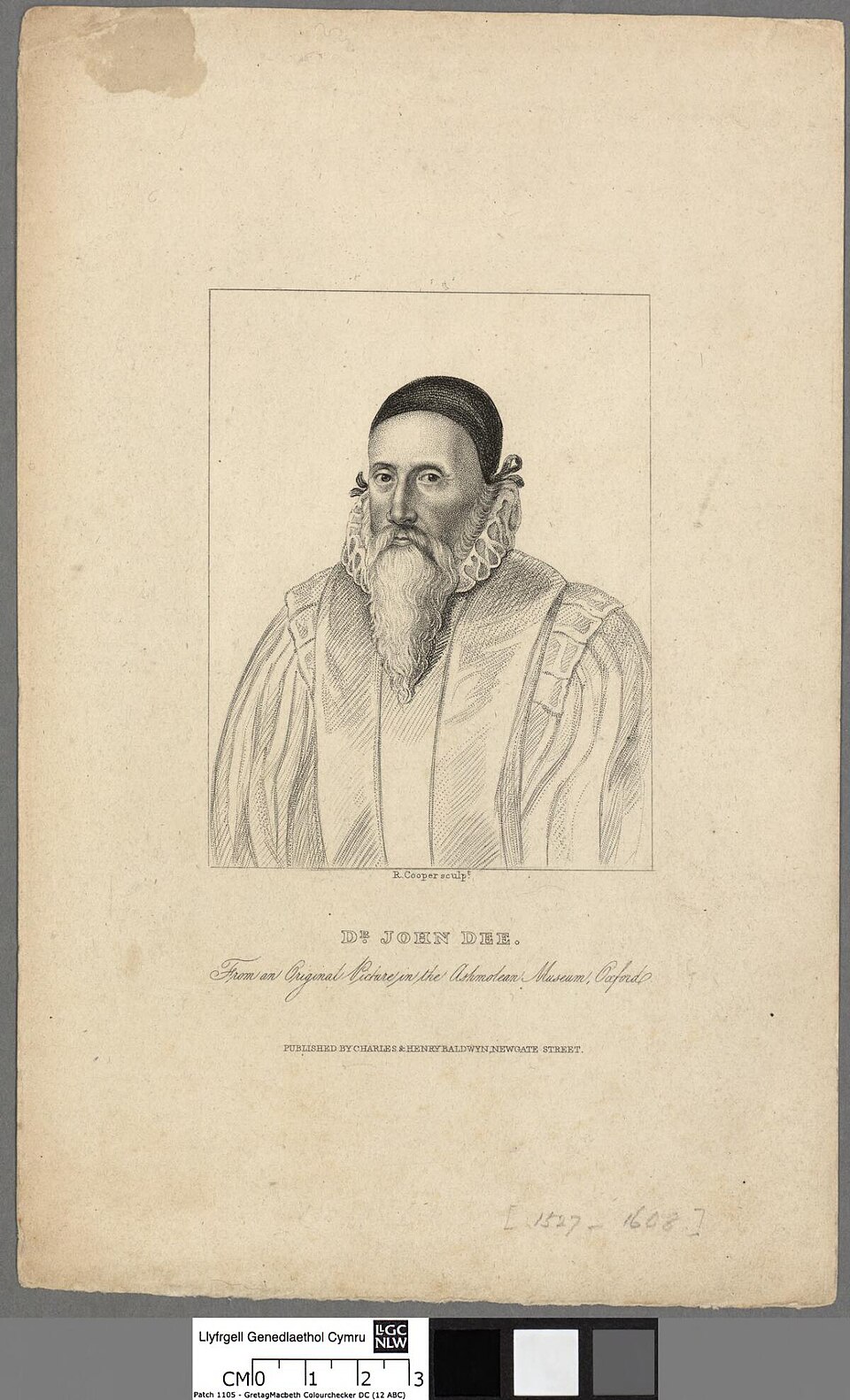
John Dee (1527–1608 or 1609) was a mathematician, adviser, collector of books, and student of many fields that early modern readers did not divide as sharply as we might. In the 1580s he recorded sessions conducted with Edward Kelley, who acted as a scryer or intermediary. Dee believed the conversations concerned angels and divine knowledge. A historian can describe that belief and study his surviving records while leaving the existence of the reported beings open. The British Library catalogues Sloane MS 3188 as Dee’s conferences with angels, a concrete starting point for the subject. Dates, speech, correction, and the mechanics of a reported encounter make the notebooks unusually valuable. They do not, by themselves, verify that an angel spoke. They document what Dee and Kelley recorded and how that record circulated.
Manuscripts before modern systems
Later writers often call the material “Enochian,” but that label can hide the difference between Dee’s notebooks and systems assembled centuries afterward. Separate manuscripts preserve distinct portions of the material, including tables, keys, and accounts of actions. Some records were copied by other antiquaries, so shelfmarks, hands, and sequences reveal separate stages of transmission. A later printed diagram may be a reconstruction rather than a plate Dee drew in that form. The date of a session, the date of its fair copy, and the date of a modern edition need not be identical. Revisions, gaps, contested readings, and ordinary problems of handwriting and preservation run through the archive.
How one recorded action unfolds
Dee dates and locates a session, records those present, asks questions, and writes what Kelley reports seeing or hearing. Tables and words can arrive letter by letter through reversals and repeated passes, with hesitation and later correction preserved. Observation, interrogation, transcription, and fair copy jointly produce the record that later systems often present as finished revelation.
Questions the record can answer
Dee’s records can answer how he represented his aims, who participated, what language they wrote down, and how they handled uncertainty within the sessions. They are less useful as proof for sweeping claims about supernatural results or a single unchanging ritual system. Scholarship on the manuscripts traces the conversations across places and dates and compares them with Dee’s broader religious and intellectual setting. That work protects Dee from two simplifying myths: the picture of a modern laboratory scientist embarrassed by occult interests, and the picture of a timeless wizard untouched by Elizabethan culture. His mathematics, devotional life, collecting, and spirit records coexisted. For a reader interested in ritual history, the archive shows a series of distinct projects: early spirit actions, the Heptarchic material, the tables and language commonly called Angelical, and later continental sessions do not form one uninterrupted revelation. Dates and shifts in format mark the breaks: Heptarchic material, Angelical tables, and continental sessions are related projects, not one seamless revelation.
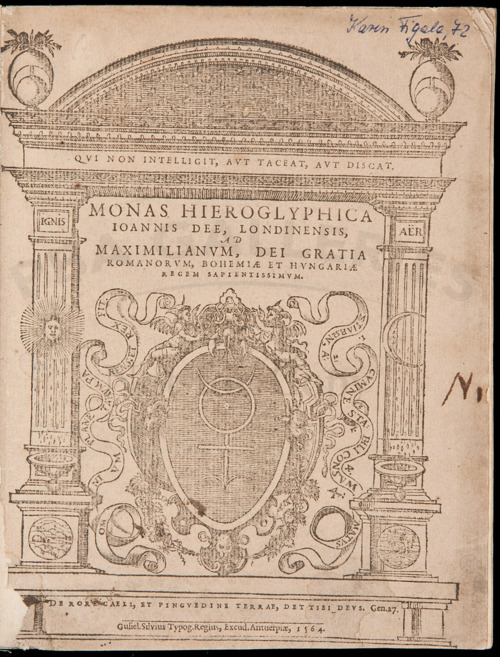
Read Dee’s 1564 Monas Hieroglyphica as a separate printed work →
Questions to explore
- Which manuscript records the episode in question?
- Is an illustration contemporary with Dee or a later reconstruction?
- What part of the claim comes from Dee, Kelley, a copyist, or a modern commentator?