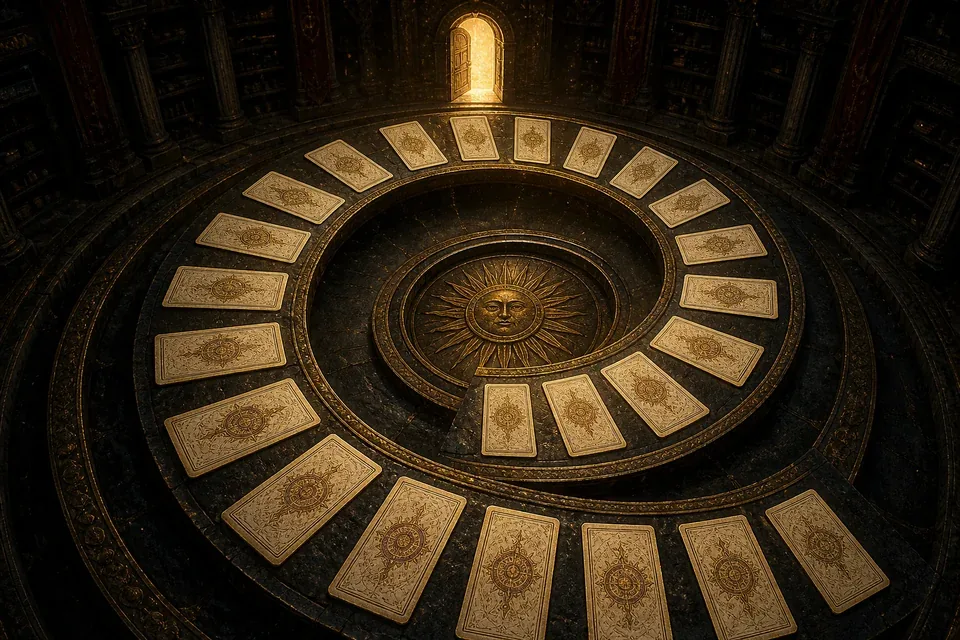
Major Arcana Path assigns twenty-two positions named for the Major Arcana, from the Fool to the World. It is a thematic reading of a long change, not a demand to draw one particular card into each named place. The position supplies the question; the drawn card supplies an image to compare with it.
A useful question for this spread
Which Major Arcana themes describe the stages of my present story?
The question can be made more specific to your circumstances before you draw. Keep the wording open enough for an unexpected card and grounded enough to connect the cards to something you can observe or decide.
The 22 positions, in order
The position labels below follow this version of the spread. Keep the order visible while reading so a compelling card does not cause its place to change after the draw.
- 1The Fool
Where does a new cycle begin before the plan is clear?
- 2The Magician
Which tool or skill is already in hand?
- 3The High Priestess
What remains private, intuitive, or unspoken?
- 4The Empress
What is being nurtured into form?
- 5The Emperor
Which structure grants stability or limits freedom?
- 6The Hierophant
What teaching or inherited rule is active?
- 7The Lovers
Which relationship or value calls for a choice?
- 8The Chariot
Where is directed effort carrying the story?
- 9Strength
What kind of courage is required here?
- 10The Hermit
What can be understood through solitude?
- 11Wheel of Fortune
Which change is outside your control?
- 12Justice
What would fairness require?
- 13The Hanged Man
Where might a pause change the view?
- 14Death
What ending makes another phase possible?
- 15Temperance
What needs moderation or integration?
- 16The Devil
Which attachment or constraint is visible?
- 17The Tower
What assumption is being disrupted?
- 18The Star
Where does hope remain useful?
- 19The Moon
What is unclear, feared, or imagined?
- 20The Sun
What can be seen plainly now?
- 21Judgement
What calls for a fuller reckoning?
- 22The World
What is complete, and what begins again?
How to read the pattern
Read in short chapters rather than all twenty-two at once. The Fool through the Chariot can frame beginnings and direction; Strength through Temperance can explore pressure and adjustment; the Devil through the World can address constraint, disruption, hope, and completion. A surprising contrast between position name and drawn card can be more useful than a neat match.
After looking at the cards individually, compare the first position with the final one. Notice what changed in between and which cards complicate a simple story. A repeated suit or image can focus attention, but its meaning still depends on the question and the position.
An example reading
If Four of Pentacles falls at the Fool position, a new start may be held back by a need for security. The Star drawn at the Tower position might suggest hope during disruption. Those pairings are interpretations of a story structure, not claims that the cards changed their standard names.
This example shows how a card can open a question without proving a hidden fact or fixing the outcome. The next useful step is to compare the idea with the real situation and revise it when new information arrives.
Major Arcana Path tarot spread FAQ
How many cards are in the Major Arcana Path tarot spread?
This version uses 22 cards in a fixed order: The Fool, The Magician, The High Priestess, and 19 later positions ending with The World. The numbered diagram and position list use the same sequence, so the role of a card stays stable while you interpret it.
What question works best for the Major Arcana Path spread?
Begin with “Which Major Arcana themes describe the stages of my present story?” and replace any broad wording with the situation, decision, or time period you actually want to examine. The spread works best as a structured reflection rather than proof of another person’s private thoughts or a guaranteed prediction.
How do I keep a 22-card Major Arcana Path reading coherent?
Read it in three passes: first the individual positions, then nearby groups, and finally the movement from The Fool to The World. Write one sentence for each pass so a striking card does not overwhelm the rest of the layout.